Tokyo hosts exhibition highlighting Tibet's refugee crisis, cultural identity on World Refugee Day
Jun 23, 2026
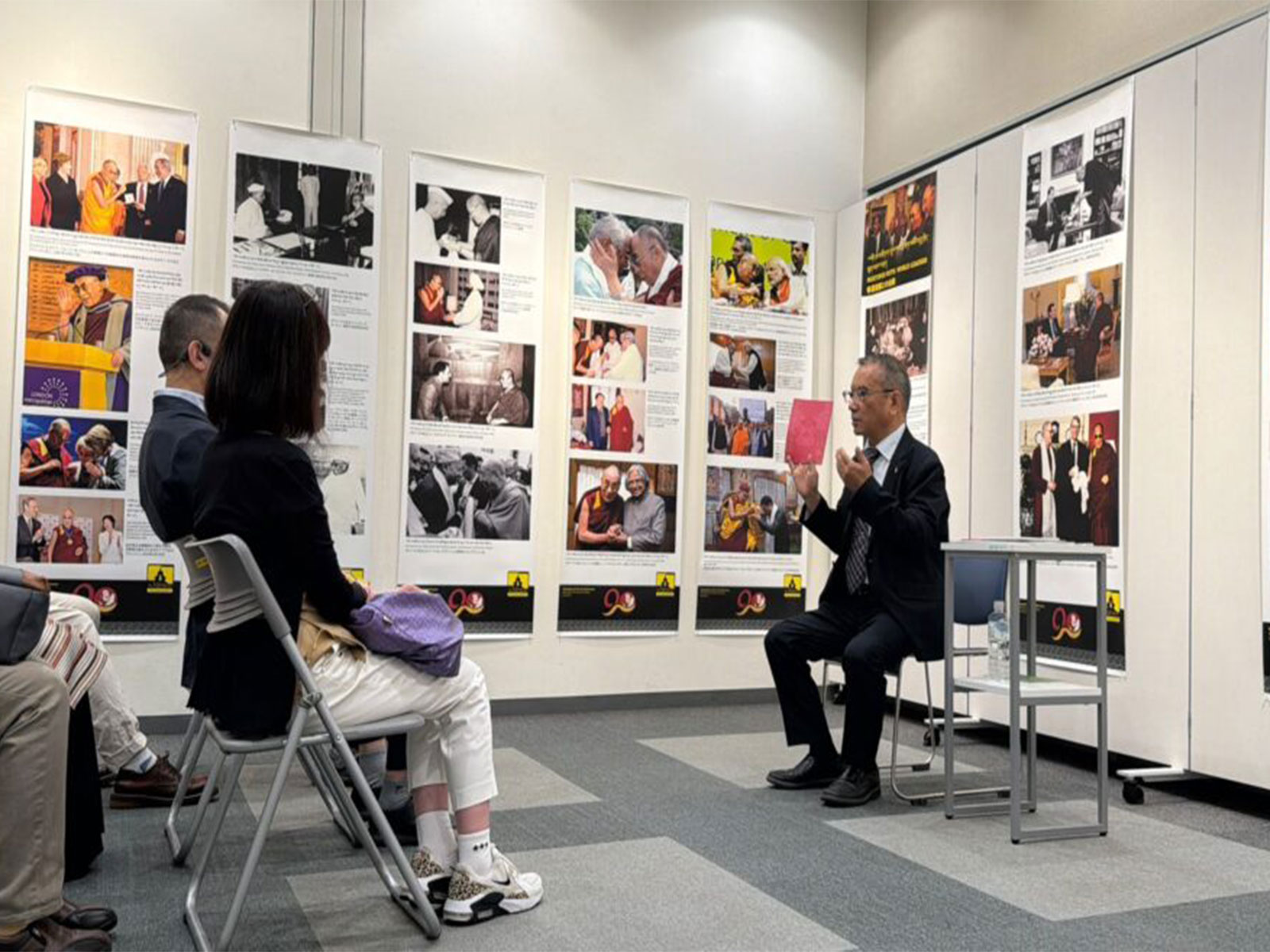
Tokyo [Japan], June 23 : Marking World Refugee Day, Tibet House Japan organised a two-day photo exhibition and a series of talks in Tokyo highlighting the history, culture and continuing challenges faced by the Tibetan people under Chinese rule, according to the Office of Tibet, Japan.
Held at the Bunkyo Civic Centre, the exhibition focused on the life and teachings of the Dalai Lama while drawing attention to the Tibetan refugee experience and the broader issue of preserving Tibetan identity in exile.
According to the Office of Tibet, Japan, the event coincided with the United Nations-designated World Refugee Day, observed annually on June 20 to honour refugees worldwide and reaffirm the global commitment to a compassionate world free from forced displacement.
The report said that Tibet came under Chinese military control in 1950, leading to widespread destruction and displacement. The report stated that more than 1.2 million Tibetans died, over 6,000 monasteries and nunneries were destroyed, and thousands of religious texts were lost. It adds that the Dalai Lama fled to India in 1959, followed by around 80,000 Tibetan refugees who sought refuge in India, Nepal and Bhutan.
In the event addressing visitors, Dr. Tsewang Gyalpo Arya, Representative of the Liaison Office of the Dalai Lama, outlined Tibet's historical and present-day situation and said the exile Tibetan community continues working to preserve its culture and advocate for freedom and justice.
According to the Office of Tibet, Japan, he explained the Dalai Lama's four lifelong commitments--promoting human values, religious harmony, preservation of Tibetan culture and the revival of the ancient Nalanda tradition as guiding principles for building a peaceful and compassionate global society.
Dr Arya also raised concerns over Chinese colonial boarding schools, saying nearly one million Tibetan children are being subjected to assimilation policies. Referring to China's recently introduced Ethnic Unity and Progress Law, he said it was aimed at the "elimination, assimilation, and destruction of the identity, language, and culture" of Tibetans and other minority communities.
According to the Office of Tibet, Japan, he announced that representatives of Tibetan, Uyghur, Southern Mongolian and Hong Kong communities would hold a discussion on July 1 on the law's implications.
The Office of Tibet, Japan, said the exhibition attracted more than 150 visitors, many of whom shared their experiences of travelling to Tibet and India or attending the Dalai Lama's teachings. Volunteers also briefed attendees on the Tibetan issue and distributed informational material on Tibet and the work of the office.