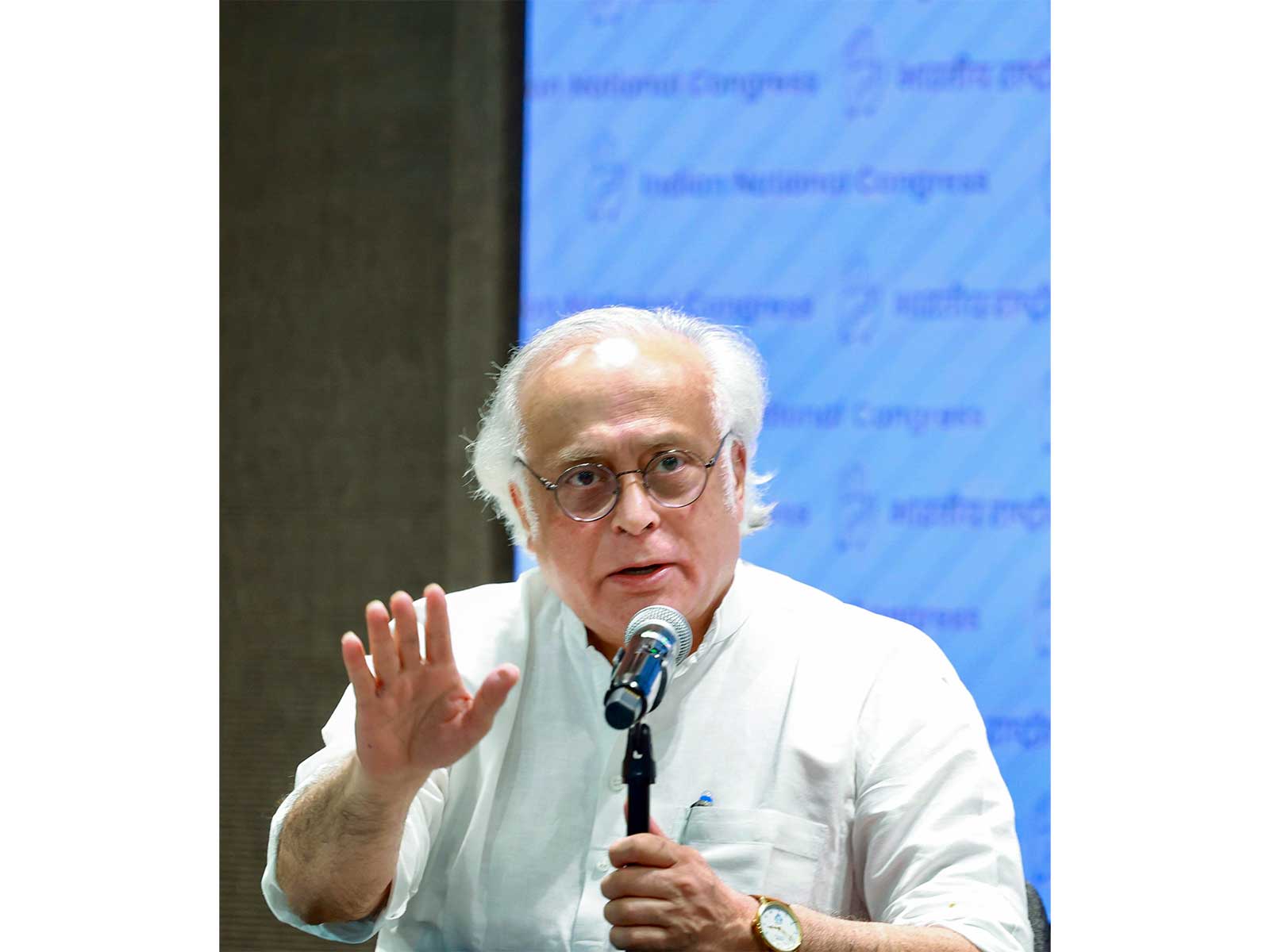
"Tu jahan jahan chale ga, mera saaya saath hoga": Jairam Ramesh highlights how Jawaharlal Nehru’s Bandung spirit continues to shape modern diplomacy
Sep 12, 2026
New Delhi [India], September 12 : Decades after Jawaharlal Nehru helped lay the groundwork for post-colonial international relations in Indonesia, Congress leader Jairam Ramesh on Saturday invoked the iconic Bollywood melody to highlight how the former Prime Minister's diplomatic legacy continues to loom large over contemporary global forums, most recently reflected in Paragraph 16 of the newly adopted BRICS New Delhi Declaration.
Referring to the explicit citation of the 1955 Asian-African Conference in the official declaration, Ramesh, in a post on X, pointed out that the "Bandung Spirit" remains an indispensable reference point for nations striving toward a fairer, more inclusive, and representative multilateral system.
"We recall the 1955 Asian-African Conference in Bandung, Indonesia, that proclaimed general principles, including equality, independence, non-intervention, and mutual benefit," states Paragraph 16 of the BRICS outcome document. "We stress that the Bandung Spirit serves as a reference in the pursuit of a fairer, more inclusive, and representative multilateral system," he said.
For Ramesh, the inclusion of Bandung in a modern multi-nation pact underscores a poetic reality: no matter how much time passes or how geopolitics shift, Nehru’s vision for the Global South remains an inescapable shadow walking side-by-side with modern diplomacy.
"Here are some jottings by Jawaharlal Nehru on the afternoon of April 22, 1955, at that historic meeting. Vineet Thakur recently wrote a fine piece on these and other jottings, doodles and notes of Nehru at Bandung. Remember that old Bollywood hit song Tu jahan jahan chale ga, mera saaya saath hoga," said the Congress leader.
https://x.com/Jairam_Ramesh/status/2098752248864194665?s=20
Drawing from historian Vineet Thakur’s analysis published in the Center for the Advanced Study of India (CASI) of Nehru’s private jottings on a Garuda Airlines slip pad during the 1955 summit, preserved at the Prime Minister’s Museum and Library in New Delhi, Ramesh framed the historical event not as a romanticised legend, but as a gritty, high-stakes diplomatic effort.
From Nehru obsessively tracking speech lengths (like Carlos Romulo’s 31.5-minute address) out of frustration over grandstanding, to scribbling his name in Urdu, Hindi, and English during moments of conference ennui, the archives reveal the human friction behind the formation of Third World solidarity.
Yet beneath those procedural exasperations lay monumental historical outcomes. Nehru’s handwritten notes captured key details missing from official records, such as Ahmed al-Shukeiri’s pivotal speech that transformed Palestine into a foundational Global South issue.
It was also on those same airline pad slips that Nehru drafted a moving tribute to Albert Einstein, who had written to Nehru just days before his death, urging him to negotiate with Zhou Enlai at Bandung to head off a Sino-American nuclear crisis. Nehru's backchannel efforts bore fruit when Zhou announced China's willingness to talk with the U.S. on April 23, 1955.
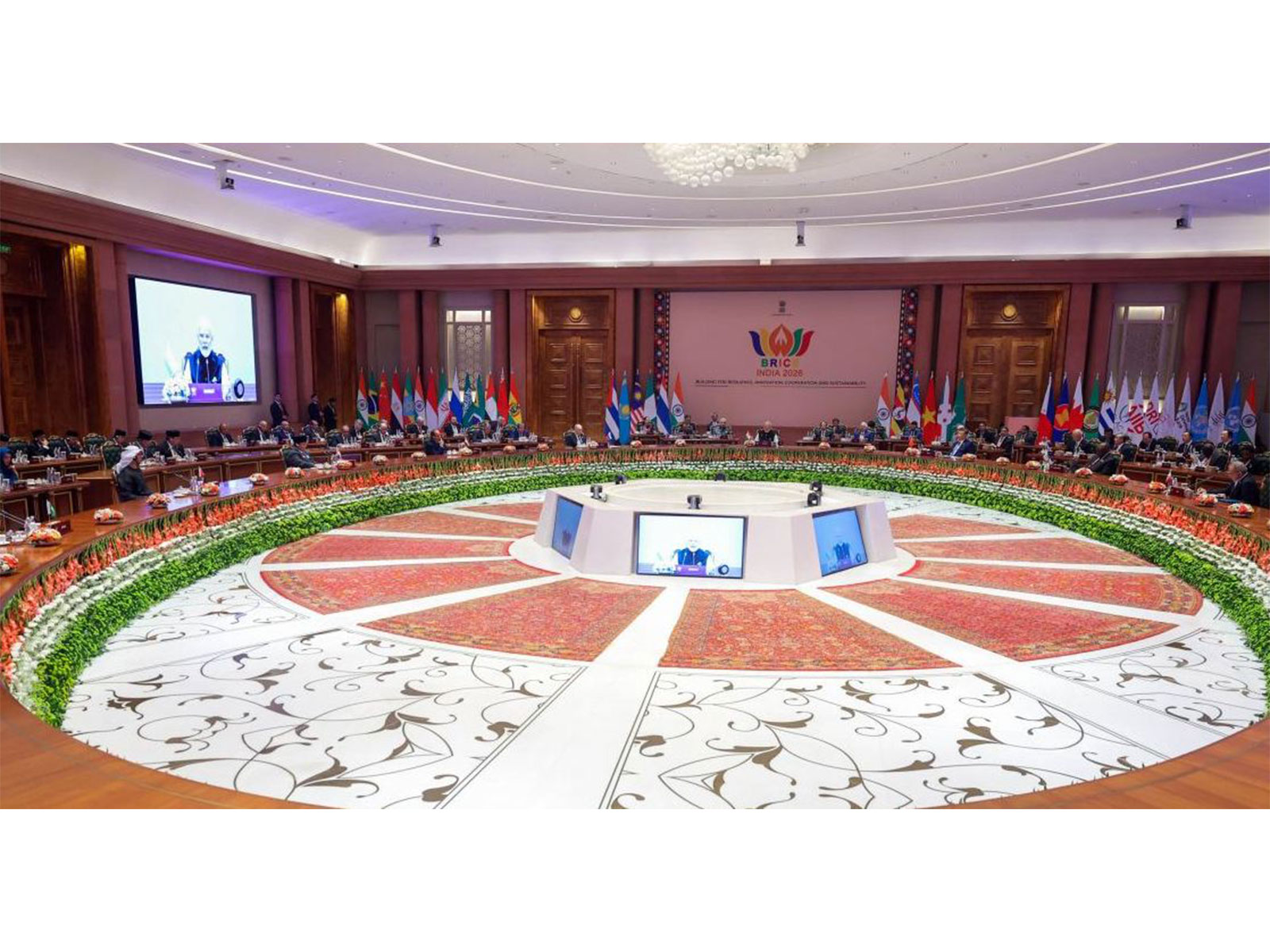
As BRICS leaders assemble today to demand structural reform in global governance, Ramesh emphasised that the principles forged in Bandung 71 years ago continue to provide the moral and strategic playbook for the developing world. Like the classic song promises, the shadow of Nehru’s statecraft continues to follow every step of the Global South's march on the world stage.
In April 1955, representatives from twenty-nine governments of Asian and African nations gathered in Bandung, Indonesia, to discuss peace and the role of the Third World in the Cold War, economic development, and decolonisation.
The core principles of the Bandung Conference were political self-determination, mutual respect for sovereignty, non-aggression, non-interference in internal affairs, and equality.
The BRICS countries on Saturday adopted the New Delhi Declaration 2026, backing the aspirations of India and Brazil to play a greater role in the United Nations, including its Security Council, while strongly condemning the April 2025 terror attack in Jammu and Kashmir and calling for zero tolerance towards terrorism.
The declaration, adopted at the 18th BRICS Summit in New Delhi, said China and Russia, as permanent members of the UN Security Council, reiterated their support for the aspirations of Brazil and India to play a greater role in the UN, including its Security Council.
The BRICS leaders also reaffirmed their commitment to reforming the UN Security Council to make it more democratic, representative, effective and efficient, with greater representation for developing countries.
On the economic front, the declaration voiced serious concern over the rise of unilateral tariff and non-tariff measures, saying such measures distort trade, threaten global supply chains and create uncertainty for international economic activity.
The grouping reaffirmed its support for reform of the World Trade Organisation and called for an open, equitable, transparent, fair, inclusive and rules-based multilateral trading system. It also advocated the immediate restoration of a fully functioning two-tier binding WTO dispute settlement mechanism.
The declaration comes as India hosts the 18th BRICS Summit in New Delhi on September 12-13, with India's Chairship guided by the theme “Building for Resilience, Innovation, Cooperation and Sustainability."