US House discusses Russia Sanctions Bill, recorded vote pending
Sep 16, 2026
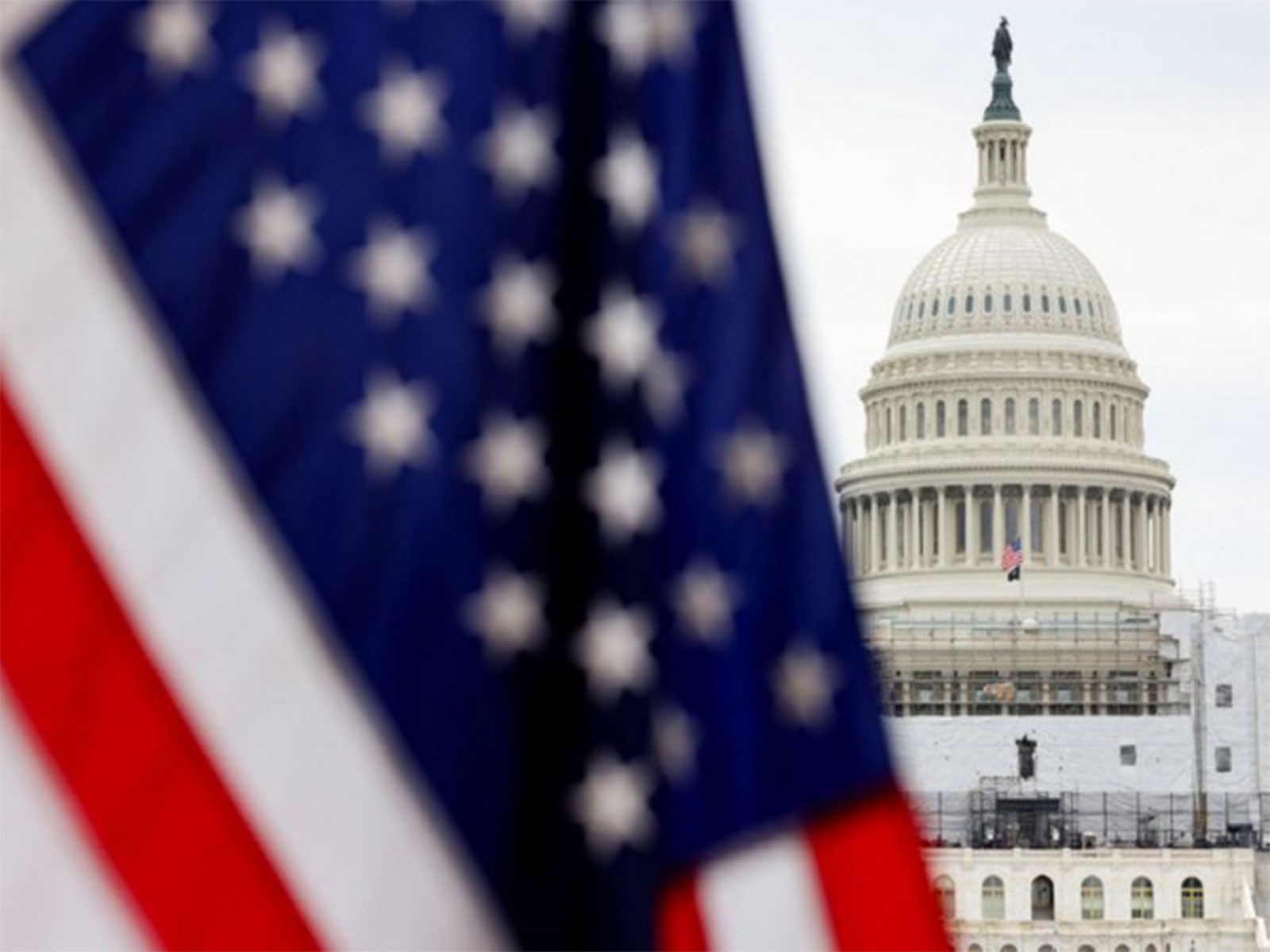
Washington, DC [US], September 17 : The US House of Representatives discussed the Lindsey O. Graham Sanctioning Russia and Iran Act of 2026 on Wednesday, a legislative proposal designed to impose further restrictive measures against Moscow and heighten economic pressure on nations maintaining Russian energy imports.
Introduced by Representative Jimmy Panetta, the bill, designated H.R. 5334, mandates visa restrictions and property-blocking penalties directed at designated Russian persons and corporate bodies, encompassing the Russian President alongside select military commanders.
The measure further bans fresh US investments within Russia, acquisitions of Russian sovereign debt, and transactions involving securities linked to specific Russian governmental entities on national US securities exchanges.
A central element of the draft legislation focuses on nations persisting with Russian energy purchases.
The legislation would mandate the President to escalate tariffs by as much as 100 per cent on merchandise brought into the United States from any state counted among the five primary importers of Russian petroleum or natural gas, provided that nation knowingly executes new procurement contracts for Russian energy following enactment.
This clause carries potential consequences for India, which persists as a primary importer of Russian crude.
Having already secured passage in the Senate, the measure would advance directly to President Donald Trump should the House complete its approval process.
The tariff clause does not enforce an automatic 100 per cent levy on India; rather, it grants the President discretionary authority, bounded by statutory conditions, to raise tariffs up to 100 per cent on goods originating from nations fulfilling the criteria.
During the parliamentary debate, specific Republican members stressed the necessity for intensified economic pressure against Russia alongside sustained American backing for Ukraine.
One Republican legislator asserted that what was characterised as "silent support" for the Russian and Iranian administrations must cease, calling on colleagues to back the bill as a tribute to the late Senator Lindsey Graham.
Representative Brian Fitzpatrick remarked that measures penalising Russia and aiding Ukraine warrant endorsement.
Conversely, expressing strong opposition during Capitol Hill proceedings, Representative Gregory Meeks criticised the proposed legislation, arguing that the measure grants excessive executive authority while failing to provide substantive aid to Ukraine.
Addressing the chamber, Meeks stated, "My opposition today is rooted in one simple reality. After hearing loud and clear from Americans about the impact of the president's disastrous tariff policies and the affordability crises in this country, we could not grant the president more tariff power that we know he will abuse."
The Democratic lawmaker contended that conservative projections indicate the bill's tariff mechanisms would impose an average cost of $3,000 per American household, noting this calculation assumes boundaries are maintained on top energy importers despite broader statutory latitude.
Highlighting economic pressures faced by citizens, Meeks questioned, "At a moment when American families are already facing soaring gas prices, raising mortgage rates, high inflation, why would we hand the tariff man, as he calls himself, new authority to impose even more inflationary tariffs without clear guardrails?"
Addressing strategic aspects of the proposal, he criticised the lack of direct support provisions, "And what do the Ukrainians get in return? No security assistance, no air defence, no reconstruction support for war-ravaged communities. This bill, as drafted, does not require tougher sanctions on Russia. The historically broad waiver language makes imposing sanctions essentially optional."
Questioning executive resolve regarding Moscow, Meeks noted disparities in enforcement records, pointing out that the current administration had implemented significantly fewer sanctions designations compared to preceding years, alongside instances of waived energy sanctions and recent diplomatic engagements involving senior officials.
Advocating for legislative revisions rather than outright rejection, Meeks remarked, "The good news is we do not have to go back to the drawing board. We can make simple yet critical changes to this legislation, changes that I and others have proposed. Send it back to the Senate and then to the president's desk all before the end of this month."
Emphasising the dual objectives of supporting foreign allies and safeguarding domestic consumers, he stated, "We can support Ukraine. We can hold Russia accountable. And we can store, we can protect the American people from higher costs as the grocery store and at the pump. We just have to have the courage and the common sense to insist, to insist on a better bill."
Following the debate, the chamber conducted a voice vote regarding concurrence with the Senate amendments to H.R. 5334.
The presiding officer declared that the ayes had secured the majority, though Representative Meeks requested the yeas and nays.
The Chair subsequently deferred further action, leaving a formal recorded vote pending.
Aside from its primary Russian sanctions framework, the legislation prolongs the duration of the Iran Sanctions Act of 1996 through to 2031, while broadening federal tax relief provisions covering specific educator expenses to encompass qualified early-childhood educators.