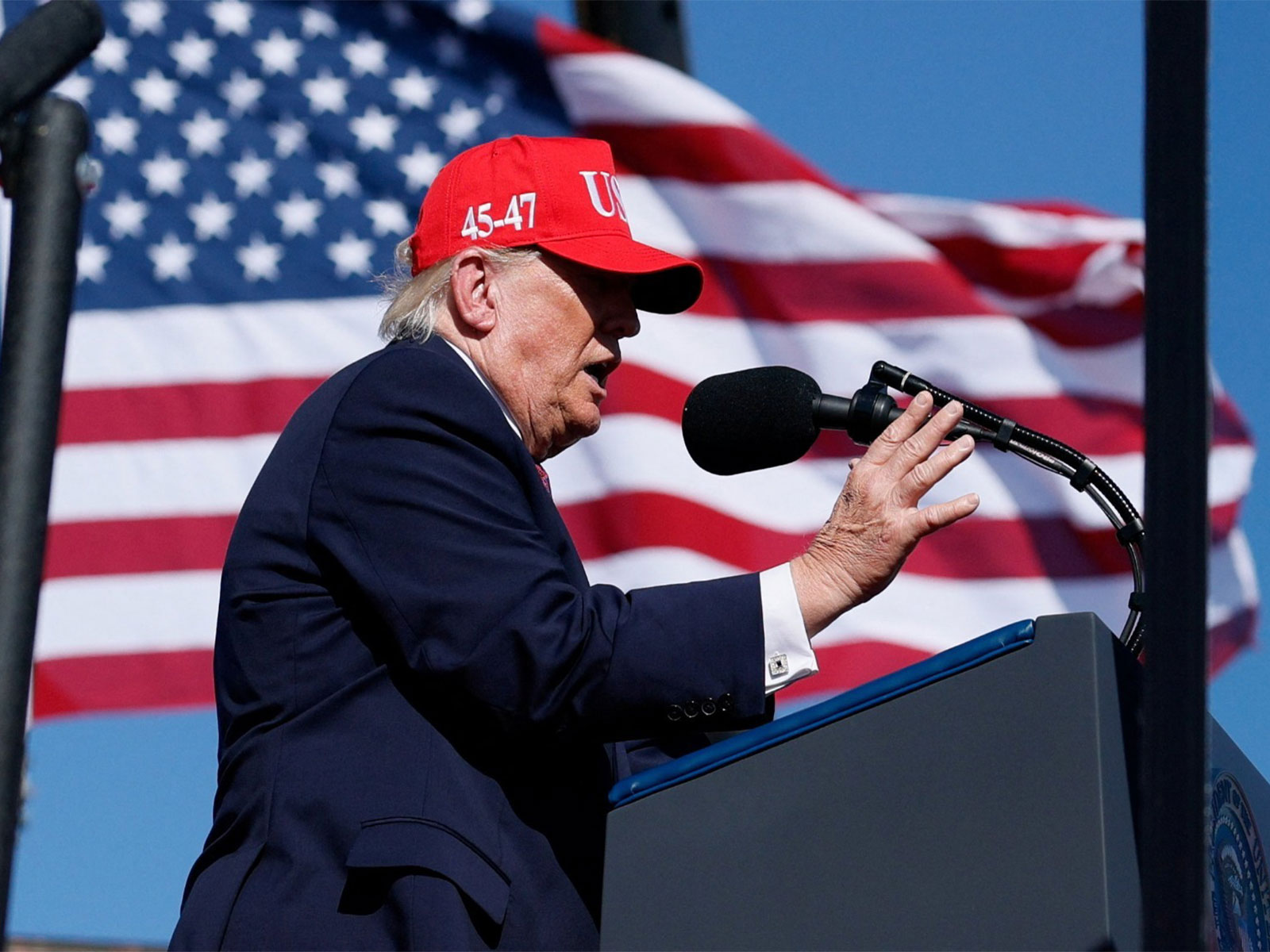
"Who wants to be President of Iran": Trump asks during Arizona rally
Oct 15, 2026
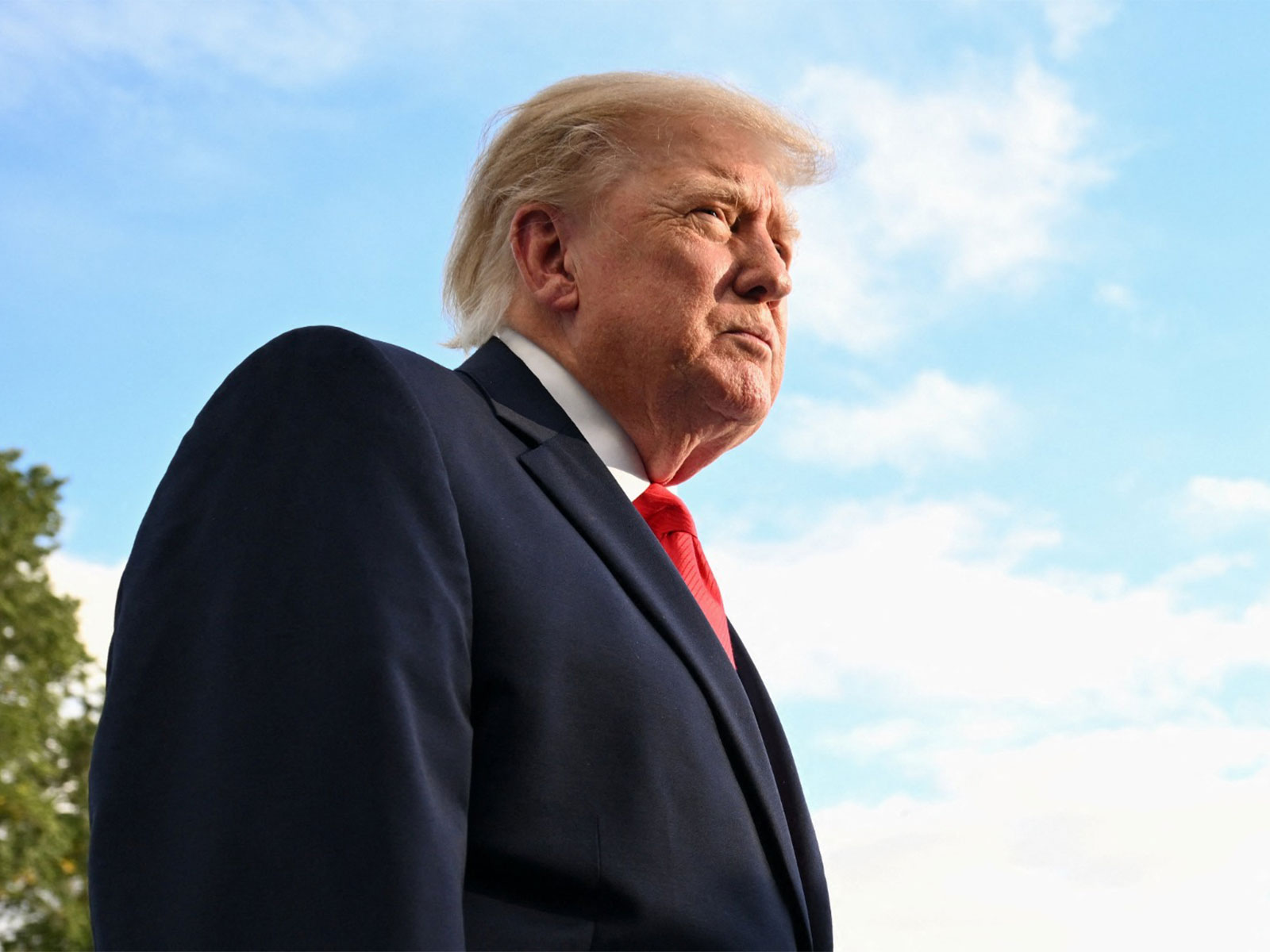
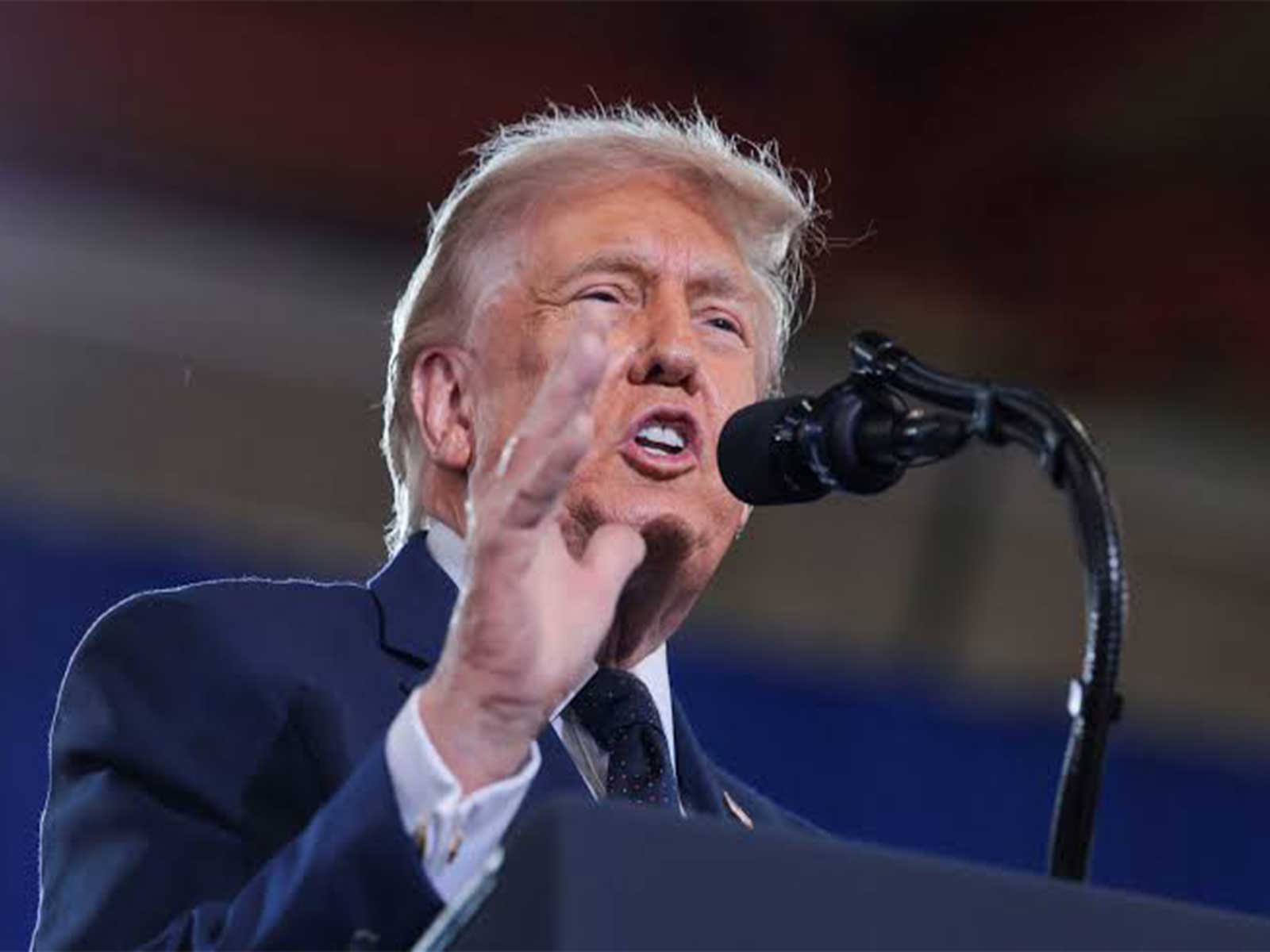
Arizona [US], October 15 : US President Donald Trump on Wednesday (local time) said that he may have “gone a little too far” in his remarks about Iran while asking who would want to become the country’s president.
As per Fox News, speaking at a campaign rally in Arizona, Trump said, “Who would like to be the president of Iran? Please raise your hand. No. I don't want to be. I probably went a little too far. I'm sorry because I don't know who the hell we're dealing with."
Earlier, during his campaign in Alaska, Trump said, "Wait till you see what we do to Iran. We're going to we're going to do a number. Wait till you see... The big thing is they were not going to have a nuclear weapon and they won't. That's buried under thousands of tons of rock."
Meanwhile, Iran’s Parliament Speaker Mohammad Bagher Ghalibaf, one of Tehran's top negotiators, said the country’s military capabilities, including its firepower, offensive power and air defence, had increased significantly between the 12-day war and the more recent conflict with the United States and Israel.
In his interview with the Iranian people, shared through his official Telegram channel, Ghalibaf said, “Becoming strong is not just a military dimension. Deterrence has variables, and naturally, an important priority is the military priorities that we have seen; for example, our firepower, our offensive power, and our air defence have increased significantly between the 12-day war and this recent war, becoming more effective and more massive.”
He further claimed that Iran’s air defence capabilities had improved substantially and that its adversaries had suffered significant damage, citing drones and the F-35 aircraft as examples.
“The enemy mistakenly felt that Iran was weak and attacked. We must frustrate the enemy by becoming stronger in order to achieve sustainable deterrence,” Ghalibaf said, identifying military power, control over the Strait of Hormuz, the axis of resistance, national cohesion and what he called “a hard core of 90 million” people as components of sustainable deterrence.
Ghalibaf said Tehran sought to establish a new equation based on war, negotiation and deterrence, instead of the traditional cycle of war, negotiation and peace.
“Instead of the cycle of war, negotiation, and peace, we create a new equation: war, negotiation, and deterrence,” he said, adding that Iran would fight when necessary, strengthen its preparedness and seek to convert military gains into political outcomes.
“Our goal is to create deterrence through strengthening and to solidify this strengthening in the enemy's mind,” Ghalibaf said.
He also defended Iran’s approach of combining military action with negotiations, saying the objective was to compel the United States to accept what Tehran considers the legitimate demands of the Iranian people.
“When we say that we are both fighting and negotiating, we do not mean that we are waging endless war or negotiating constantly; rather, we mean that we are waging war to make the enemy desperate and force him to give in to the legitimate demands of our nation,” he said.
Referring to the US proposal presented to Iran, Ghalibaf accused Washington of violating its commitments and said it should face consequences.
“America must be punished and change its behaviour and be made to understand that it must accept the legitimate demands of the Iranian people,” he said.
Ghalibaf also claimed that the understanding reached with the United States had strengthened Iran’s military forces and Hezbollah in Lebanon, providing Tehran with additional opportunities and resources to consolidate its capabilities.
In a separate post on X, Ghalibaf criticised the Trump administration over rising inflation in the United States and shared a CNN news report titled, “Inflation rose to 3.7 per cent last month in last snapshot of consumer prices before the midterms”.
https://x.com/mb_ghalibaf/status/2110423134398726467
He said, "Let’s 'play the percentages'. Not in odds, but in the % increases. btw, 'They have nothing in 2 weeks,' 'Wells explode in 3 days,' 'Economic D-Day' all passed. Time’s relative; turns out it could be irrelevant. Nobel in Practical Physics for Treasury?"
According to the CNN report shared by Ghalibaf, the Consumer Price Index rose 0.6 per cent in September from the previous month, taking annual inflation to 3.7 per cent from 3.4 per cent in August and exceeding economists’ expectations of 3.6 per cent.
The report said core CPI, which excludes volatile food and energy prices, increased 0.3 per cent from August and 2.6 per cent year-on-year, also exceeding economists’ expectations of 0.2 per cent and 2.5 per cent, respectively.
The CNN report said rising inflation was eroding Americans’ wage gains and intensifying affordability concerns ahead of the US midterm elections.
“We’re in a world now of inflation at 3.7 per cent and wage gains for the typical American at 3 per cent; that’s a big gap,” Heather Long, chief economist for Navy Federal Credit Union, told CNN.
“The inflation pressures are in quite a few areas, and it’s tricky to cut back. The anger about the economy that many Americans feel has justification,” she added.