Yashar party's Eisenkot officially receives mandate from President Herzog to form Israel's next government
Nov 08, 2026
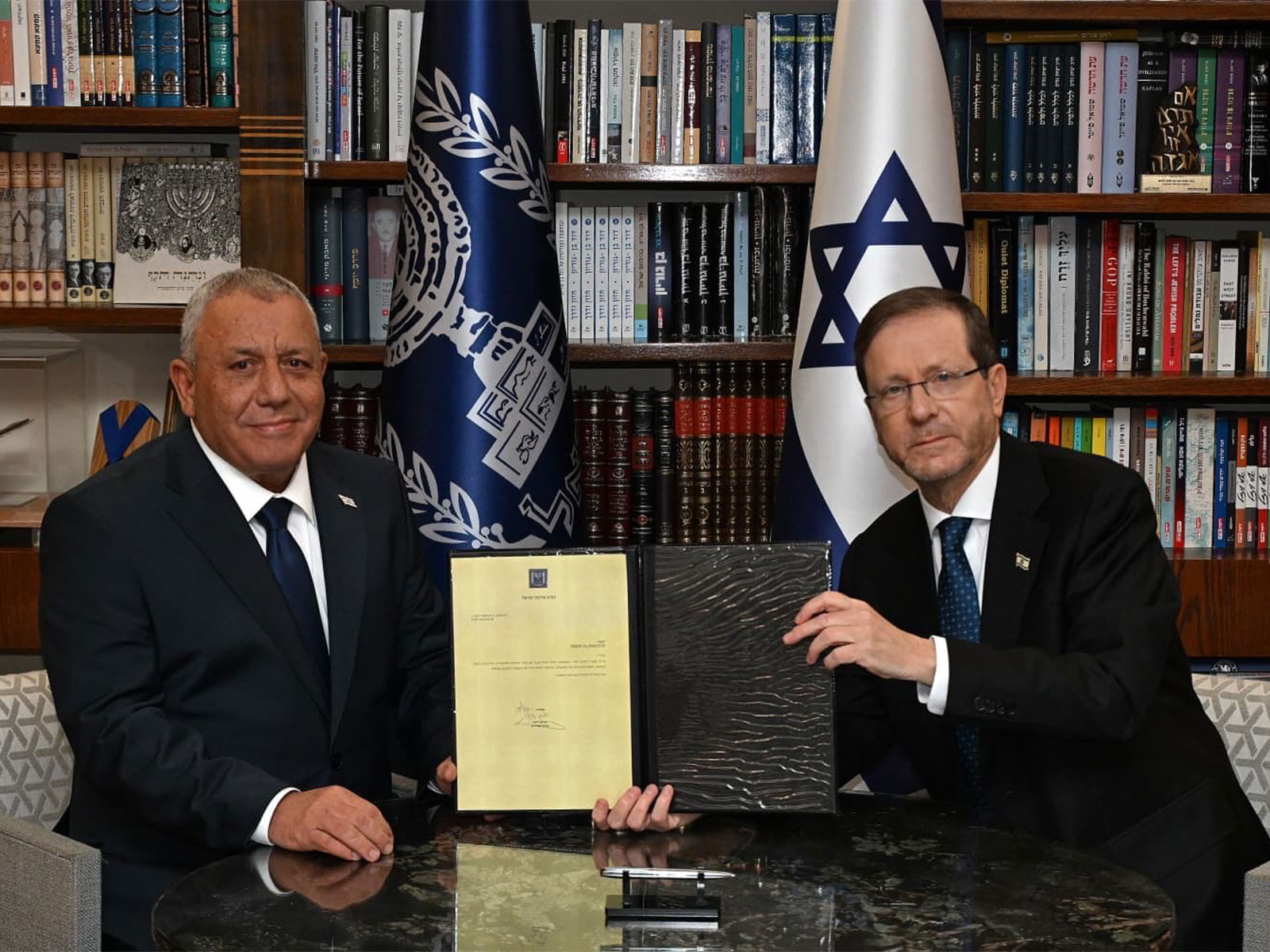
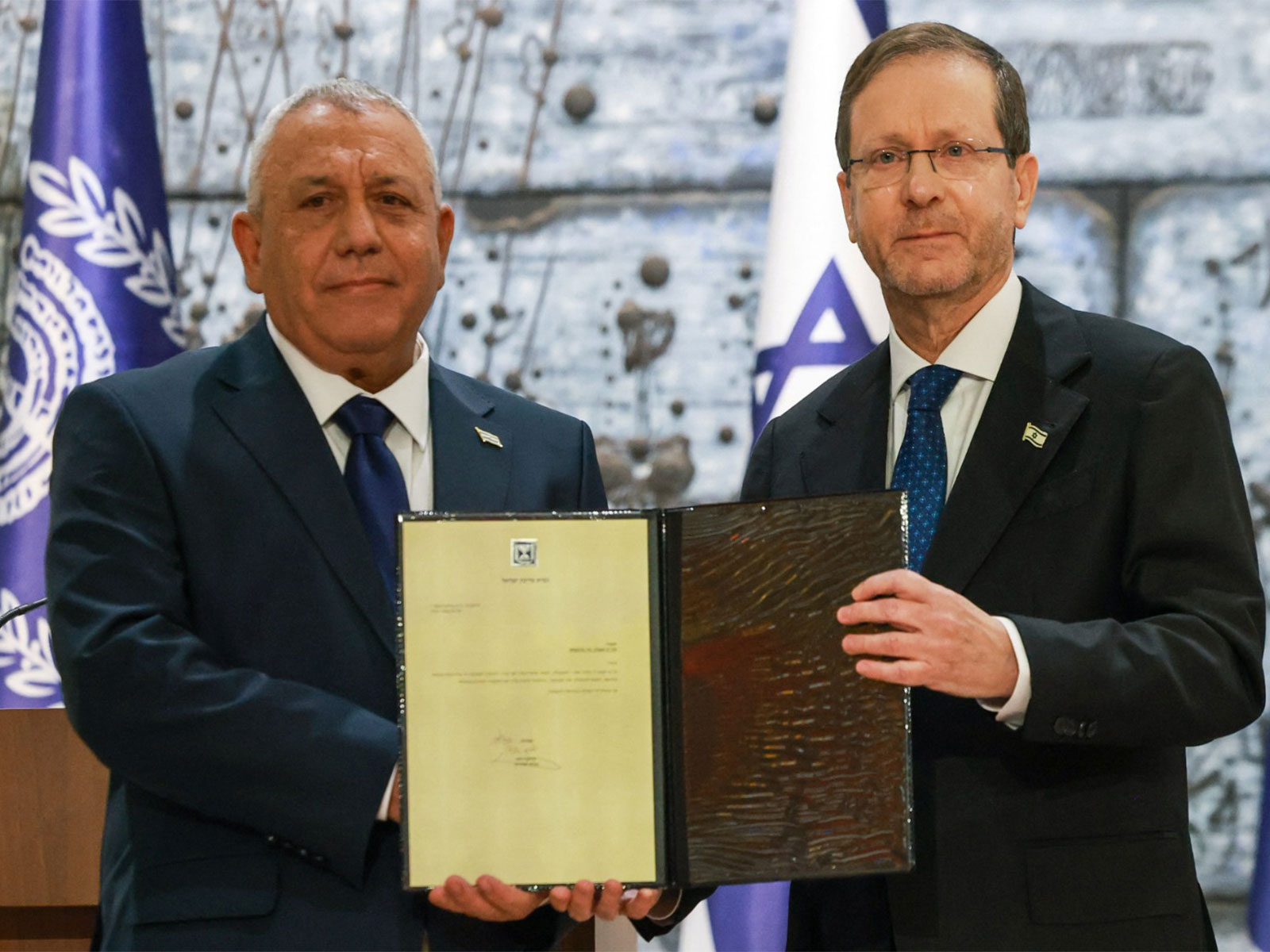
Tel Aviv [Israel], November 8 : Yashar party chairman Gadi Eisenkot on Sunday officially received the mandate from Israeli President Isaac Herzog to form the country's next government, formally beginning the process of coalition negotiations to replace Prime Minister Benjamin Netanyahu, as the opposition bloc seeks to consolidate parliamentary support amid differences over the composition of the proposed administration.
Eisenkot received the mandate during an official ceremony at the President's Residence, following consultations conducted by Herzog with representatives of political factions in Israel's 120-member Knesset.
Under the mandate, Eisenkot will have 28 days to negotiate with prospective coalition partners and form a government. However, Herzog may grant an extension of up to 14 additional days if required.
The development follows a round of consultations in which factions representing 67 Members of the Knesset (MKs) recommended Eisenkot to lead the next government, while representatives of 46 lawmakers backed incumbent Prime Minister Netanyahu.
A faction comprising seven lawmakers chose not to recommend either candidate.
The President's Office had earlier confirmed the decision in a statement, saying, "President of the State of Israel Isaac Herzog has decided to task the chairman of the Yashar party, Gadi Eisenkot, with forming the government."
The statement further noted that Herzog's decision came after consultations with representatives of the various parliamentary factions and discussions with political leaders, including Netanyahu and Eisenkot.
The 67-seat backing for Eisenkot comprises 48 seats from the Jewish-led opposition bloc, including Yashar, Together, The Democrats and Yisrael Beiteinu, along with eight seats from the Arab Ra'am party and 11 seats from the Joint List.
The Joint List's unanimous decision to recommend Eisenkot, alongside the endorsement from Ra'am, contributed to his securing the backing of a majority of lawmakers who participated in the presidential consultations.
Meanwhile, Netanyahu received recommendations from factions representing 46 seats, down from the 53 seats secured by his right-wing bloc in the elections. The ultra-Orthodox United Torah Judaism (UTJ) party chose not to recommend either candidate, with its seven lawmakers abstaining from backing a contender.
With the mandate now formally conferred, Eisenkot faces the challenge of bringing together different political factions and securing the parliamentary backing necessary to establish a government.
However, disagreements within the opposition-led change bloc over the proposed coalition's structure and the role of Arab-led parties have emerged as a major challenge in the government formation process.
According to The Times of Israel, Eisenkot and Yisrael Beytenu leader Avigdor Liberman are scheduled to meet on Monday to discuss their differences over the formation of the next government and coordinate the parliamentary agenda of the change bloc.
The meeting is expected to take place a day before the newly elected Knesset is sworn in, making the discussions significant for the opposition bloc's efforts to coordinate its next steps in parliament.
The report, citing Hebrew media reports, said the meeting between Eisenkot and Liberman is aimed at resolving disagreements that could affect the formation of a new government and the opposition's broader parliamentary strategy.
The principal point of disagreement between the two leaders concerns the possibility of establishing a minority government or an administration dependent on the support of Arab-led political parties.
Liberman has explicitly ruled out backing either a minority government or a government reliant on Arab-led parties, a position that has significantly narrowed Eisenkot's options for assembling a viable parliamentary majority, according to The Times of Israel.
The Yisrael Beytenu leader has instead indicated a willingness to negotiate with ultra-Orthodox parties, marking a departure from his longstanding opposition to cooperating with them.
Liberman has also suggested that lawmakers from Netanyahu's Likud party could defect from the incumbent Prime Minister's parliamentary bloc, potentially creating another route for securing the numbers required to form a government.
However, his apparent change in position regarding cooperation with ultra-Orthodox parties has drawn criticism and fuelled accusations that he is obstructing Eisenkot's efforts because of personal ambitions to become Prime Minister. Liberman has denied these allegations.
The report further stated that Eisenkot is expected to meet B'Yachad chairman Naftali Bennett, later on Sunday, ahead of his scheduled discussions with Liberman.
Bennett has so far remained silent amid the exchanges between Eisenkot and Liberman over the possible composition and parliamentary arrangements of the proposed government.
The expected meetings come at a crucial stage in the coalition-building process, as Eisenkot seeks to reconcile differences among parties that have recommended him to Herzog while working towards securing the necessary parliamentary support.
The disagreement over whether a government could rely on Arab-led parties remains one of the central obstacles in the negotiations. While Ra'am and the Joint List together account for 19 of the 67 seats that recommended Eisenkot, Liberman has ruled out supporting a government dependent on such parties.
This position presents Eisenkot with the challenge of finding an arrangement that can accommodate the demands of different political partners while maintaining sufficient support in the Knesset.
The upcoming swearing-in of the new Knesset is also expected to form an important backdrop to the discussions, with opposition leaders seeking to coordinate their parliamentary agenda and determine the way forward in the government formation process.
Eisenkot, a retired military chief who leads the centrist Yashar party, now has the statutory period granted by the President to negotiate with potential coalition partners and attempt to secure the parliamentary backing required to replace Netanyahu.
While his nomination received the support of 67 lawmakers during the presidential consultations, the differences among prospective partners indicate that securing recommendations and reaching a final coalition agreement remain separate challenges.
The meetings with Liberman and Bennett are therefore expected to be important in determining the next steps of the change bloc as Eisenkot begins his efforts to form Israel's next government.