China's race to dominate AI
Sep 22, 2026
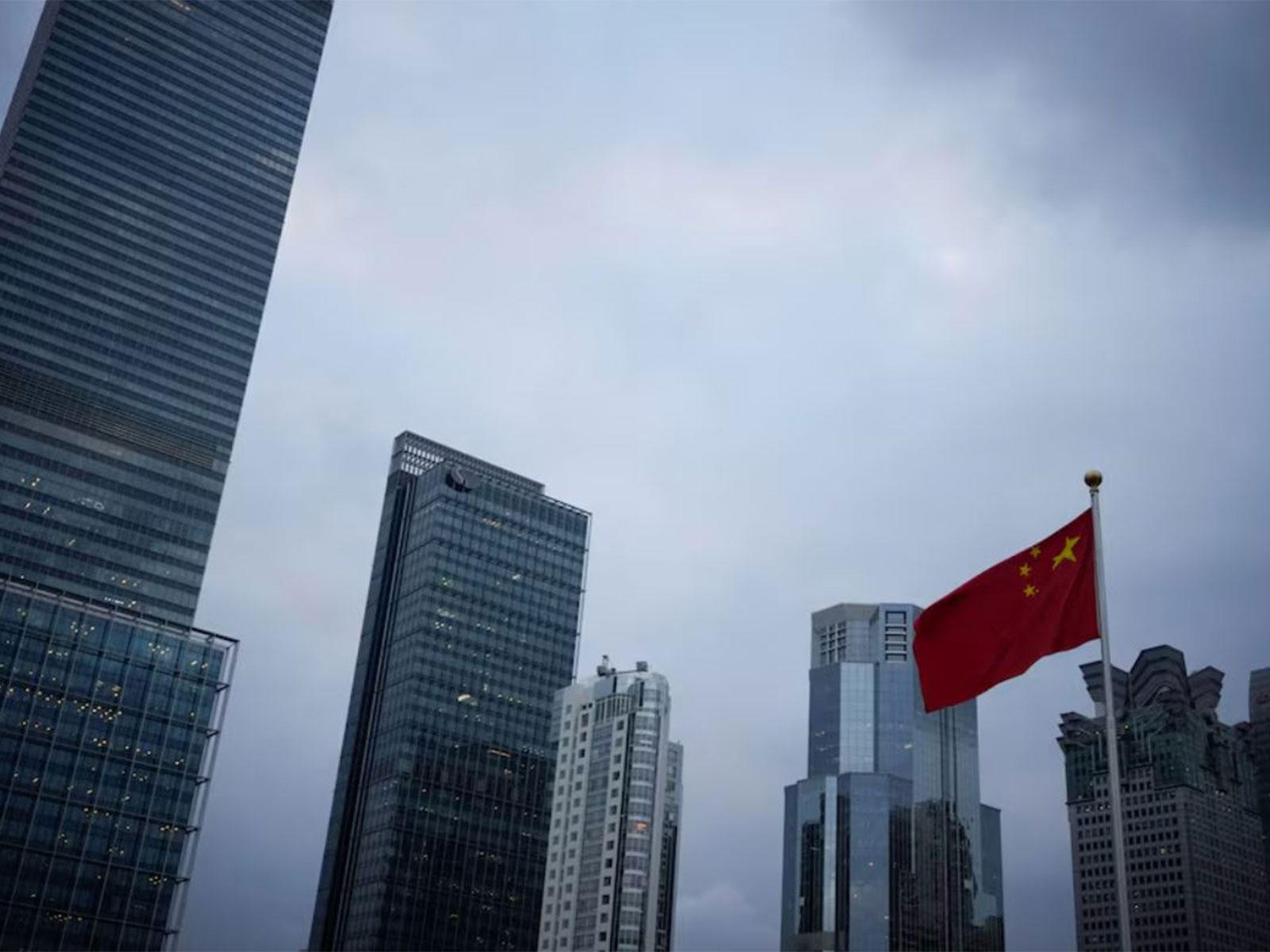
Hong Kong, September 22 : China made its intentions regarding artificial intelligence (AI) known many years ago. In 2017, for example, the country’s Next-Generation Artificial Intelligence Development Plan outlined a quest to become the “world’s primary AI innovation center” by 2030.
Beyond that, the Chinese Communist Party (CCP) is seeking to dominate and control AI, and to regulate the international rules surrounding its use. In fact, AI is a core pillar of “comprehensive national power” for China, since it wants to gain enduring advantage over competitors.
Given how China already tightly controls the internet, preventing its citizens from accessing the world beyond the Great Firewall, Chinese ascendancy in AI should also be of great alarm.
As we shall see, China’s aim in regulating AI is primarily about maintaining the authority of the CCP.
The rapid spread of this technology is causing angst within the CCP, but for different reasons compared to the rest of the world.
China’s AI Safety Governance Framework stated AI is “giving rise to new disruptive, cross-domain and global security risks. It is significantly enhancing the automation, scalability and sophistication of cyberattacks, reshaping the traditional landscape of cybersecurity offence and defence.”
The framework continues, “At the same time, as AI becomes increasingly connected to the physical world, security risks originating in cyberspace may propagate into the physical domain. More profoundly, AI has demonstrated a self-accelerating trend of model and algorithm autonomous learning, optimisation and recursive self-improvement. Whether the speed and direction of technological evolution may exceed human anticipation and control demands attention and vigilance.”
On 14 September 2026, Chen Yixin, China’s Minister of State Security, identified six major risks in the latest issue of China Cybersecurity Magazine. In the ministry’s first public warning about the severe threat AI poses, Chen unsurprisingly listed regime security first.
The worry is that hostile forces might use deepfakes and AI-generated material to produce political rumours, spread harmful information or incite social division. Such public-opinion and cognitive warfare could undermine the CCP.
The second threat is to critical infrastructure, as AI can uncover vulnerabilities and produce attack paths for hacking operations. Thirdly, Chen named data leakage. Foreign intelligence agencies can use AI-powered web crawlers, data mining and profiling to collect sensitive information, including critical national data, trade secrets and personal information.
Fourthly, the minister listed closed technological ecosystems as a risk. This might see countries like the USA, which already possess AI advantages, invoking “national security”
concerns to impose technology controls, monopolise technical standards and build closed- source ecosystems.
Fifthly, Chen identified structural challenges to social governance. Data poisoning and black box algorithms could amplify biases, create public mistrust, raise questions of accountability and outpace existing laws. Finally, the Minister of State Security warned of a transformation in warfare, where AI pushes intelligentization and moves from the periphery to the core for precise sensing and targeting. It is almost ironic, then, that several years ago the People’s Liberation Army was already highlighting the need for digitisation and intelligentization.
There is consistency in China’s position, however. Even as the West hotly debates the pros and cons of AI, Beijing is urging caution but for quite different reasons.
Add to this Anthropic’s 156-page threat intelligence report published in September, which fingered China-based actors and AI firms for misusing its Claude AI models for illicit model distillation, cyber espionage and surveillance of overseas dissidents. This revelation acutely embarrassed China.
Ryan Fedasiuk, a Fellow at the American Enterprise Institute, posited this about Anthropic’s report: “Not only does it document a world-historic Chinese counterintelligence failure – but it publicly, personally embarrassed China’s security services on the front page of every newspaper in the world. This was a huge, huge deal for China. It will fundamentally alter the relationship between Chinese AI labs and the state.” He even expects state reprisals against those Chinese companies caught routing sensitive requests to Claude.
Fedasiuk continued, “Embarrassing China’s security services and putting a target on the back of Chinese labs engaging in distillation is surely an effective deterrent to that practice. But I also think this partly explains what we’re seeing with Chinese state media’s hostility toward Anthropic and Dario [its CEO] in particular. They view Anthropic not just as the tip of the American AI spear, but as a bad-faith actor gung-ho on smearing and destabilising China’s political system. It would be unfortunate if this personal, political animosity were now bleeding into wider discussions of US-China coordination on AI safety – when, in fact, I do think the party cares about AI risk, and will continue to care about AI risk.”
AI has been in the news because of dire warnings from employees of US AI tech firms about a pending apocalypse. The main danger is that recursive self-improvement may reach a tipping point, where AI is clever enough to improve itself without needing or desiring human oversight, thus threatening human control.
Anthropic’s CEO therefore proposed slowing down and more carefully controlling AI development. Others such as Sam Altman of OpenAI and Elon Musk were in accord. China, on the other hand, is alarmed at such collegiate agreements.
This fear was evident in a recent China Daily editorial that complained about US companies ganging together. It accused the USA of making a coordinated play as “a response to Chinese competition and to the regulatory pressure coming from Washington. Its aims were threefold: to blunt China’s AI advance, to win a favourable policy environment at home, and to keep investors’ enthusiasm for US AI alight.”
The editorial added, “The proposed coordination among the three companies sounds rather like a club whose membership rules have been drafted before the guest list is announced. A global AI safety framework that excludes China is not quite global.”
And this is the crux of the matter. China does not want to be left on the outside, for it seeks to be controlling and leading how AI is regulated and rolled out.
Alex Krasodomski, Director, Digital Society Programme at Chatham House, acknowledged Chinese concerns, as well as the need to manage AI. He remarked, “It must not be a blunt instrument used to crush competition to current US AI leaders. And it will not be possible to address without some kind of US-China agreement.”
He elaborated: “But the current narrative, so heavily predicated on maintaining US advantage over China, makes this more difficult.” Examples of this are industry leaders saying democracies must maintain a lead over China, and accusing Beijing of a less rigorous approach to AI safety. Furthermore, “US President Donald Trump presents AI as a zero-sum game, choosing instead to focus on winning the AI race: ‘whoever wins AI, wins’.”
Krasodomski noted too, “Xi’s push to advance China’s vision of AI governance, largely in competition with Washington, will undoubtedly fuel the sense of an AI arms race gathering pace, which will hardly act as a brake on the speed of development. AI will be on the table when Trump and Xi meet in DC later this month. Some kind of progress is not impossible. But while leading voices in both countries are doubling down on the need to outcompete one another, it will require a monumental effort to broker an agreement.”
Even as China articulates its vision for the principles underpinning how AI works and how it should be governed internationally, one challenge it faces is that its AI models do not have the reach and following that Western ones such as OpenAI’s ChatGPT, Google or Anthropic’s Claude do.
There are efforts to change that, though. In July, Beijing-based firm Moonshot AI launched Kimi K3, a new large language model (LLM). It differs from Western ones in that it is open-weight, allowing users to download and modify it for their own purposes. In contrast, Western LLMs are generally closed-weight, in that they cannot be altered.
Making open-weight and open-source models available is proving a successful strategy for China. For example, Alibaba’s Qwen models have already chalked up nearly one billion downloads. This is the international footprint and influence that China needs to set rules globally.
China also launched the World Artificial Intelligence Cooperation Organization (WAICO) in July, along with 28 other nations. Its headquarters is in Shanghai. This evinces another Chinese strategy to woo countries of the Global South, and to use WAICO to create norms for AI governance. Chairman Xi Jinping promised in a speech to “help Global South countries with capacity building to bridge the AI and digital divides” and “prevent creating new historical injustice in AI”.
James Kynge, Senior Research Fellow for China and the World at Chatham House’s Asia-Pacific Program, also noted, “Another feature of China’s vision for global AI governance is that it should remain under human control, resisting a version of AGI – artificial general intelligence – in which AI models train themselves autonomously and create a super-intelligent system that is beyond human control.”
Most pertinently, Kynge went on, “Human control in China’s context effectively means under the control of key communist party bodies such as the Cyberspace Administration of China. In his WAICO speech, Xi said that laws, regulations, technological monitoring and emergency response systems should be put in place to strengthen security.”
Despite the progress China is making with its vision for AI, Kynge highlighted another challenge, which is its “moves to potentially limit the transfer overseas of key data for the training of Chinese LLM models”. The Chinese government is undecided whether foreign users should be allowed to download Chinese AI model weights.
“Such restrictions would reduce the appeal of Chinese LLMs, potentially undercutting their global popularity,” the Chatham House academic predicted.
Yet another challenge is AI’s capacity to take away people’s jobs. Unemployment is already a vexing issue in China, with 320 million people alone working in its “gig economy” without labour rights or social welfare. If AI compounds this, creating greater unemployment, this poses a serious risk to the CCP since it increases social unrest.
Selina Xu, a Singaporean-born commentator on AI, argued, “Beijing is unlikely to agree to some sort of pause or pacing because: (1) they already see themselves as being slowed down forcibly by US export controls/containment and in the position of the laggard catching up. (2) AI is one of the key ‘new quality productive forces’ that Beijing needs to drive productivity gains and mitigate slowing economy headwinds. (3) Chinese labs aren’t calling for it either – their top priority is survival and profitability amid fierce domestic competition, and they're generally burdened by all the regulatory compliance that already exists (to advocate for international policy of this sort is also seen as overreaching into the domain of the government).”
So, China’s global AI governance framework is less about managing risks and more about ensuring a non-Western influence is in the AI domain. Interestingly, nowhere has China called for greater cooperation with the USA. A global governance framework would require this, but Beijing has precious few suggestions on how this could occur.
Greater cooperation with the USA is at the bottom of China’s list of priorities, but at the top is upholding the CCP’s overall leadership. Thus, China’s understanding of AI safety is very different to that of the Western world.
Returning to Chen, the Minister of State Security, and his warnings, his solution is this: “Party control over the internet,” “party control over data,” and “transform the advantages of party leadership into the effectiveness of AI governance”.
For China, it is not a question of AI versus not having AI. Nor is it a strategic competition between China and the USA. Instead, it is a contest between the USA and the CCP for domination of AI, data and information, for this will determine the future of society. Perhaps Trump is right after all – whoever wins AI, wins. And the Chinese Communist Party just cannot afford to lose.