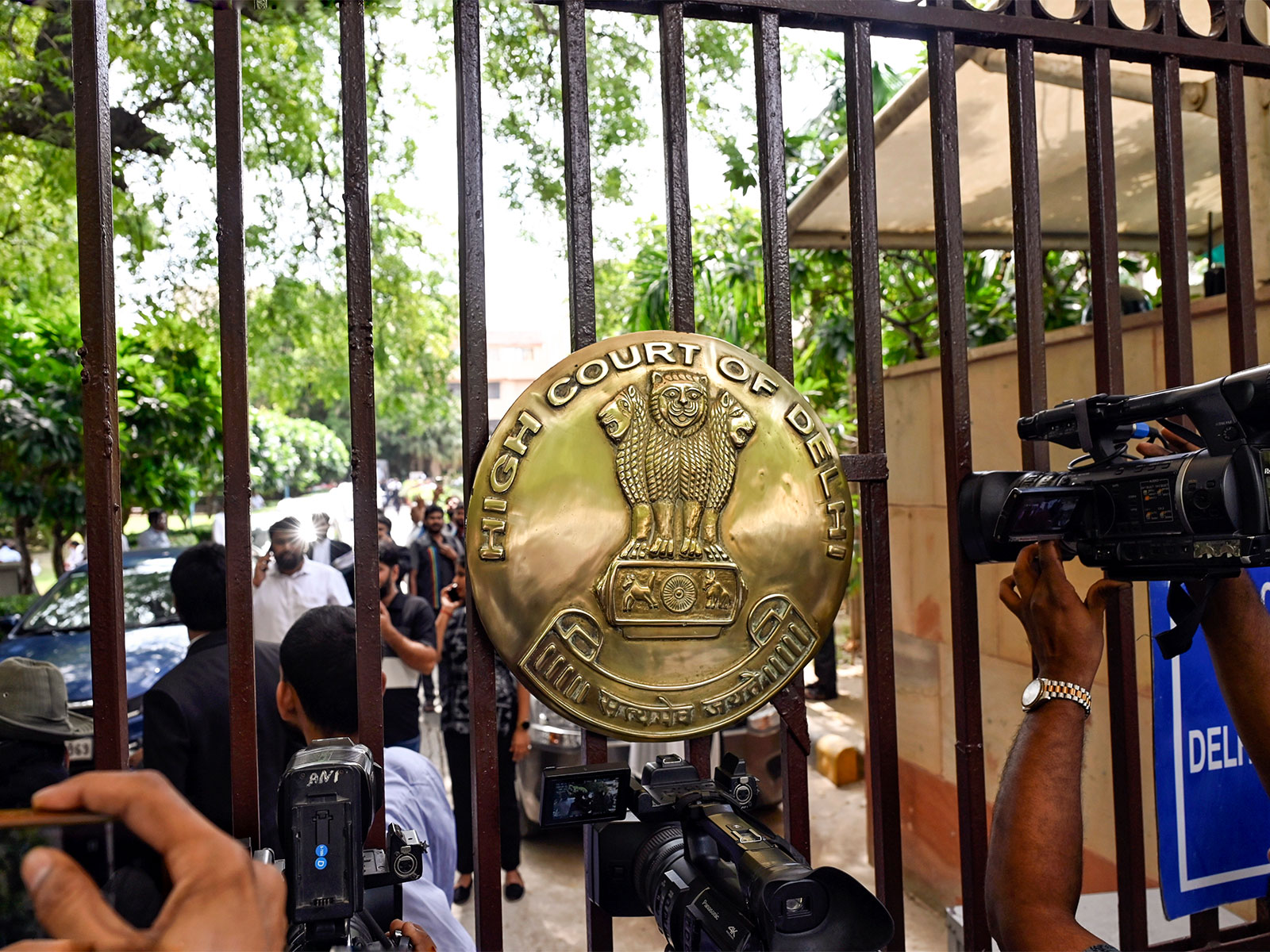
Delhi HC refuses to waive 30-day notice period under Special Marriage Act, says courts cannot override statutory mandate
Jun 18, 2026
New Delhi [India], June 18 : The Delhi High Court has refused to relax the mandatory 30-day waiting period prescribed under the Special Marriage Act, 1954, for a couple seeking early solemnisation of their marriage due to the groom's impending overseas employment.
Holding that courts cannot direct authorities to act contrary to a statutory mandate, Justice Purushaindra Kumar Kaurav dismissed the writ petition. The petitioners had approached the Court seeking a direction to the Marriage Officer, Kalkaji, to exempt or relax the 30-day notice period and solemnise their marriage before June 10, 2026.
They submitted that petitioner no.1 had secured employment abroad and was required to join before that date. Since they had submitted their notice of intended marriage on May 11, 2026, the marriage could only be solemnised on June 19 after completion of the statutory waiting period.
Rejecting the plea, the Court observed that the statutory scheme under the Special Marriage Act expressly contemplates solemnisation of marriage only after the expiry of 30 days from publication of notice.
Justice Kaurav noted that the decisions relied upon by the petitioners, including Pranav Kumar Mishra v. Govt. of NCT of Delhi and the Allahabad High Court's judgment in Safiya Sultana v. State of U.P., did not deal with the issue of waiver or curtailment of the statutory waiting period and were therefore inapplicable to the present case.
The Court emphasised that writ courts exercising jurisdiction under Article 226 ordinarily cannot compel statutory authorities to act in derogation of procedures expressly prescribed by law.
Reiterating the settled principle that where a statute requires a thing to be done in a particular manner, it must be done in that manner alone, the Court observed that neither the government nor the courts can act contrary to statutory provisions.
Justice Kaurav further held that the 30-day waiting period is not a mere procedural formality but forms an integral part of the legislative framework consciously enacted by Parliament.
Any direction to bypass the waiting period would effectively require authorities to act contrary to the Act and could even expose them to penal consequences under the statute. The Court relied on Supreme Court precedents holding that no mandamus can be issued directing authorities to violate the law.
Addressing the plea of hardship, the Court observed that personal inconvenience, however genuine, cannot justify dilution of mandatory statutory requirements. Referring to the legal maxim dura lex sed lex ("the law is hard, but it is the law"), the Court said that a result flowing from a statutory provision cannot be ignored merely because it causes hardship in an individual case. It added that courts cannot rewrite or dilute statutory requirements on considerations of personal exigencies.
The Court also underscored that while interpreting statutes, courts cannot add or subtract words from legislative provisions or rewrite the framework enacted by Parliament. It was observed that any such exercise would amount to legislation rather than interpretation.
Holding that there was no justifiable ground to permit waiver or curtailment of the 30-day period prescribed under the Special Marriage Act, the Court concluded that granting the relief sought would amount to directing authorities to act contrary to the express legislative mandate.