Delhi HC says govt’s decision to give cash instead of school uniforms to EWS students not arbitrary
Oct 23, 2026
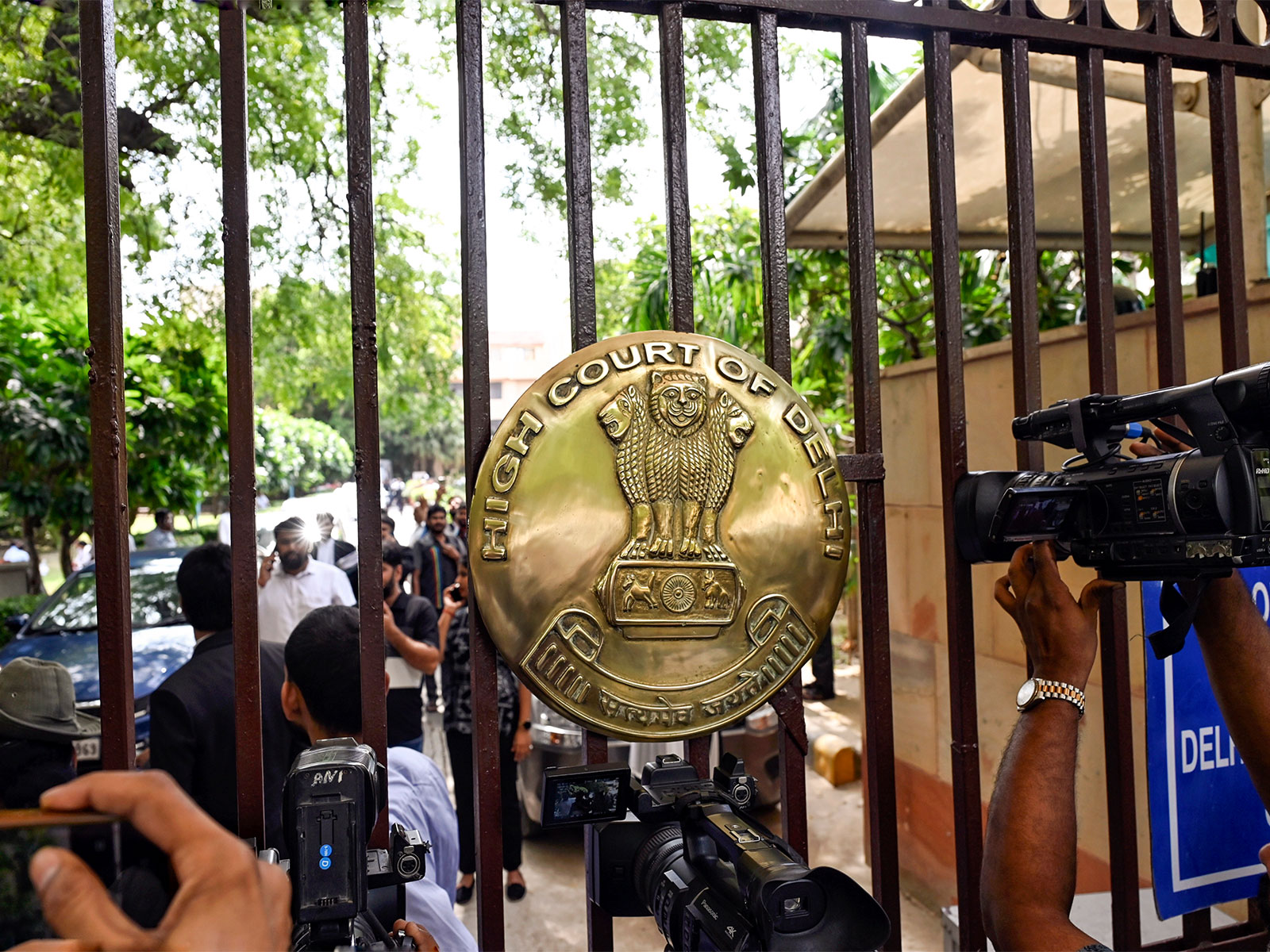
New Delhi [India], October 23 : The Delhi High Court held that the government’s decision to provide cash assistance instead of supplying school uniforms to students from economically weaker sections (EWS) and disadvantaged groups cannot be termed “completely arbitrary, whimsical or capricious”, dismissing a review petition challenging its earlier decision upholding the policy.
A bench of Justices Subramonium Prasad and Renu Bhatnagar observed that courts ordinarily do not interfere with policy decisions unless they are so arbitrary, whimsical or capricious that they shock the conscience of the court.
The bench said the review petition was primarily an attempt to re-argue the entire case, which falls outside the limited scope of review jurisdiction.
The court also found no apparent error in its earlier judgment or any material that it had failed to consider before accepting the Delhi government’s policy of providing an adequate amount to eligible students for purchasing uniforms.
The judgment was passed on October 12 on a review petition filed by the organisation Justice for All, which had challenged the court’s January 23, 2026, decision modifying its earlier directions on the implementation of the Right of Children to Free and Compulsory Education (RTE) Act, 2009.
The original petition sought enforcement of the statutory provisions requiring free textbooks, uniforms and other study materials for students admitted under the EWS and disadvantaged group categories in recognised aided and unaided private schools in Delhi.
The dispute arose after the Delhi government formulated a policy on June 10, 2025, deciding to provide financial assistance for uniforms instead of supplying them directly.
Explaining the rationale behind the policy, the government had stated that procuring and distributing uniforms was a cumbersome exercise that would place an additional burden on the education department and schools. It had also pointed out that the tendering process through the Government e-Marketplace generally took around six months and that different schools had uniforms of varying designs, colours and specifications.
Accepting the policy, the High Court had, in January this year, modified its April 13, 2023, order and directed the government to ensure that students received an adequate amount for uniforms in accordance with the policy.
Challenging that decision, Justice for All contended that it had not been allowed to file a reply and argued that the policy was contrary to the mandate of the RTE Act.
Rejecting the procedural objection, the bench said adequate time had been granted to the petitioner after the review petition was filed. Its counsel had appeared and argued the matter in full and had not sought time to file a reply.
The court, therefore, rejected the contention that the earlier review proceedings had not been properly heard.
On the challenge to the policy, the bench noted that the statutory provisions and the government’s policy had already been examined when the court decided the earlier matter. The same arguments were being raised again in the present proceedings, it said.
The court emphasised that review jurisdiction cannot be used as a substitute for an appeal. A review can be entertained on limited grounds, including the discovery of new and important evidence that could not have been produced earlier despite due diligence, or an error apparent on the face of the record.
An alleged error that requires an elaborate process of reasoning to establish cannot ordinarily be treated as an error apparent on the face of the record, the bench noted, relying on Supreme Court judgments on the scope of review jurisdiction.
Finding no apparent error in its earlier decision and no failure to consider relevant material, the High Court dismissed the review petition along with pending applications. Advocate Khagesh B Jha appeared for Justice for All.