Delhi HC upholds quashing of 2022 DANIPS/DANICS promotion rules, directs centre to frame fresh mechanism within two months
Jul 01, 2026
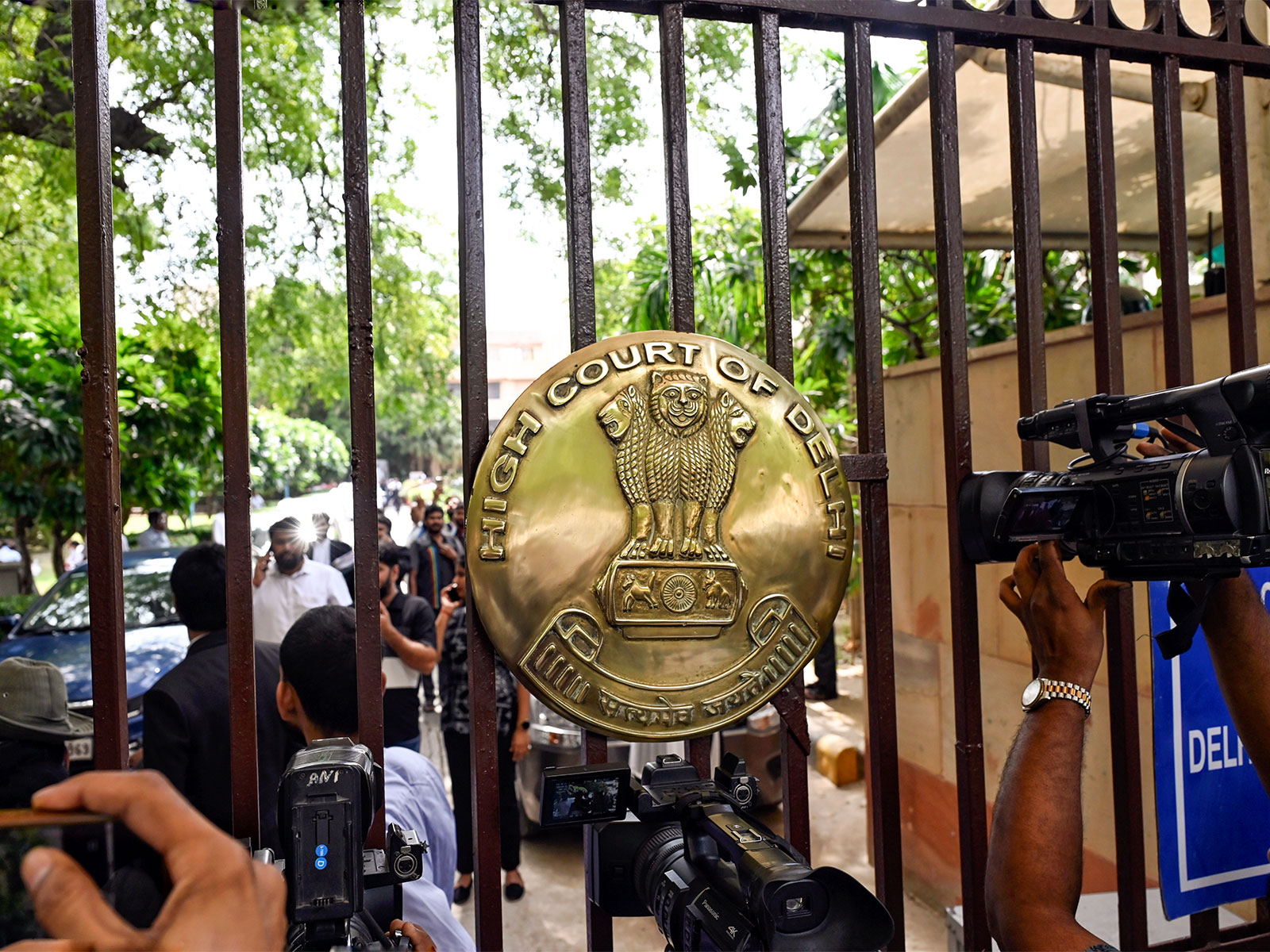
New Delhi [India], July 1 : The Delhi High Court has upheld the quashing of the 2022 amendments to the service rules governing the Delhi, Andaman and Nicobar Islands Police Service (DANIPS) and the Delhi, Andaman and Nicobar Islands Civil Service (DANICS), holding that the amendments suffered from arbitrariness as the Union Government failed to justify why it shifted the crucial date for promotion eligibility to July 1 instead of January 1.
While affirming the Central Administrative Tribunal's decision to set aside the Gazette Notifications introducing the amendments, the High Court modified the Tribunal's directions by holding that courts cannot compel the executive to amend statutory rules in a particular manner.
Instead, it directed the Ministry of Home Affairs (MHA) and the Department of Personnel and Training (DoPT) to undertake a reasoned exercise and evolve an appropriate mechanism within two months. Till fresh amendments are notified, the Court directed that January 1 following the year of examination shall be treated as the crucial date for determining "approved service" for DANIPS and DANICS officers.
A Division Bench of Justice Anil Kshetarpal and Justice Amit Mahajan disposed of writ petitions filed by the Union of India challenging two CAT orders dated January 16, 2025, which had struck down the Delhi, Andaman and Nicobar Islands, Lakshadweep, Daman and Diu and Dadra and Nagar Haveli (Police Service) (Amendment) Rules, 2022 and the corresponding Civil Service Amendment Rules.
The dispute arose from the 2022 amendments that shifted the crucial date for determining promotion eligibility from January 1 to July 1 to align it with the date from which "approved service" was reckoned. The Union argued that the amendments removed anomalies arising from two different cut-off dates and ensured timely promotions.
Rejecting the Centre's challenge, the High Court observed that although policy decisions are ordinarily beyond judicial interference, courts can intervene where a policy is arbitrary, discriminatory or violative of constitutional guarantees under Articles 14 and 16.
The Bench noted that the Tribunal had earlier, in 2018, found that maintaining different dates for reckoning approved service and determining promotion eligibility discriminated against DANIPS officers by delaying promotions and adversely affecting their induction into the Indian Police Service (IPS). That earlier finding had never been challenged by the Union Government.
The Court found that despite those findings, DoPT rejected the Ministry of Home Affairs' proposal to adopt January 1 as the uniform date without assigning any reasons.
It was observed that no records explaining the decision-making process were produced even after the High Court specifically granted an opportunity to the Union to place the relevant material on record.
The Bench held that the absence of any reasoned justification rendered the amendments manifestly arbitrary and justified the Tribunal's decision to strike them down.
The Court further observed that merely shifting both the reckoning of approved service and promotion eligibility to July 1 did not cure the larger discrimination highlighted in the earlier litigation. Instead, it continued to disadvantage DANIPS and DANICS officers by reducing their effective approved service by six months compared to officers of the Armed Forces Headquarters Civil Service (AFHQCS), another Group 'B' service where January 1 remains the benchmark.
The Bench also held that reckoning approved service from July 1 adversely impacts the officers' future induction into the IAS and IPS by delaying eligibility and affecting seniority vis-a-vis direct recruits.
However, the High Court disagreed with one part of the Tribunal's order that had directed the Government to amend the service rules by specifically fixing January 1 as the crucial date.
The Court held that while tribunals can strike down arbitrary rules, they cannot dictate the precise manner in which statutory rules should be framed or amended. The responsibility for curing the defect lies with the rule-making authority.
Accordingly, the Court directed the MHA and DoPT to undertake a reasoned exercise and devise a mechanism addressing the anomalies identified by both the Tribunal and the High Court without causing prejudice to DANIPS and DANICS officers. The exercise has been directed to be completed preferably within two months.
Pending such amendments, the Court ordered that January 1 following the year of examination shall be treated as the crucial date for determining approved service for DANIPS and DANICS officers, similar to the practice followed in AFHQCS.