Delhi Master Plan 2047 unveiled: Focus on Transit-Oriented Development, sustainable urban growth
Aug 20, 2026
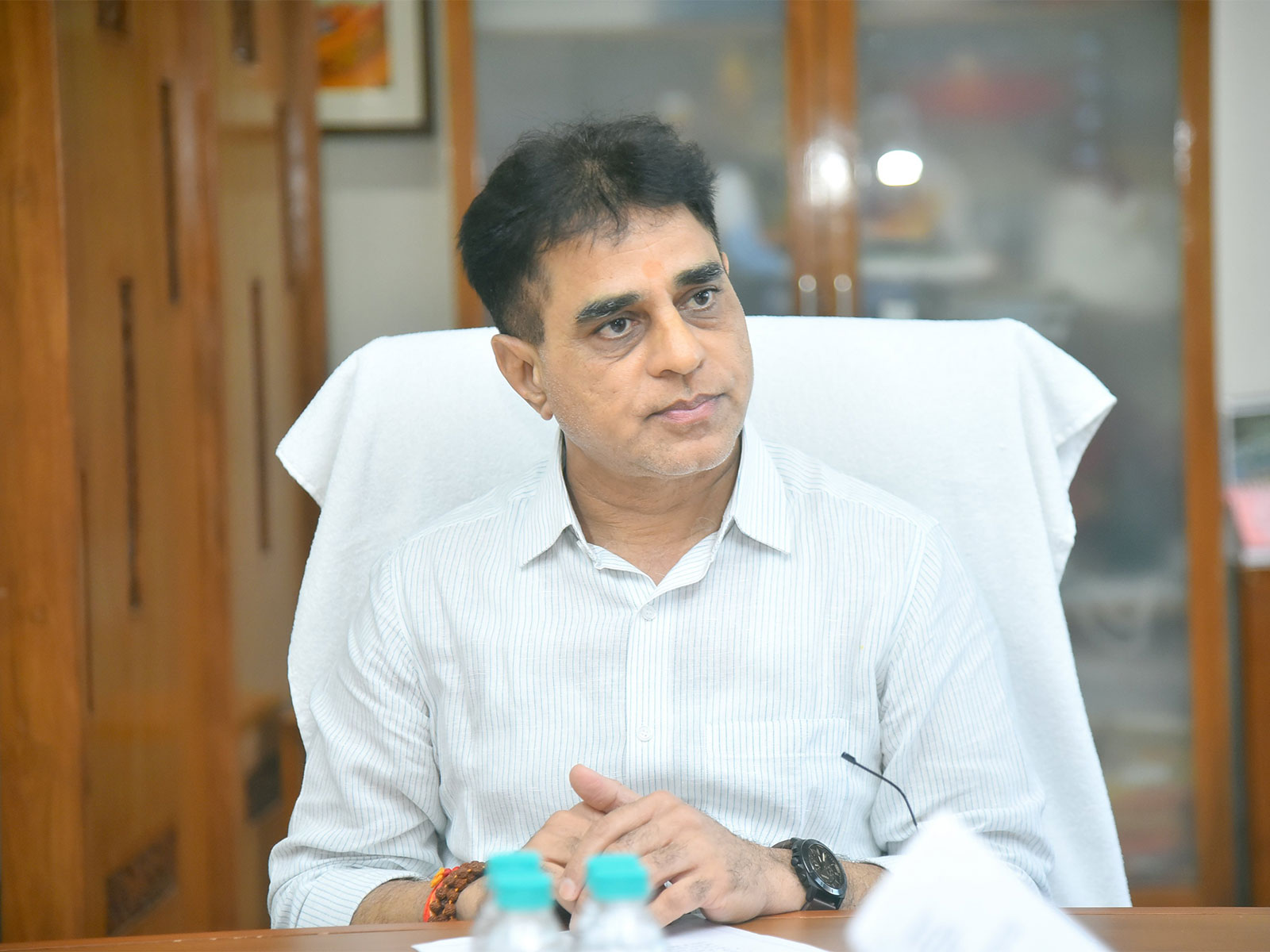
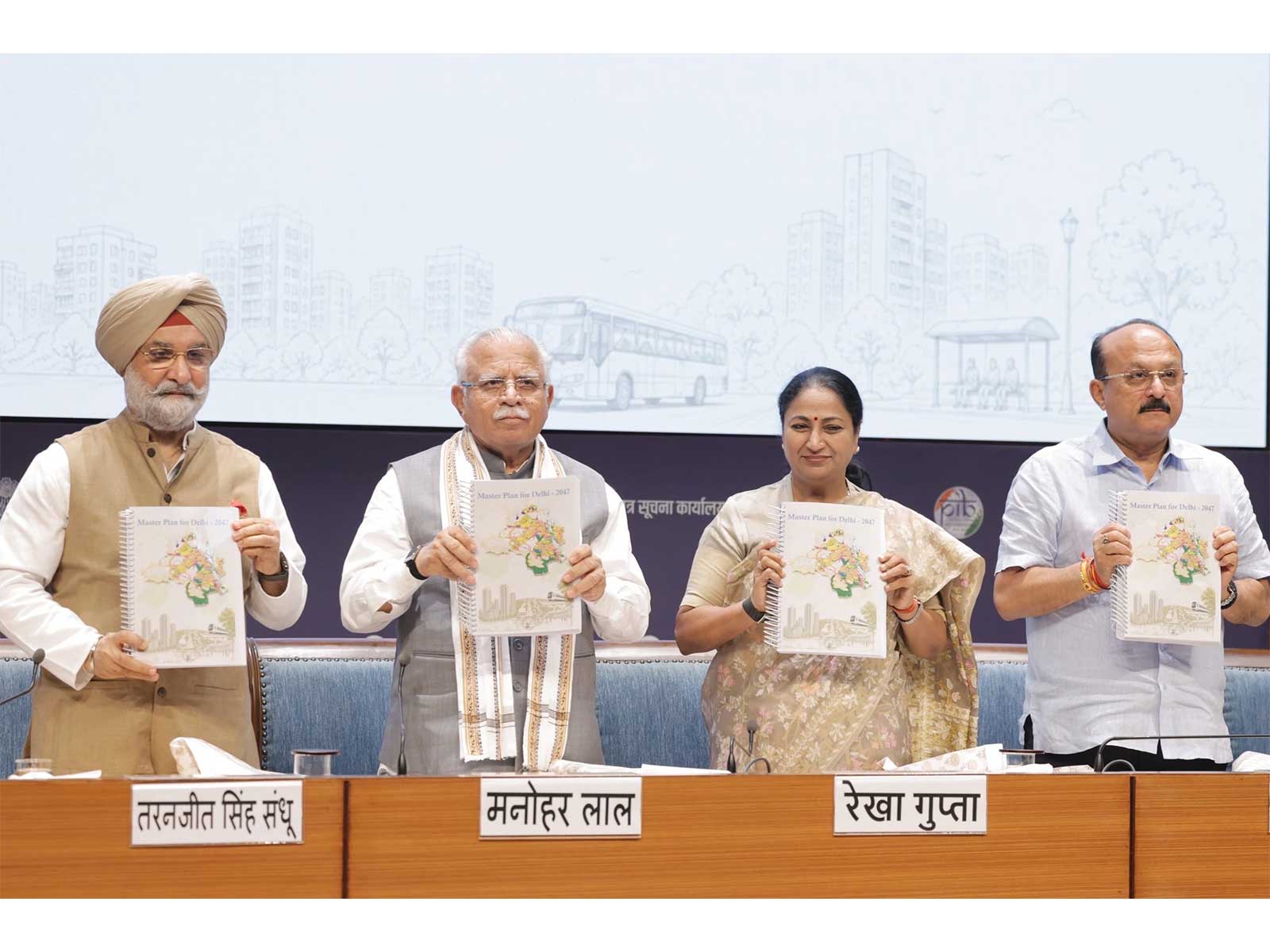
New Delhi [India], August 20 : Union Minister of Housing and Urban Affairs and Power, Manohar Lal, unveiled the Delhi Master Plan 2047 (MPD-2047) on Thursday in the presence of Delhi Lieutenant Governor Taranjit Singh Sandhu and Delhi Chief Minister Rekha Gupta, an official release said.
Secretary, Department of Capital Development, Ministry of Housing and Urban Affairs, D Thara; Chief Secretary, Government of NCT of Delhi, Rajeev Verma; Vice Chairman, Delhi Development Authority (DDA), N Saravana Kumar; and other senior officials were also present on the occasion.
Speaking on the occasion, Union Minister of Housing and Urban Affairs and Power, Manohar Lal said that, keeping in view Delhi's growing population and the need for its holistic development, the Delhi Master Plan 2047 will prove to be a milestone in shaping the future of the national capital. He said that the Master Plan envisages the development of around 40 lakh new affordable housing units, with a focus on meeting the future housing requirements of the city.
The Minister further stated that a Transit-Oriented Development (TOD) policy has been incorporated to strengthen public transport corridors and promote better-connected urban development. He added that, with a view to making colonies more habitable, Resident Welfare Associations (RWAs) would be encouraged to register and adopt a redevelopment framework on the lines of the in-situ redevelopment policy, facilitating planned redevelopment and improvement of existing residential areas.
Lieutenant Governor of Delhi, Taranjit Singh Sandhu, said that, aligned with the Prime Minister's vision of 'Sapt-Dhara', the Delhi Master Plan 2047 lays down a robust roadmap for vertical growth, transit-oriented development and quality housing, while promoting the development of knowledge, education and medical hubs and preserving Delhi's rich cultural heritage.
He emphasised the need to translate the planning framework into visible outcomes on the ground to enhance Ease of Living and build a more sustainable, vibrant and future-ready Delhi.
Delhi Chief Minister Rekha Gupta said that the Delhi Master Plan 2047 provides a comprehensive roadmap for a Viksit Delhi, aimed at creating a more planned, accessible and future-ready national capital for coming generations. She said that the Plan addresses the diverse needs of Delhi--from villages and unauthorised colonies to old residential colonies and market areas--while responding to the challenges posed by a growing population, transportation needs and pollution.
The Chief Minister highlighted that provisions for higher FAR would open new avenues for redevelopment, while simplified norms would facilitate expansion of urban amenities. She added that the Plan would also strengthen the vision of 'Jahan Jhuggi, Wahan Makaan', giving further impetus to the aspiration of poor families for permanent housing.
Aligned with the vision of the Prime Minister for Viksit Bharat 2047, the Delhi Master Plan 2047 provides a roadmap to transform Delhi into an inclusive, sustainable, resilient and globally competitive capital city.
MPD-2047 adopts two distinct planning approaches--area-based redevelopment for existing brownfield areas and ROW-based planning for greenfield areas. Brownfield development will focus on TOD, mixed-use development and infrastructure augmentation, while greenfield areas will use connected road networks extending through Land Pooling and Low-Density Areas. Together, these approaches enable efficient land use, stronger intra- and inter-city connectivity, and coordinated sustainable growth.
The redevelopment of existing areas--including Group Housing, DDA Housing, and Government Housing--has seen the minimum plot area requirement reduced significantly from 40,000 square meters to 3,000 square meters, which is set to yield around 7 lakh additional dwelling units.
Specific measures are being targeted to ensure better living conditions in unauthorised colonies while expanding housing availability across the capital. Along the city's Metro Corridor, approximately 18 lakh affordable houses will be constructed within Transit-Oriented Development (TOD) Zones, alongside further affordable housing projects planned along High Density Corridors (HDC). Dignified housing initiatives for Jhuggi Jhopri clusters aim to benefit more than 17 lakh dwellers.
Industrial plots measuring 5,000 square meters and above will receive an additional 15% FAR for workers' housing, while a 50% FAR incentive is introduced to promote affordable rental housing for students, working professionals, migrant workers, and low-income groups.
The commissioning of the Land Pooling Policy encompasses nearly 200 square kilometres of planned urban expansion designed to create around 12 lakh new homes supported by a 600-kilometre road network. This approach emphasises government-led, infrastructure-first development, with the DDA constructing 30-metre and wider roads upfront to facilitate planned growth and enhanced connectivity.
Multiple implementation models are being deployed, including Town Planning Schemes, alongside faster rollouts using planning schemes spanning a minimum of 20 hectares through assembled land. High-Density Corridor development is being introduced across land pooling areas with an FAR up to 400 along a 250-meter-wide corridor on UER-II. Sector 8B, Zone P-II in Village Gadi Khasro and Ibrahimpur has been notified as the first sector ready for implementation.
Economic spaces are being revitalised by allowing commercial centre redevelopment on minimum plot sizes of 1,000 square meters through incentivised FAR, encouraging fresh investment and transforming sites into modern business destinations. Mixed-use development is permitted along roads with a Right of Way (RoW) of 30.0 meters and above, enabling commercial activities on ground floors and first lower floors in stilted buildings. To promote industry, the plan establishes modern industrial parks featuring flexible zoning and permits big-box retail, e-commerce, and warehousing directly within industrial areas. Furthermore, co-working spaces and data centres are allowed to support innovation and emerging startups.
Heritage preservation focuses on conserving around 1,500 assets through targeted Cultural Resource Management Plans, complemented by the debut of a 50 TDR Heritage Incentive. Adaptive reuse will facilitate transforming heritage structures into hotels, museums, offices, libraries, and cultural venues while maintaining their historic character. Environmental initiatives prioritise the protection, conservation, and ecological restoration of nearly 1,700 hectares along the River Yamuna floodplains across 13 major restoration projects, alongside constructing a 52-kilometre cycle track along the floodplain.
Narela is slated for transformation into a world-class education hub with 138 hectares reserved for public and private universities, while Dwarka is being developed as Delhi's International Gateway featuring modern infrastructure, IT, data centres, startups, and industrial parks.
Urban mobility will be centralised under a single Unified Metropolitan Transport Authority responsible for planning, developing, implementing, and enforcing transport policies. Multi-modal transit hubs will offer seamless connections between the Metro, RRTS, buses, intermediate public transport, walking, and cycling. Intra-city and inter-state travel will be enhanced via UER-I, UER-II, and UER-III corridors, with UER-II already offering faster transit. Parking will be regulated under a Unified Parking Planning Framework.
To enhance the business environment and daily living, the plan institutes online approvals and streamlines procedures, reducing regulatory use premises from 133 to 45 while incorporating a negative list approach across residential, commercial, and industrial zones.
The broader redevelopment strategy encourages plot-based projects by waiving the 4-hectare area-level mandate, while commercial redevelopment is encouraged through higher FAR incentives and lower minimum plot size requirements of 1,000 square meters. Furthermore, residential buildings across 1,511 unauthorised colonies will be regularised on an "as is where is" basis without requiring layout plans, extending property ownership security to roughly 45 lakh residents.
The framework promotes a safe, vibrant 24x7 city equipped with dedicated cultural circuits to build an inclusive and age-friendly urban environment. Infrastructure development focuses on expanding Sewage Treatment Plants (STPs) and sewerage networks to improve water quality and support a cleaner Yamuna. Net-zero urban development will be advanced using energy-efficient building designs, low-carbon planning, rooftop solar installations, rainwater harvesting, water recycling, waste-to-resource projects, and green mobility options.
Data-driven governance will utilise GIS-based planning and digital platforms for transparent urban development. Ecological connectivity will expand through a Green Connect Network, improving access to recreational spaces using urban forests, biodiversity parks, ecological corridors, and indigenous plantations.
Development in the capital's ceremonial core includes redeveloping Kartavya Path and constructing the 1.25 lakh square meter Yuge Yugeen National Museum. Finally, a regulated framework will manage nearly 150 square kilometres across Low-Density Areas (LDA)--including 23 notified LDRA villages--ensuring arterial road continuity from land pooling zones under a uniform planning structure for residential, commercial, recreational, and public uses.