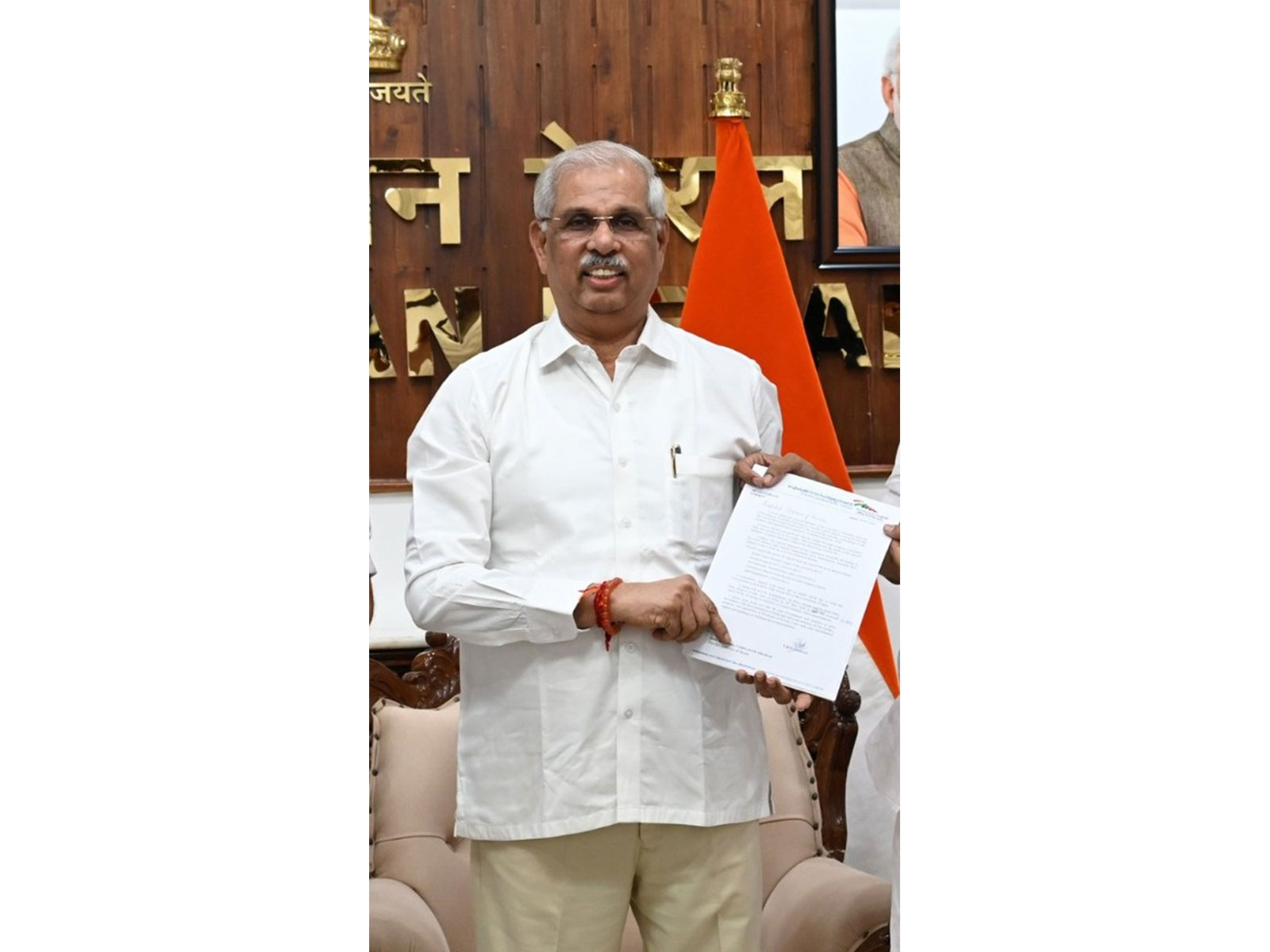
From constitutional firmness to personal warmth: Governor Arlekar’s Keralam tenure ends; but his commitment to duty continues
Oct 13, 2026
Thiruvananthapuram (Keralam) [India], October 13 : Even as the announcement of his appointment as the Governor of Tamil Nadu marked a new chapter in his public life, Keralam Governor Rajendra Vishwanath Arlekar began Tuesday with a familiar commitment to his scheduled engagements, boarding the 4 am Vande Bharat Express from Thiruvananthapuram to Palakkad.
The early-morning journey, undertaken despite the announcement of his new assignment, drew appreciation on social media, with many viewing it as a reflection of his dedication to public duty.
Arlekar's departure from Kerala comes as part of a wider reshuffle of Governors announced by the Centre. Om Prakash Mathur, the Governor of Sikkim, has been appointed as the new Governor of Kerala.
When Arlekar arrived in Kerala in January 2025, succeeding Arif Mohammed Khan, he inherited a challenging political atmosphere shaped by prolonged differences between the Governor's office and the Left Democratic Front (LDF) government.
There were initial questions about whether he would follow the confrontational path associated with his predecessor.
However, the seasoned politician from Goa gradually established a style of his own, combining firmness on constitutional and ideological questions with a personal warmth that helped maintain channels of communication with the state government.
Throughout his tenure, Arlekar avoided turning disagreements into public confrontations with the government. He stood by his positions but remained open to dialogue, demonstrating that differences between constitutional authorities need not always translate into administrative deadlock.
His relationship with then Chief Minister Pinarayi Vijayan offered glimpses of this approach. Arlekar visited the Chief Minister at Cliff House with flowers and birthday wishes and later invited him to join him for a morning walk in the gardens of Lok Bhavan.
Such gestures reflected a personal side of the Governor that often stood alongside his firm approach to official responsibilities.
Arlekar did not shy away from asserting the authority of his office when he believed a matter required his intervention. His insistence that official functions at Lok Bhavan begin with the lighting of a traditional lamp before an image of Bharat Mata remained unchanged despite protests and boycotts by some ministers.
However, in administrative matters, he showed a willingness to explore solutions through discussion rather than prolonged confrontation.
The long-running dispute over vice-chancellor appointments at the APJ Abdul Kalam Technological University and the Digital University of Kerala was one such example. At a time when the disagreements had reached the Supreme Court, Arlekar engaged directly with the Chief Minister to work towards a resolution.
His approach brought a fresh emphasis on consultation in a dispute that had strained relations between the Governor's office and the state government for years. He continued to maintain that matters falling within his constitutional jurisdiction required consultation with him.
His tenure also saw moments of disagreement, including criticism over his recent intervention seeking action against those accused of attacking the Kerala University Vice-Chancellor. Nevertheless, the broader approach of dialogue helped keep relations relatively calm in recent months, with the new government announcing a policy of restraint in its dealings with the Governor.
The proposed private universities legislation provided another example of the role played by negotiations. Arlekar indicated that the Bill could be considered if brought back with necessary changes, leading the government to withdraw the earlier version.
Beyond the political and constitutional dimensions of his office, Arlekar also sought to make Lok Bhavan more accessible to the public. The institution hosted lecture series and opened its doors to wider public engagement during his tenure.
He was also known for a thoughtful personal gesture: visitors who came to meet him were often sent away with a small memento, adding a touch of warmth to the formal setting of the Governor's office.
Arlekar had been given additional charge of Tamil Nadu around six months ago, fuelling speculation about a possible change in his responsibilities. The latest reshuffle has now formalised his move to the neighbouring state.
As he prepares to take up his new assignment, his early-morning journey to Palakkad stands out as a simple but telling moment at the end of his Kerala tenure, a reminder that, even amid changes in office and responsibility, previously scheduled public engagements remain on his calendar.
For Kerala, his departure marks the end of a tenure shaped by constitutional assertion, personal courtesy and a preference for dialogue in navigating political differences.
For Arlekar, Tamil Nadu presents a new assignment, carrying forward the experience of a term in which he sought to balance the responsibilities of his office with a measured and accessible public presence.