How PickQuick Enables Legacy FMCG Brands to Sell on Blinkit, Zepto and Swiggy Instamart
Apr 16, 2026
VMPL
New Delhi [India], April 16: Quick commerce platforms like Blinkit, Zepto, Instamart have rapidly evolved from a convenience driven experiment to India's most influential retail channels. What began as a solution for urgent purchases is now shaping how consumers buy groceries, personal care, and daily essentials. According to Mordor Intelligence, India's quick commerce market is already valued at approximately 3.65 billion dollars and continues to expand at pace.
This growth is not limited to metros. Quick commerce platforms now operate across more than 80 cities, signalling a structural shift in distribution rather than a temporary trend. For FMCG brands, the implications are clear. Visibility on these platforms is becoming as critical as shelf presence in traditional retail.
Yet, despite the urgency, many legacy brands struggle to enter this ecosystem in a meaningful way.
Why Legacy FMCG Brands Are Falling Behind
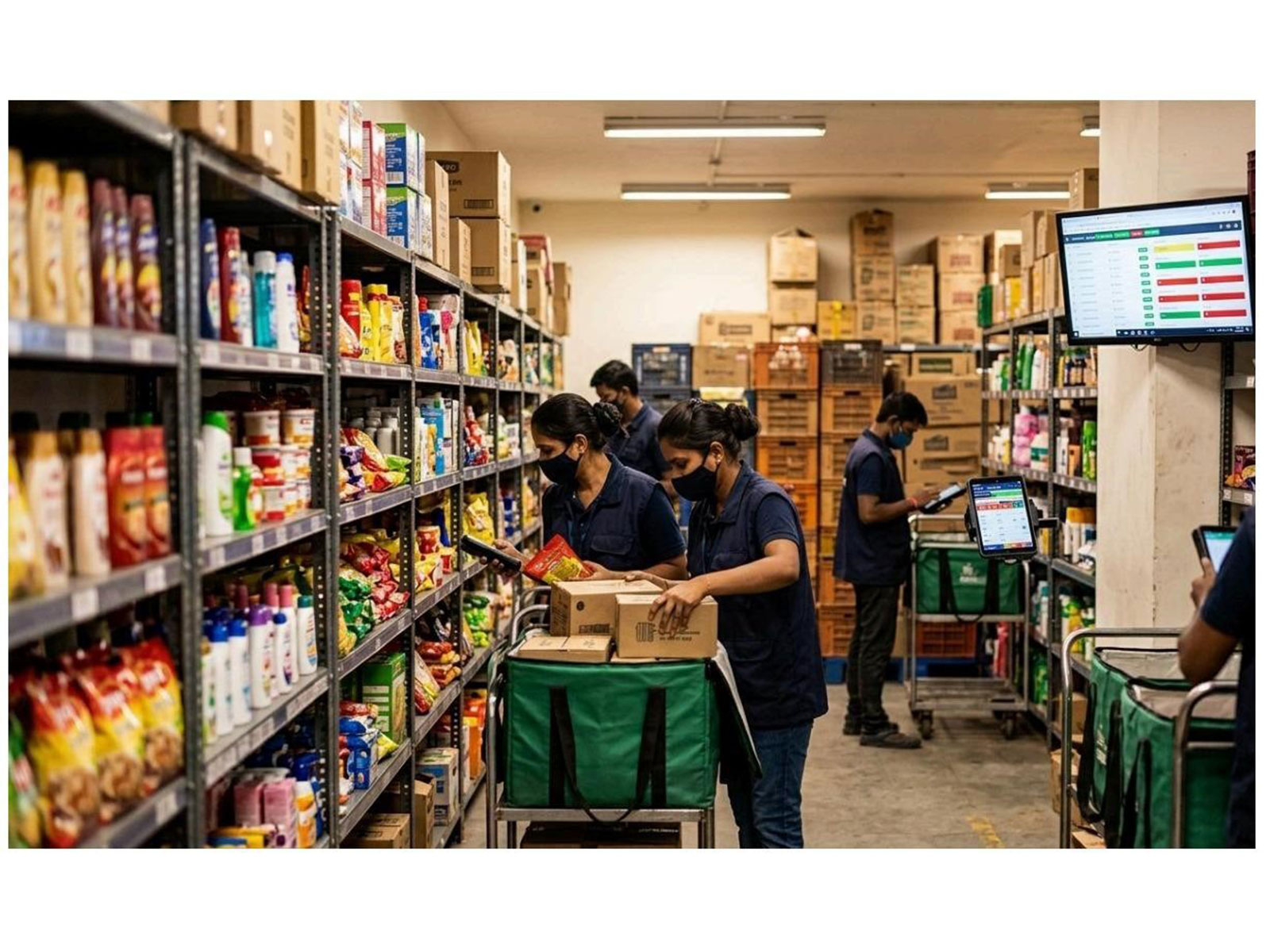
The challenge is not demand but infrastructure. Quick commerce operates on a fundamentally different model compared to general trade or modern retail. It requires access to dark store networks, real time inventory tracking, city level demand planning, and continuous replenishment cycles.
Each platform also comes with its own compliance systems, listing requirements, and operational expectations. For legacy FMCG companies built around distributor led supply chains, adapting to this environment requires a complete operational overhaul.
The result is a growing gap between consumer demand and brand availability. Even on major platforms, visibility is concentrated. Datum Intelligence highlights that while Blinkit hosts 2,777 brands, only 491 of them generate nearly 80 percent of total sales. This makes early and efficient entry into quick commerce not just important, but decisive.
How PickQuick Solves This by Bridging the Operational Gap
Instead of requiring brands to build capabilities from scratch, quick commerce enablers act as a single operational layer that connects them to multiple quick commerce platforms. They manage the backend from onboarding and compliance to distribution and replenishment, allowing brands to participate without restructuring their existing supply chains.
Prabhat Sahu, the founder of PickQuick, explains, "Quick commerce is not just another sales channel, it is a completely different operating system. Our role is to simplify that complexity so brands can focus on product and demand while we handle execution."
For brands like Prakash Masala, this model has enabled faster access to digital shelves without the need for platform specific teams. The emphasis is on seamless integration rather than incremental expansion.
Speed to Market and Multi Platform Access
One of the defining advantages of this model is speed. Traditional onboarding often requires brands to negotiate and integrate with each platform individually, leading to staggered launches across cities and apps.
PickQuick changes this dynamic by enabling simultaneous presence across platforms such as Blinkit, Zepto, and Swiggy Instamart. This significantly reduces time to market and allows brands to capture early visibility in a space where consumer loyalty is built quickly. Unlike traditional distributors, it is built specifically for quick commerce economics, not general trade or modern trade.
Vasant Masala, for instance, has been able to expand its reach across multiple cities through a unified rollout strategy rather than sequential onboarding. This kind of execution is critical in a market where availability directly impacts repeat purchases.
Expanding Network and Brand Portfolio
PickQuick currently operates in over 31 cities and supports more than 47 brands across leading quick commerce platforms, the brand portfolio includes a mix of legacy and regional players that are looking to scale their digital presence without disrupting existing distribution systems.
Brands such as Keerthi Nirmal Foods and DDecor reflect the diversity of categories now entering quick commerce, moving beyond groceries into home and lifestyle segments. Their inclusion also signals how the channel is expanding in both depth and breadth.
By spreading brand onboarding and operations across multiple categories, PickQuick strengthens its position as a comprehensive quick commerce enablement partner rather than a niche service provider.
Why PickQuick's Model Stands Out
A key aspect here is capital efficiency. PickQuick operates on a negative working capital model, meaning it scales without burning cash on inventory. For partner brands, this reduces upfront investment and lowers the financial risk associated with entering a new channel.
This approach aligns with the broader shift in the FMCG sector where growth is increasingly balanced with capital discipline. Instead of building parallel supply chains, brands can leverage existing systems while accessing new demand pools through quick commerce enablement.
The Future of Quick Commerce Enablement
As quick commerce continues to expand into new cities and product categories, the complexity of managing multi platform distribution will only increase. Infrastructure, not intent, will determine which brands succeed in this environment.
PickQuick's roadmap includes deeper integrations with platform partners, expansion into additional cities, and onboarding of more brands across categories. The long term vision is to become a foundational layer for FMCG distribution in the quick commerce era.
The shift in consumer behaviour is already evident. Ten minute delivery is no longer a novelty but an expectation. For legacy FMCG brands, participating in this ecosystem is becoming essential to remain competitive.
In that context, quick commerce enablement is emerging as a critical capability. Platforms like PickQuick are not just service providers but strategic bridges bridging the quick commerce distribution gap, helping traditional brands transition into a faster, more dynamic retail channel like quick commerce.
(ADVERTORIAL DISCLAIMER: The above press release has been provided by VMPL. ANI will not be responsible in any way for the content of the same.)