India, Japan push defence manufacturing under "Design with Japan, Make in India"; Explore joint naval shipbuilding
Nov 19, 2026
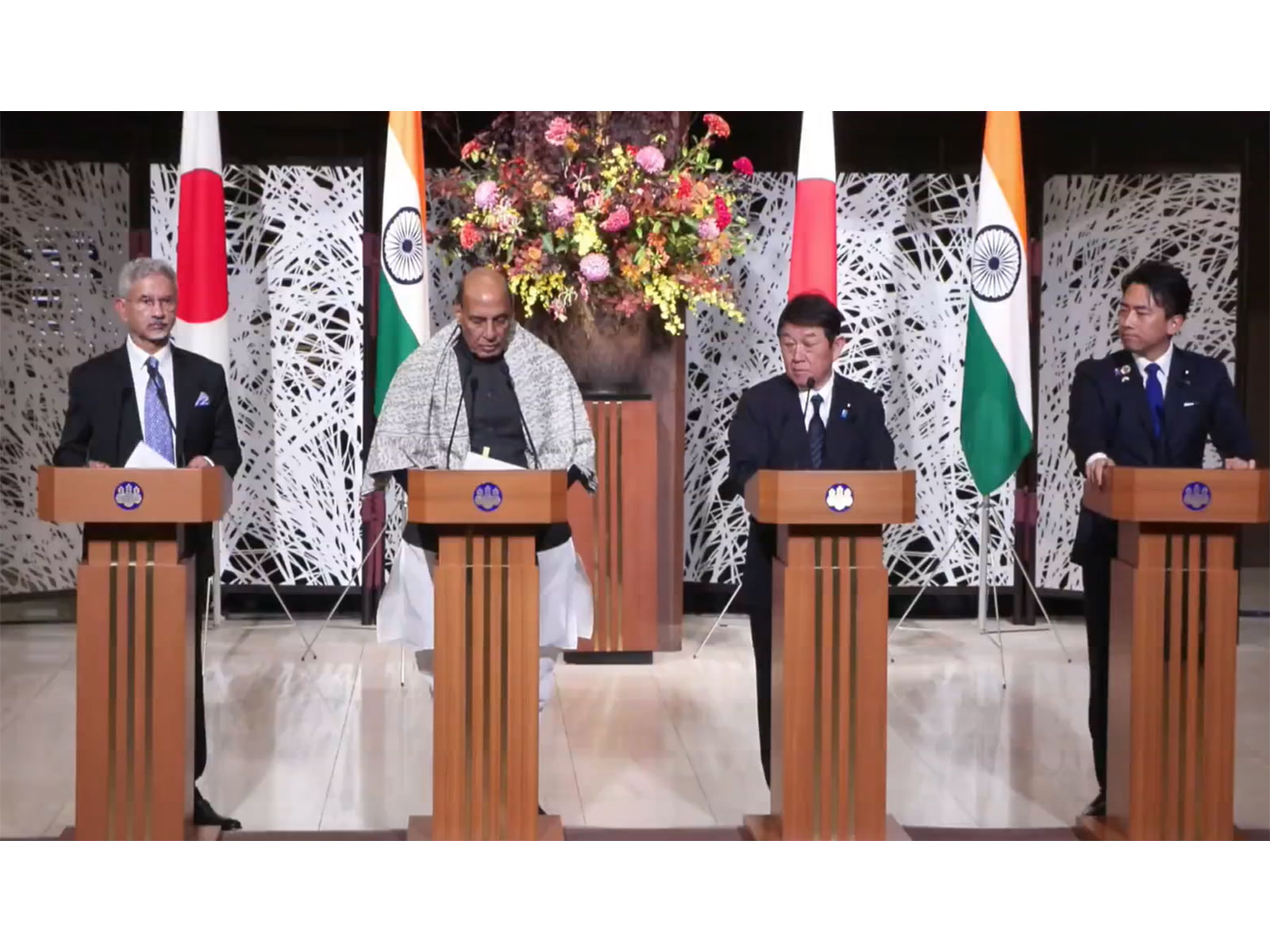
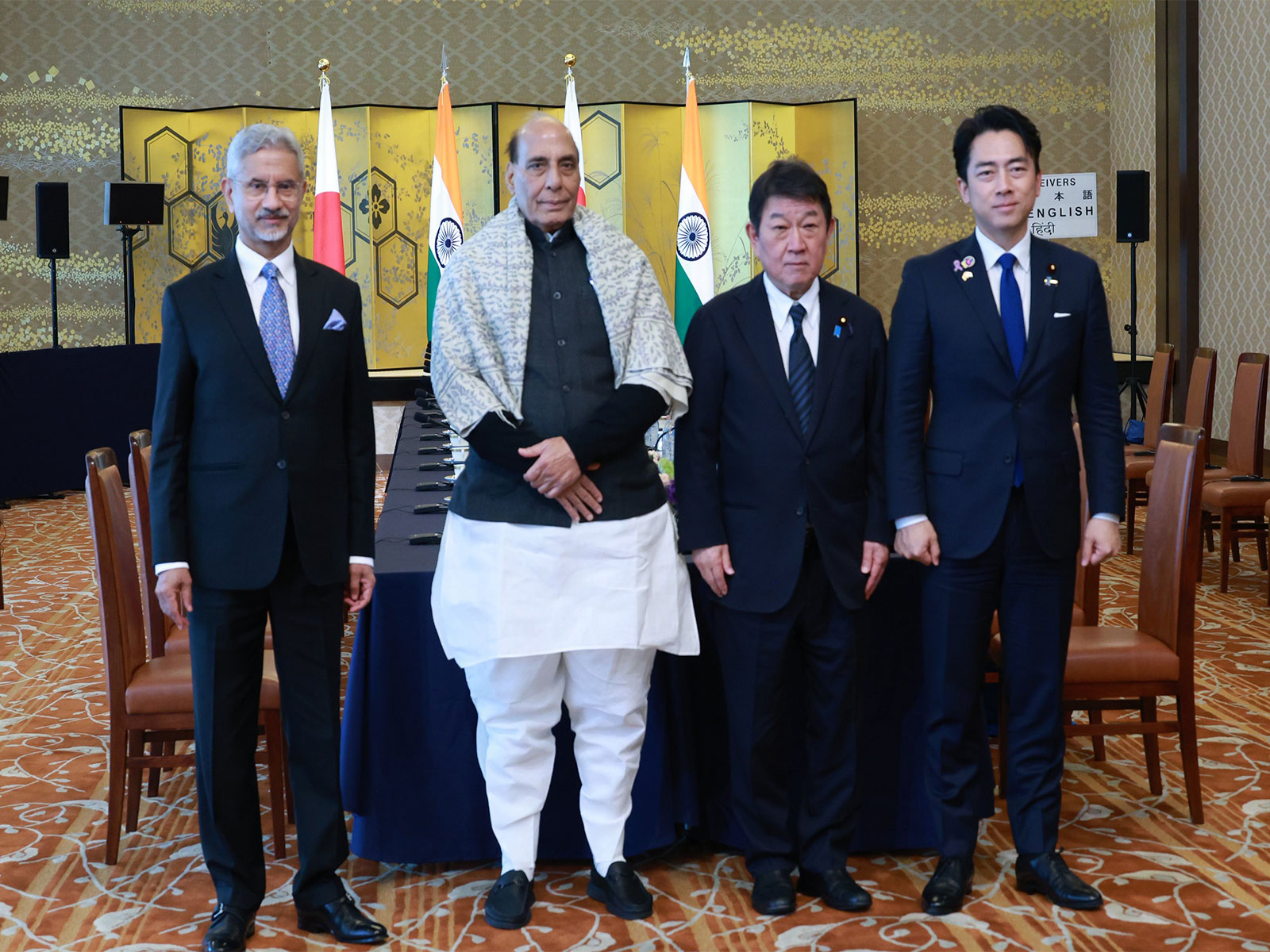
Tokyo [Japan], November 19 : India and Japan on Thursday agreed to deepen defence industrial cooperation under the framework of "Design with Japan, Make in India" and explore the possibility of joint development in naval shipbuilding and design, as the two countries stepped up efforts to strengthen their strategic and defence partnership at the fourth India-Japan 2+2 Foreign and Defence Ministerial Meeting in Tokyo.
The discussions also focused on expanding military exercises, enhancing maritime security cooperation, sharing information and strengthening defence capabilities, with the two sides reaffirming their commitment to maintaining peace and stability in the Indo-Pacific region.
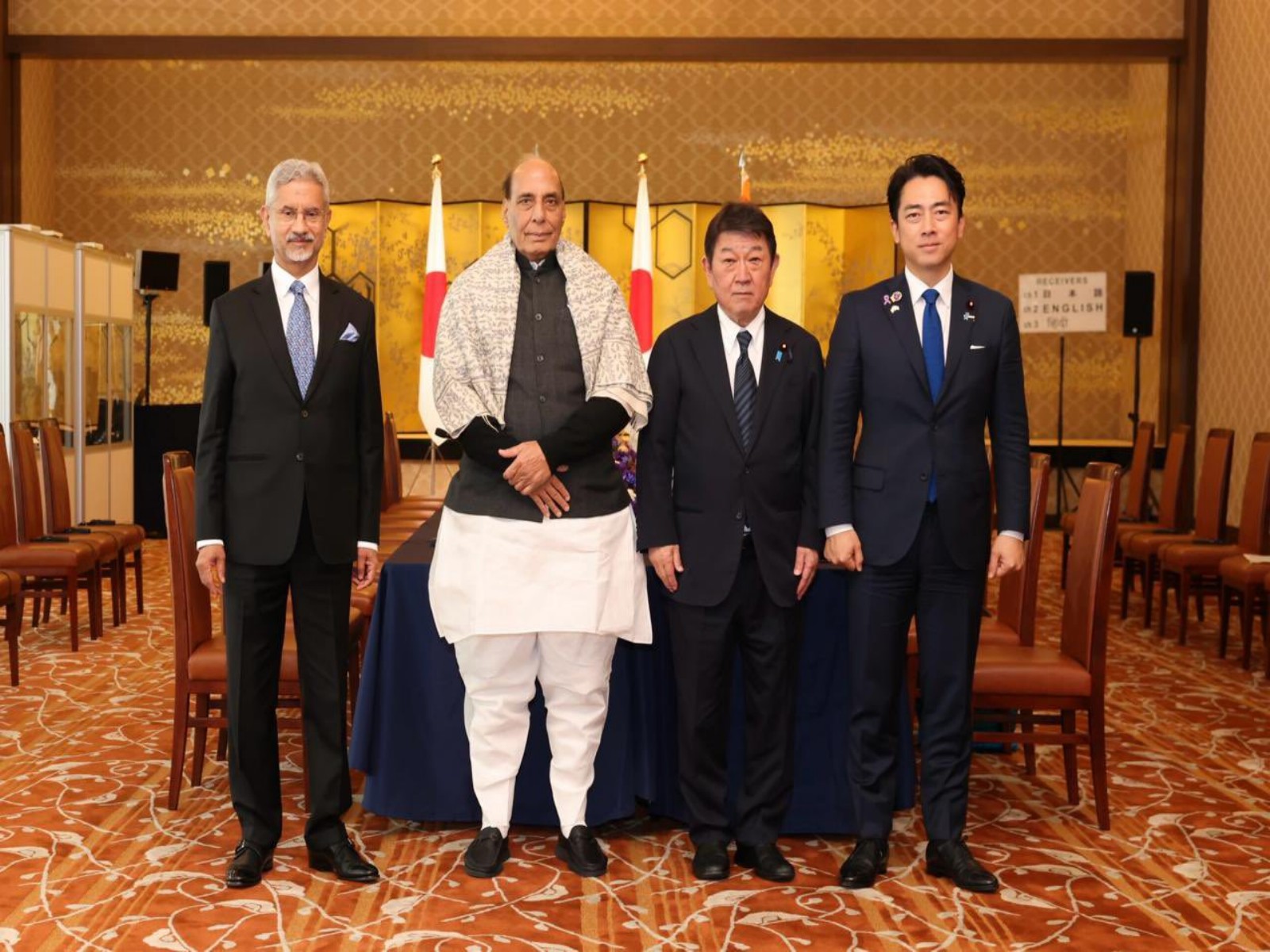
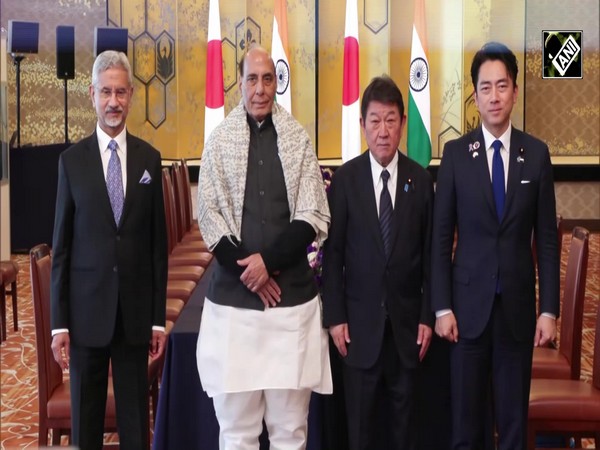
The meeting was attended by Defence Minister Rajnath Singh and External Affairs Minister S Jaishankar, along with Japan's Foreign Minister Motegi Toshimitsu and Defence Minister Koizumi Shinjiro.
In a joint statement issued after the meeting, the Ministers welcomed the growing defence and security partnership between the two countries and called for further strengthening cooperation in defence production and technology.
They "looked forward to further strengthening of defence industrial cooperation under the framework of 'Design with Japan, Make in India'," while welcoming the convening of the third India-Japan Defence Industries Forum in Tokyo in October 2026.
The Ministers also expressed their expectation for an early formulation of the UNICORN-related arrangements and India's Acceptance of Necessity (AoN) by February 2027.
On maritime cooperation, the two countries welcomed the recently signed Memorandum of Arrangement on Maritime Security Cooperation and agreed to work towards concrete outcomes between the Indian Navy and the Japan Maritime Self-Defence Force.
The joint statement said the two sides would pursue cooperation in Maritime and Air Domain Awareness (MDA), Search and Rescue (SAR), information sharing and Humanitarian Assistance and Disaster Relief (HADR), in accordance with their respective strategic and operational needs.
The Ministers also affirmed that their defence authorities were committed to enhancing mine countermeasures capabilities and "exploring the possibility of joint development in naval ship building and design".
The two sides further welcomed the expansion of bilateral military exercises, particularly following the first-ever visit to India by Japan Air Self-Defence Force fighter aircraft for the India-Japan air force exercise 'Veer Guardian 26'.
The visit was accompanied by the Chief of Staff of the Japan Air Self-Defence Force. The Ministers agreed to deepen bilateral exercises through greater operational complexity, integration of unmanned systems and the pursuit of bilateral and multilateral exercises at short notice.
In another significant development, the Ministers welcomed the signing of a Letter of Intent (LOI) towards the utilisation of firing ranges in India, which would enable Japan Self-Defence Forces to conduct live-fire training in India for the first time, including training involving surface-to-ship missiles.
They agreed to accelerate coordination between the defence authorities of the two countries for the early realisation of the arrangement.
Highlighting the growing strategic convergence between the two countries, the Ministers underscored the importance of closer coordination under the India-Japan Special Strategic and Global Partnership amid an increasingly complex and uncertain international environment.
The joint statement said the Ministers reaffirmed their commitment to maintaining and strengthening an international order that is "free, open and based on the rule of law", while respecting national sovereignty and territorial integrity and promoting the peaceful resolution of disputes without the threat or use of force.
They also underlined the need for all countries to refrain from any attempt to unilaterally change the status quo.
The Ministers appreciated the synergy between India's Indo-Pacific Oceans' Initiative (IPOI) and MAHASAGAR (Mutual and Holistic Advancement for Security and Growth Across Regions) and Japan's updated "Free and Open Indo-Pacific (FOIP)" vision, saying these initiatives contribute to a peaceful, prosperous and resilient Indo-Pacific.
The two sides also took note of the progress in bilateral cooperation since the previous 2+2 meeting in 2024 and welcomed the outcomes of the 15th and 16th India-Japan Annual Summits held in August 2025 and July 2026, respectively.
These summits provided leader-level strategic direction for strengthening defence and security cooperation, economic partnership, economic security, energy resilience, technology, innovation and people-to-people exchanges.
The Ministers also agreed to further enhance bilateral policy consultations on regional developments in Africa, Asia and the Middle East/West Asia, as well as multilateral issues, including UN reform, space, maritime affairs, climate change, terrorism and the Arctic.
During the meeting, Japan's Foreign Minister Motegi and Defence Minister Koizumi also explained the ongoing efforts to revise Japan's National Security Strategy, National Defence Strategy and Defence Buildup Program.
The Ministers noted that these efforts would contribute to enhanced cooperation with India in maintaining peace and security in the region and beyond.
The two countries also welcomed expanding cooperation between their respective coast guards and noted that India would host the fifth Coast Guard Global Summit (CGGS) in February 2027, a framework initiated by the Japan Coast Guard.
Separately, the Ministers agreed to hold a dialogue between the consular authorities of India and Japan to discuss a range of consular matters, including a tabletop exercise (TTX) on cooperation in assisting their respective nationals abroad.
The fourth 2+2 meeting reflects the continued efforts by India and Japan to expand their strategic partnership, with defence manufacturing, maritime security and operational cooperation emerging as key areas of engagement.