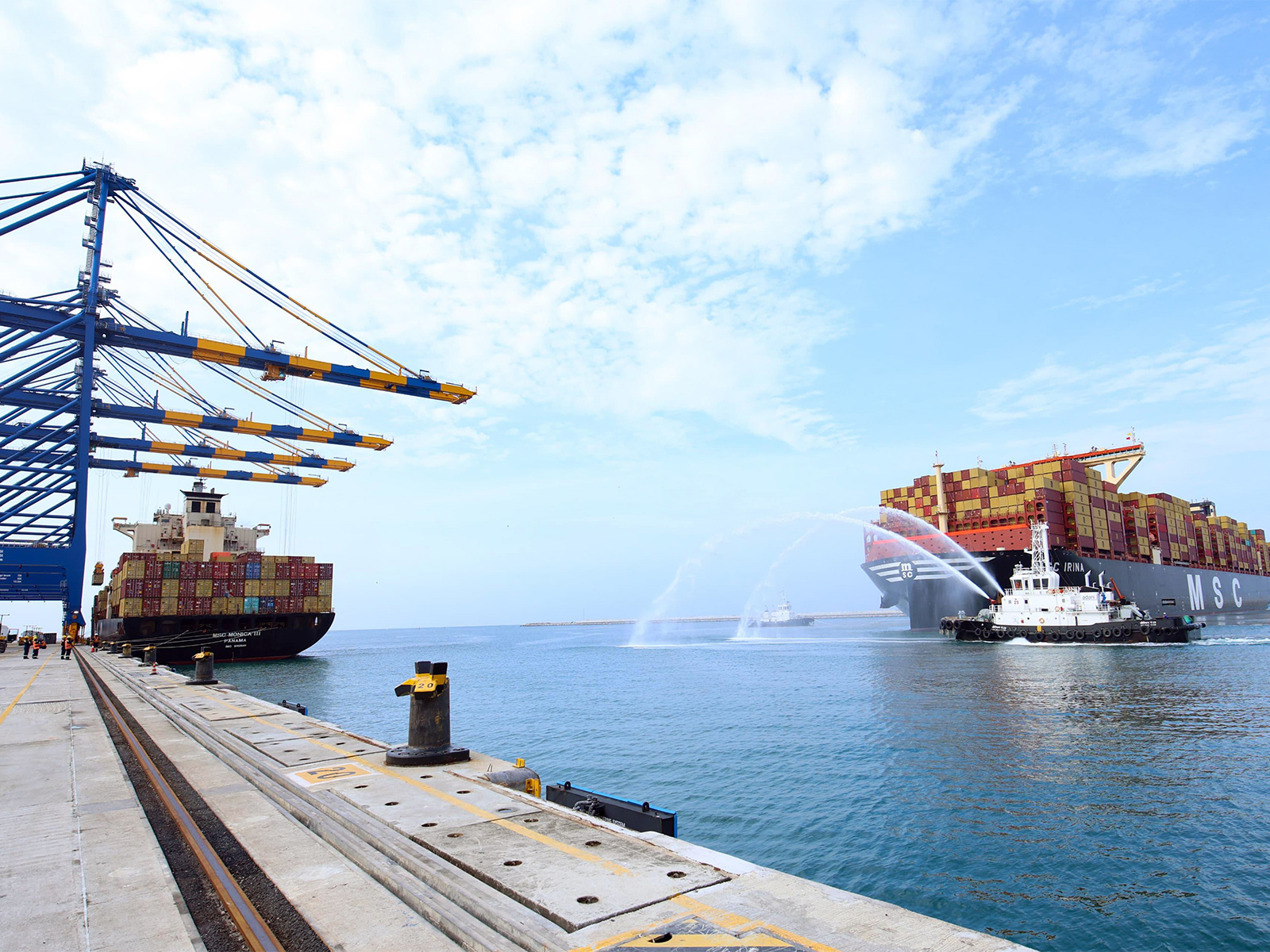
India's port cargo handling capacity rises 22%, but logistics gaps persist: Report
Nov 03, 2026
Mumbai (Maharashtra) [India], November 3 : India's cargo handling capacity at ports has increased by 22 per cent, from 2.3 billion tonnes to 2.8 billion tonnes annually since 2017-18, but logistical and operational bottlenecks beyond port facilities continue to affect overall trade efficiency, according to a joint report by FICCI and Kearney.
The report said cargo handled at major and non-major ports increased by 38 per cent from 1,209 million tonnes to 1,668 million tonnes during the period. Port capacity utilisation also improved from 52 per cent to 59 per cent, indicating that facilities continue to have additional capacity.
"The next phase of maritime growth will be decided less by berths and cranes than by the shipping services, inland links, logistics and industry that connect ports to markets," the report noted.
Operational efficiency at major ports has also improved, with vessel turnaround time declining by 18 per cent to around 49 hours. Jawaharlal Nehru Port Authority (JNPA), Pipavav and Mundra also featured among the top 30 ports in the World Bank's Container Port Performance Index 2025.
However, the report highlighted that delays after customs clearance remain a major challenge. At four key seaports covered under the 2025 National Time Release Study, export approvals took an average of 30 hours, while the time between official clearance and vessel departure stood at 158 hours, accounting for 84 per cent of the total recorded time.
At Jawaharlal Nehru Custom House, customs processing took an average of two hours and 12 minutes in 2026, but the overall export cycle continued to exceed eight days.
"This reflects logistics activity and scheduled waiting, not only avoidable delay," the report noted, adding that the findings show "where coordination matters most."
The report also pointed to India's dependence on foreign transhipment hubs, with international ports handling around 75 per cent of the country's transhipment containers as of May 2025.
The operational launch of Vizhinjam port in May 2025 has added deepwater handling capacity. However, subsequent changes in shipping-line rotations indicate that structural challenges in developing domestic transhipment facilities remain.
On the infrastructure front, private terminal operators currently handle around two-thirds of major port traffic under the Major Port Authorities Act, 2021. The government has set a target of increasing private sector participation to 85 per cent by 2030.
Connectivity with hinterland markets also remains an area requiring attention. Of the 294 identified road and rail connectivity projects, 84 had been completed by July 2026. The 1,506-km Western Dedicated Freight Corridor, connecting Dadri with JNPA, became fully operational in March 2026.
Comparing India's trade corridors with major global logistics hubs such as Shanghai-Ningbo, Rotterdam, Jebel Ali and Singapore, the report called for targeted development plans for container ports, transhipment hubs, energy-related ports and dedicated export corridors.
It recommended that the Ministry of Ports, Shipping and Waterways, along with state administrations, identify key industrial clusters and develop transport connectivity based on actual freight movement.
The report also called for better coordination among transport agencies and dedicated gateway coordinators to monitor infrastructure projects and address operational challenges.