Meghalaya's Jirang FPC revenue surges to Rs 1.17 crore as women farmers take GI-tagged agro products global
Jul 04, 2026
By Hemanta Kumar Nath
Ri-Bhoi (Meghalaya) [India], July 4 : Meghalaya's Jirang Organic Agro Farmers Producer Company (FPC) has emerged as a model of women-led rural entrepreneurship, with its annual revenue surging to over Rs 1.17 crore by 2025 from just Rs 1.5 lakh during 2017-2021, as women farmers have taken the state's GI-tagged pineapples and other premium agro products to domestic and international markets.
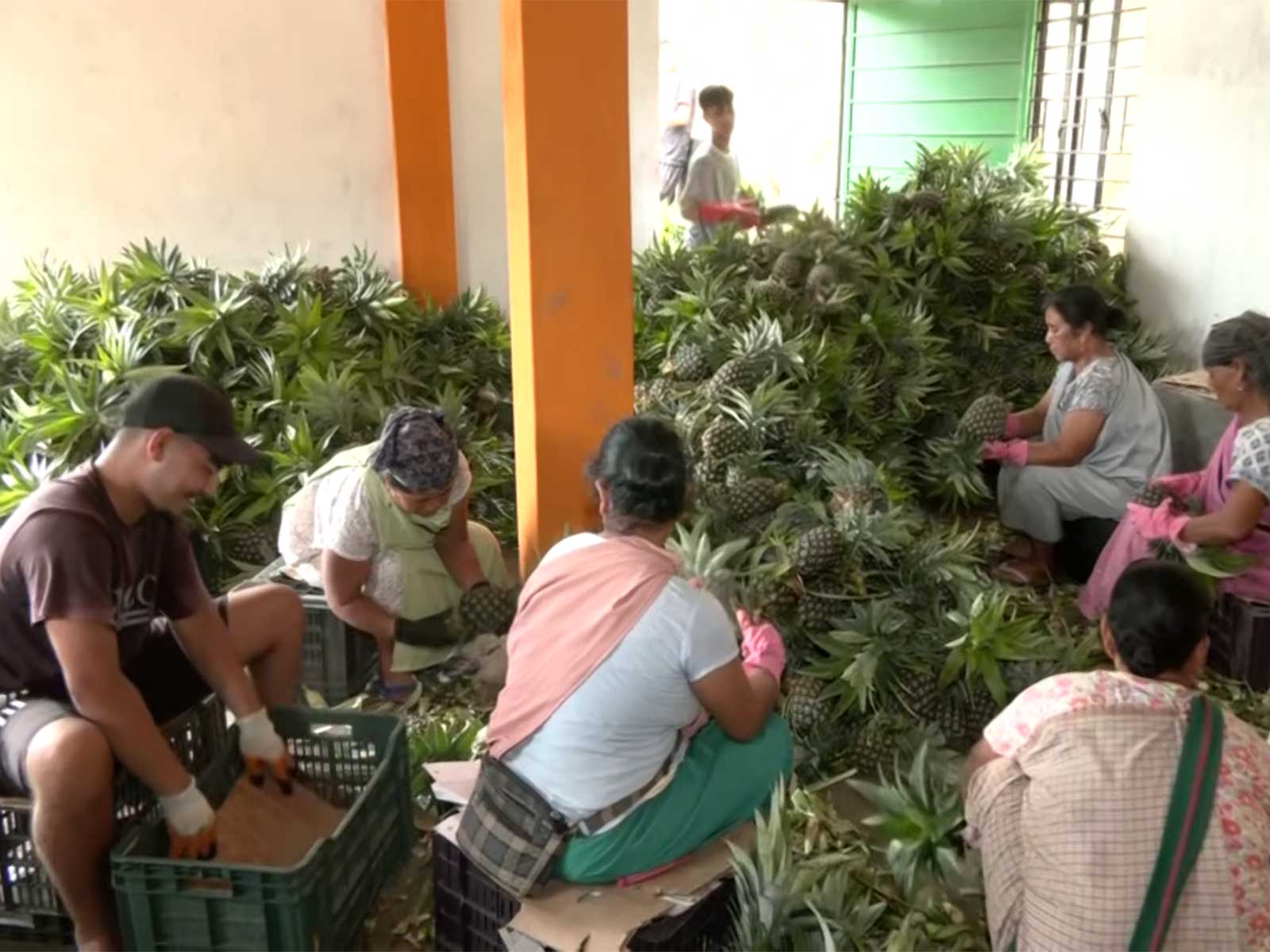
Based in Ri-Bhoi district, the Jirang Organic Agro Farmers Producer Company was established in 2017 with 433 farmers from 18 villages. Nearly 75 per cent of its members are women, who are leading efforts to strengthen Meghalaya's rural economy while showcasing the state's naturally organic produce on the global stage.
Along with male farmers, 200 women cultivators such as Ibalahun Thangkhiew and Daisy Wahlang are spearheading the production and marketing of Meghalaya's premium pineapples, Khasi Mandarin oranges, ginger and black pepper, helping create a distinct identity for the state's agricultural products.
Meghalaya has emerged as one of India's leading producers of premium-quality pineapples, known for their exceptional sweetness, rich aroma, low acidity and naturally organic cultivation practices. Grown across the state's rain-fed hills and valleys, particularly in Ri-Bhoi, Garo Hills and parts of the Khasi and Jaintia Hills, pineapple cultivation supports thousands of farming households and forms a vital part of the state's horticultural economy.
The state's GI-tagged pineapple has also gained international recognition. During his official visit to the United Arab Emirates in 2025, Prime Minister Narendra Modi presented Meghalaya's GI-tagged pineapple to the UAE President, highlighting the state's agricultural heritage on the global platform.
Speaking to ANI, Ibalahun Thangkhiew, Chief Executive Officer of Jirang Organic Agro Farmers Producer Company, said the organisation has significantly expanded its market reach while creating economic opportunities for women.
"We have exported our products to Dubai and other parts of India. We are also working on women empowerment as well as to develop the rural economy," Thangkhiew said.
Vice-Chairperson Daisy Wahlang credited government support for helping the farmer collective establish value-added processing facilities and improve market access.
"I thank the government for its support as it has assisted us with the required machines to process the fruits and to export the products. This is an opportunity for us to earn a living while also creating jobs," Wahlang told ANI.
Pineapple farming in Meghalaya is deeply rooted in the state's community traditions and matrilineal social structure, where women play a central role in cultivation, post-harvest management and farmer institutions. For many households, pineapple cultivation is not only an agricultural activity but also a major source of income and women's economic empowerment.
Over the years, the Jirang FPC has built strong market linkages with leading buyers, including Lulu Group, Safal-Mother Dairy, Reliance Retail and Blinkit, enabling farmers to secure better prices while reducing dependence on intermediaries.
A significant milestone in the company's journey came in September 2025 with the inauguration of Meghalaya's first aseptic pineapple pulp processing unit at Jirang. Established under the state's Community-Public-Private Partnership (CPPP) model with support from the International Fund for Agricultural Development (IFAD) and the FOCUS programme, the Rs 2.46 crore facility can process 10 metric tonnes of fresh fruits per day and has an annual processing capacity of 480 to 600 metric tonnes of pineapple into pulp.
The processing unit has enabled year-round market access for farmers, reduced post-harvest losses and increased value addition, thereby strengthening farmer incomes.
The success of the Jirang FPC reflects Meghalaya's broader strategy of building integrated, farmer-owned value chains that combine community ownership, government investment and private-sector partnerships.
The state government has adopted a comprehensive value-chain approach focusing on farmer collectivisation, processing, branding and market access through flagship initiatives such as the Meghalaya State Organic Mission, FOCUS, the Meghalaya Livelihoods and Access to Markets Programme (MLAMP) and CM FARM+.
Under the Meghalaya State Organic Mission (2024-2028), an investment of Rs 295 crore has been earmarked to bring one lakh hectares under certified organic cultivation by 2028, benefiting over 90,000 farmers and strengthening more than 600 cooperatives and farmer institutions. Pineapple remains one of the priority crops under the mission and accounts for nearly 25 per cent of the area currently under organic certification.
The state has also introduced scientific interventions to improve planting materials, cultivation practices and productivity, while demonstration farms, farmer training programmes and exposure visits have encouraged the adoption of modern technologies without compromising traditional and sustainable farming practices.