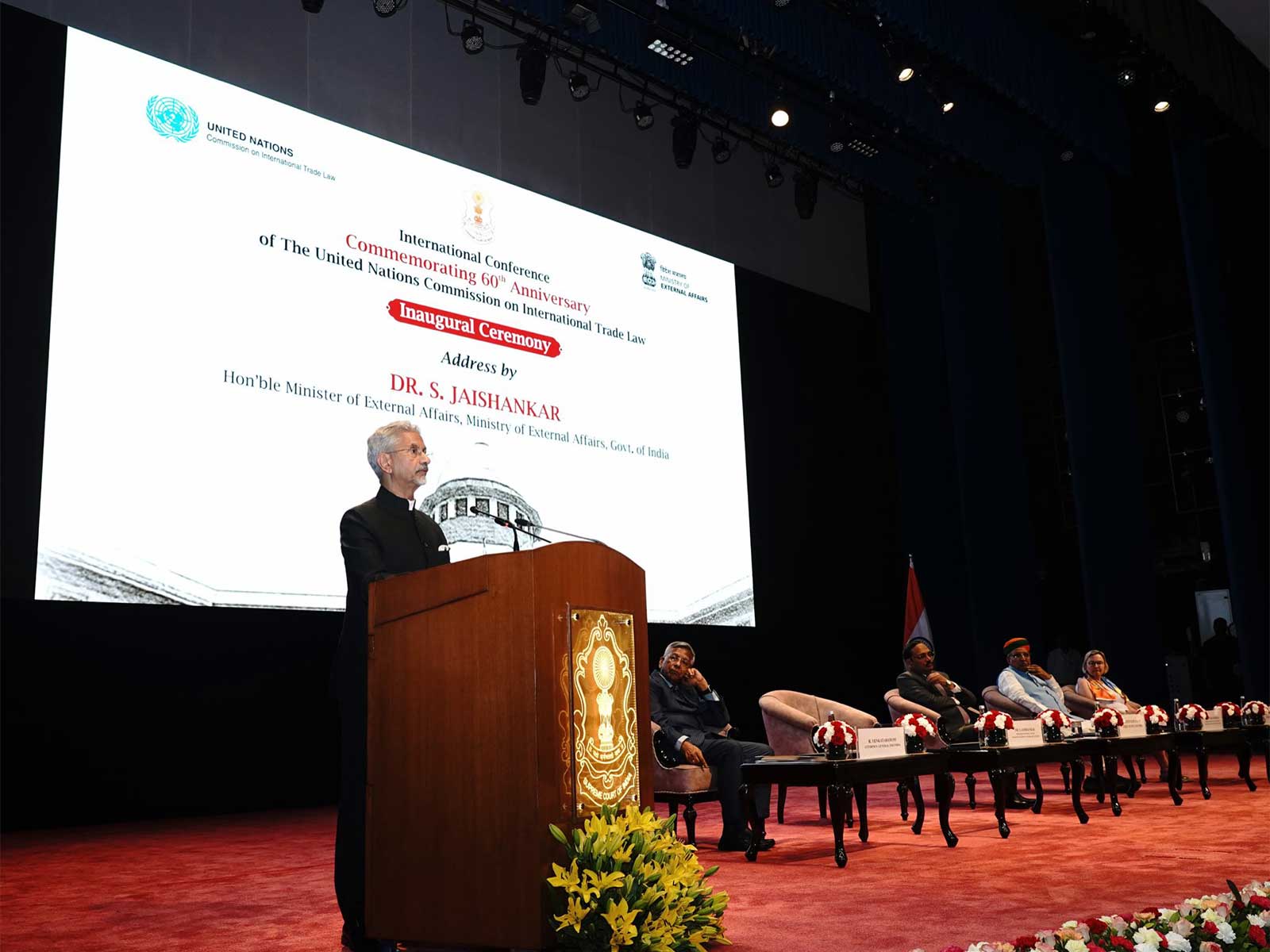
"Nations are seeking legal predictability": EAM Jaishankar calls for harmonised trade rules at UNCITRAL conference
Jul 24, 2026
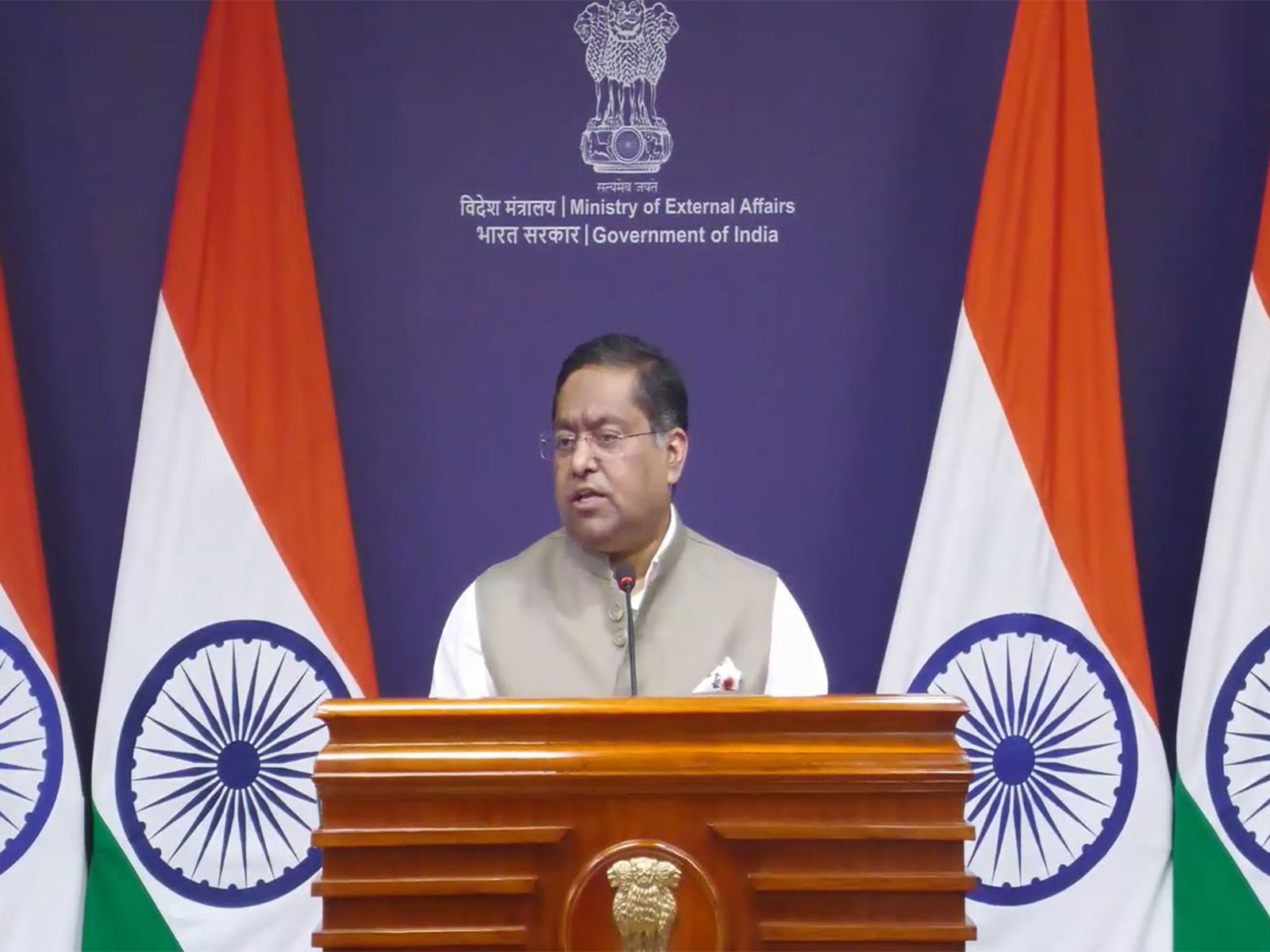
New Delhi [India], July 25 : External Affairs Minister S Jaishankar on Thursday called for a harmonised, rules-based legal architecture to safeguard global trade against growing geopolitical volatility, supply chain disruptions, and rapid technological shifts.
Delivering the inaugural address at an international conference commemorating the 60th anniversary of the United Nations Commission on International Trade Law (UNCITRAL), Jaishankar emphasised that in today's transforming global landscape, nations are seeking legal predictability above all else.
"Today's world is witnessing unprecedented geopolitical volatility, supply chain disruptions, rapid technological shifts," Jaishankar told the gathering of international delegates, jurists, and legal experts. "And these developments are affecting how goods, services, capital, and data move across borders, exposing businesses and governments to risks for which no country can be resilient in isolation."
Addressing the evolving dynamics of international trade, the minister stressed that legal development cannot remain insulated from changing global realities. He noted that standardised legal frameworks are critical to keeping cross-border flows moving reliably amidst systemic uncertainty.
"What nations are seeking is not just infrastructure and connectivity, but most of all legal predictability," Jaishankar asserted. "They are looking for harmonized, rules-based architecture that ensures the trades, data flows and contracts enforcement are seamless across borders and continents. With harmonized legal frameworks, efficient dispute-resolution mechanisms, and greater certainty in cross-border transactions, that UNCITRAL in particular is advancing, trade and cross-border commerce can remain resilient even amidst all these disruption."
Looking toward the future, Jaishankar pointed to the shifting global economic centre of gravity, insisting that tomorrow's legal architecture must become more democratic, inclusive, and attuned to the needs of developing nations.
"Further, as the economic centre of gravity shifts, the legal architecture of tomorrow must be more democratic, inclusive, and sensitive to the realities of the Global South," he stated. "UNCITRAL's important mission in its next chapter will be to ensure that international trade law acts as a leveller, bridging the gap between developed and developing economies."
The External Affairs Minister also underlined India's longstanding engagement with UNCITRAL, noting its position as one of only eight countries with continuous membership.
He highlighted how India's domestic legal framework has drawn inspiration from UNCITRAL instruments, citing reforms in arbitration, commercial dispute resolution, and insolvency as reflections of India's commitment to creating an internationally compatible legal environment.
Jaishankar directly linked these legal reforms to India's broader vision of economic transformation. "Today, India is one of the fastest-growing major economies," he said. "Our vision of Viksit Bharat 2047 is founded on a resilient economy, technological innovation, expanded manufacturing and deeper integration with the global economy. But achieving these objectives requires predictable legal frameworks that facilitate international trade, investment and commercial cooperation."
Reaffirming India's support for a consensus-driven approach, he urged broad participation to ensure international norms reflect global developmental realities. He also underlined the stakes of the Global South in ensuring that the evolution of international trade law.
"Our active engagement across its Working Groups reflects our conviction that international legal norms must be shaped through inclusive dialogue and broad participation," Jaishankar noted. "Developing countries and the Global South have an important stake in ensuring that the evolution of international trade law reflects their developmental priorities as well as practical realities."
Concluding his address, the minister congratulated the UNCITRAL Secretariat on its landmark anniversary and felicitated the Chief Justice of India, the Supreme Court of India, and all co-organisers.
He expressed confidence that the deliberations over the coming days would generate fresh ideas and inspire the next generation of legal scholars, jurists, practitioners, and policymakers across the region to contribute to the progressive development of international trade law.
Reflecting on his remarks, Jaishankar wrote in a post on X, "Pleased to address the inaugural of the international conference commemorating 60th anniversary of UNCITRAL. Over the years, UNCITRAL has made key contributions towards harmonization, modernization and progressive development of international trade law."
"Underlined: Profound global transformations, driven by technological changes, digital commerce, evolving supply chains and new patterns of investments impacting how goods, services, capital, and data move across borders. The necessity of predictable & harmonized legal frameworks, efficient dispute-resolution mechanisms, and greater certainty in cross-border transactions. Stakes of Global South in ensuring that the evolution of international trade law reflects their developmental priorities and practical realities. India's unwavering commitment to create a modern, transparent and internationally compatible legal environment," he added.
UNCITRAL, established by the United Nations, plays a central role in promoting the harmonisation and modernisation of international trade law by developing legislative and non-legislative instruments to facilitate cross-border trade and investment.