NHRC order passed in Delhi does not confer jurisdiction; dismisses Adivasi families’ plea: Delhi HC
Nov 20, 2026
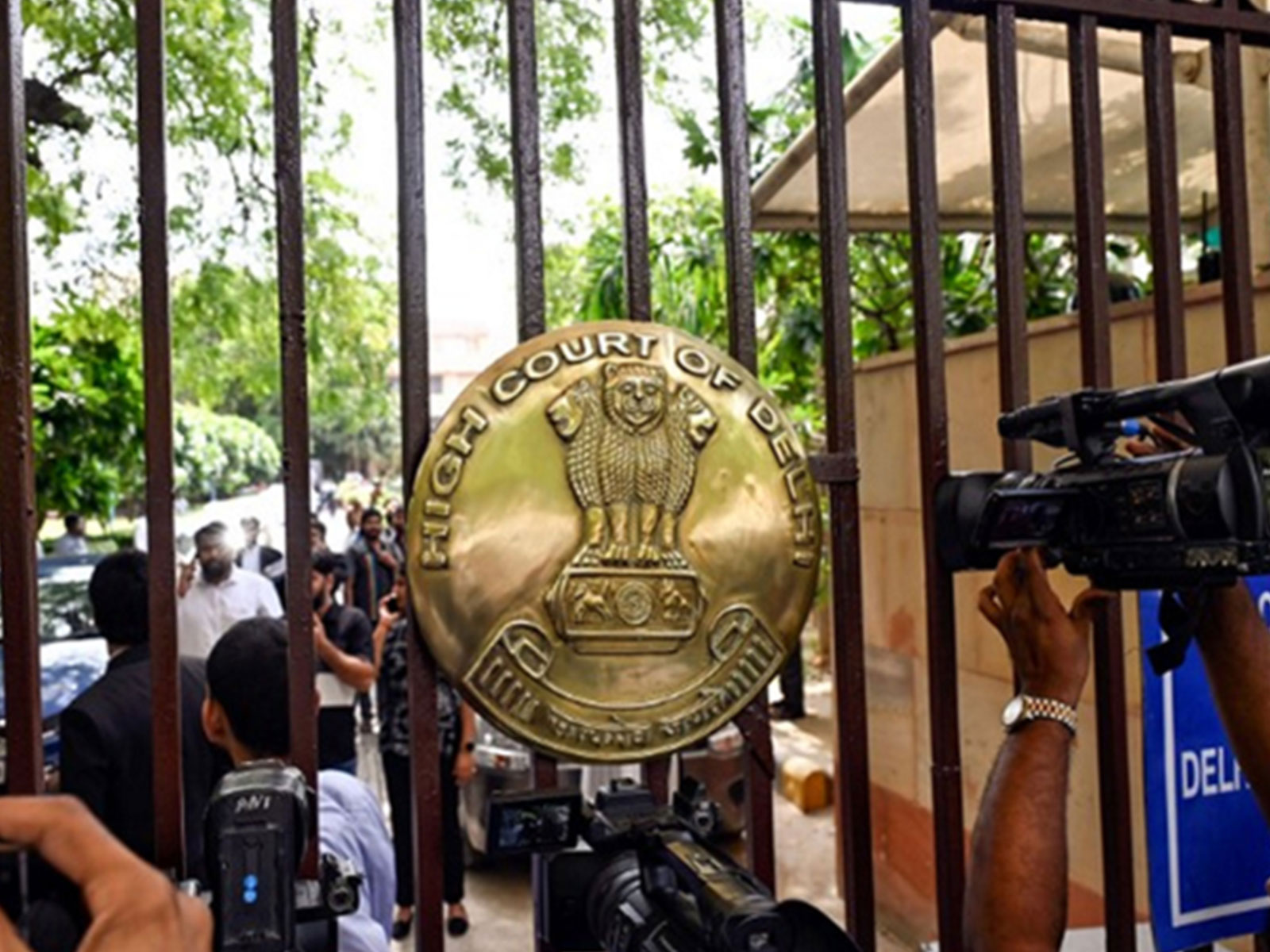
New Delhi [India], November 20 : The Delhi High Court has held that the mere fact that the National Human Rights Commission (NHRC) passed an order in New Delhi does not confer territorial jurisdiction on the Court to entertain a challenge to its decision, particularly when the entire dispute and the alleged human rights violations relate to another State.
Dismissing a petition concerning alleged threats, assaults and forced religious conversion of Adivasi families in Chhattisgarh, Justice Swarana Kanta Sharma held that the Chhattisgarh High Court was the appropriate forum to examine the grievance, as the petitioner, alleged victims, place of occurrence, concerned authorities and relevant records were all situated in Sukma district.
The Court observed that even if the passing of the NHRC order in Delhi gave rise to a part of the cause of action within its territorial jurisdiction, that alone was not sufficient to warrant the exercise of its writ jurisdiction.
“The High Court of Chhattisgarh has the most direct and substantial connection with this, and would be most appropriately placed to examine the grievance of the petitioner,” the Court observed.
The Court further cautioned that accepting the petitioner’s contention would mean that every order passed by the NHRC concerning an incident anywhere in the country could be challenged before the Delhi High Court merely because the Commission is headquartered in the national capital.
The Court was hearing a petition filed by an Adivasi resident of Village Chitlanar in Sukma district, challenging the NHRC’s June 9, 2026 decision to dispose of his complaint by forwarding it to the concerned district authorities for appropriate action.
The petitioner had alleged that several Adivasi families in the village, who had been practising Christianity for around 18 years, were threatened and assaulted for refusing to convert to Hinduism.
According to the petition, on March 5, 2026, a mob, allegedly including local Panchayat members, entered the homes of Christian Adivasi families and demanded that they either embrace Hinduism or leave the village.
It was alleged that two persons, Santa Barse and Ayte Barse, were assaulted with sticks and subsequently admitted to the District Hospital in Sukma. The families were also allegedly threatened with death.
The petitioner further claimed that the affected families, including women, children and elderly persons, were forced to leave the village and had since been living in makeshift shelters in Sukma town.
The petition stated that despite repeated complaints to the police and district administration, no effective action was taken. It was also alleged that on March 17, 2026, the families were again threatened with death if they returned to the village without renouncing Christianity and accepting Hinduism.
Thereafter, the petitioner approached the NHRC under Sections 12, 13, 17 and 18 of the Protection of Human Rights Act, 1993.
On June 9, 2026, the Commission disposed of the complaint by directing that it be forwarded to the District Magistrate and Superintendent of Police, Sukma, to take appropriate action within eight weeks, associate the complainant and victims, and inform them about the action taken.
Aggrieved by the decision, the petitioner approached the Delhi High Court, seeking directions to treat the NHRC’s order as an interim direction rather than a final disposal of his complaint and asking the Commission to reconsider the matter and take fresh cognisance.
The petitioner argued that since the impugned decision had been taken by the NHRC at its principal office in New Delhi, a material part of the cause of action had arisen within the territorial jurisdiction of the Delhi High Court.
The respondents opposed the petition, contending that the alleged incidents, complaints, displacement of families and allegations of police inaction all related to Sukma district in Chhattisgarh. They also raised an objection that proceedings concerning the same subject matter were pending in Chhattisgarh.
Rejecting the petitioner’s territorial jurisdiction argument, Justice Sharma noted that the NHRC had not adjudicated upon any right or claim of the petitioner through its June 9 order. It had merely forwarded the complaint to the District Magistrate and Superintendent of Police, Sukma, directing them to take appropriate action.
The Court observed that the NHRC had acted merely as a channel by routing the complaint back to the very authorities against whom the grievance of inaction had been raised.
It further noted that examining the reliefs sought by the petitioner would necessarily require an assessment of the incidents in Sukma, the alleged inaction of the local police and administration, and the action taken by them pursuant to the NHRC’s directions. All these facts and records were located in Chhattisgarh.
The Court also took note of the fact that neither the State of Chhattisgarh nor the District Magistrate or Superintendent of Police, Sukma, against whom the allegations of inaction were directed and who were required to act upon the NHRC’s directions, had been impleaded as parties to the proceedings.
Referring to the Supreme Court’s judgment in Kusum Ingots & Alloys Ltd. v. Union of India, the Court reiterated that the mere location of the Union Government or the concerned authority in Delhi does not, by itself, confer territorial jurisdiction upon the High Court.
It also referred to earlier decisions, including Sterling Agro Industries Ltd. v. Union of India and Rishi Pal v. National Commission for Scheduled Castes, to explain that even where a part of the cause of action arises within a High Court’s territorial limits, the Court may decline to exercise its discretionary jurisdiction by applying the principle of forum conveniens.
The Court further observed that if proceedings relating to the same subject matter were indeed pending in Chhattisgarh, as contended by the respondents, entertaining the present petition could lead to parallel adjudication and conflicting orders.
However, the Court refrained from recording any finding on the respondents’ allegation that the petitioner had concealed the pendency of other proceedings, clarifying that the judgment was confined to the issue of territorial jurisdiction.
Accordingly, the High Court dismissed the petition and pending applications for want of territorial jurisdiction and on the principle of forum conveniens, while granting liberty to the petitioner to pursue remedies available under law before the appropriate forum, including the Chhattisgarh High Court.
The Court clarified that it had not expressed any opinion on the merits of the allegations or the other objections raised by the respondents, and all rights and contentions of the parties were left open.