"Parents bring up kids, not algorithms": Ursula von der Leyen outlines three-point EU plan for child online safety, age verification
Jul 13, 2026
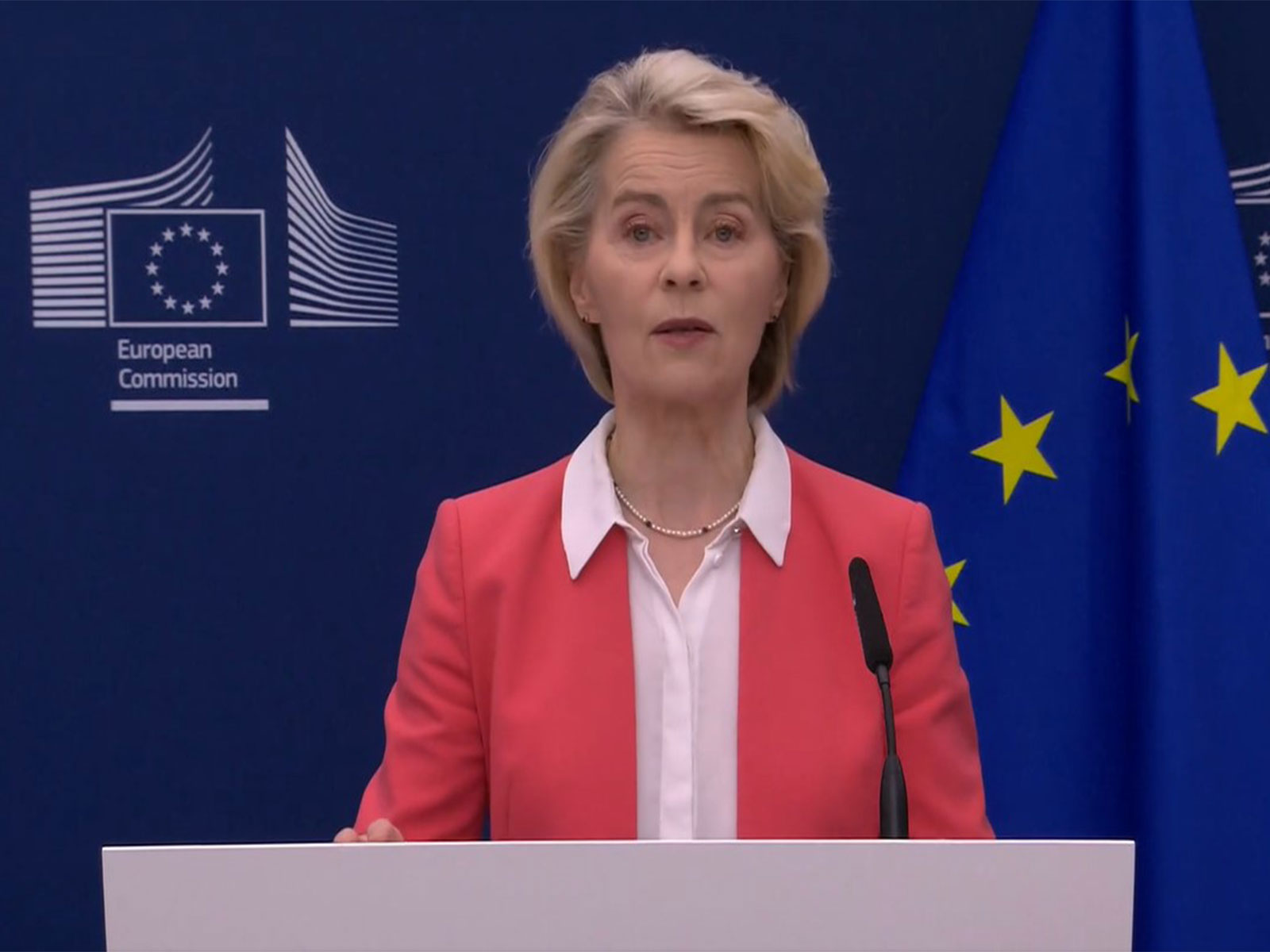
Brussels [Belgium], July 13 : European Commission President Ursula von der Leyen on Monday (local time) stressed the need for age-appropriate restrictions on social media platforms in Europe to make them a safer place for children.
During a press conference after a Special Panel on child safety online with co-chairs Dr Melchior and Professor Fegert, Ursula laid out a three-pronged legislative strategy to dismantle Big Tech's "unrestricted access" to children, demanding strict platform accountability, a new age verification system, and a legally mandated "social media start date".
She shared her remarks on X and captioned the post, "We need age-appropriate restrictions on platforms. This is not about whether children can access social media. It is about when social media can access our children. For a safer start online for every child."
https://x.com/vonderleyen/status/2076578235568083069?s=20
In her first major point, von der Leyen asserted that tech companies must shoulder the full legal burden of product safety, shifting the responsibility entirely away from families. Under Europe's Digital Services Act, she vowed to continue enforcing "safety-by-design" rules to aggressively strip away addictive features, dark patterns, and harmful content.
Under the European Union's Digital Services Act (DSA), platforms are already required to mitigate risks arising from harmful online content.
"In Europe, whoever develops a product is responsible for its safety. Car manufacturers must make their vehicles safe. We do not expect children to design their own seatbelts. We do not expect parents to fit airbags at home. And the very same must be true for big tech. This is why we have the Digital Services Act so that providers remove harmful features - addictive algorithms, dark patterns, harmful content, or unwanted contacts," she stated.
"With our DSA, we have already taken strong action - against TikTok's addictive design, and just last week against Meta. Because the rule in Europe is safety-by-design. The platforms have a duty of care to their users, especially to their most vulnerable users. So when a young person reports a problem, providers must respond quickly and effectively. Children's rights must be taken seriously. And companies must be held accountable," she added.
Turning to her second point, the European chief called for robust, age-appropriate restrictions to govern how digital networks interact with minors, shifting the conversation from whether children can access social media to "whether and when social media can access our children".
To put boundary-enforcing power back into the hands of families, she championed the deployment of an EU-developed age verification app.
"It is clear we need age-appropriate restrictions on platforms. This is not about whether children can access social media. It is about whether and when social media can access our children. The question is no longer if children face risks online, but what can we do to give children a safer start online? And here, our age verification app is one of the tools to get it done," she said.
She described the app as "easy to use, privacy preserving, and open source" and said it is "about putting power back into the hands of parents".
For her third and final point, von der Leyen made an explicit case for the establishment of a legally mandated "social media start date" to block the online platforms from having unregulated access to children, promising a formal legislative proposal later this year.
"Just as we do not give our children keys to the car before they have their licence or let them buy alcohol until they are legally allowed, we need to set the age at which they can legally access social media. The status quo, a world where we continue to allow big tech unrestricted access to our children, will only consign another generation to more mental harm, addiction and misery," von der Leyen said.
The European Commission president advocated a gradual, phased approach to digital exposure based on childhood development, emphasising that toddlers under three should have zero screen time, while older children should only access social media under strict time limits and adult supervision to allow them time to build identities in the real world.
Emphasising the urgency of implementing this phased access across "social media plus" platforms, von der Leyen warned that European governments cannot afford to wait, concluding that once childhood is gone, it cannot be recovered.
Notably, currently, at least 22 European nations, both within and outside the European Union, have either proposed, passed, or are actively considering hard age-based bans to keep young teenagers off social media completely.