Parliament Monsoon Session ends amid opposition protests; 12 Bills passed, only one debated; productivity 19% in LS, 39% in RS
Aug 13, 2026
New Delhi [India], August 13 : The Monsoon Session of Parliament, which began on July 20, was adjourned sine die on Thursday after 19 sittings spread over 25 days -- a session in which 12 Bills were passed but only one, the Public Examinations (Prevention of Unfair Means) Amendment Bill, 2026, was actually debated in the House.
Every other Bill was passed without discussion, as repeated Opposition protests over the NEET paper leak, an alleged "theft" of Ram Temple donations,aand the police alleged crackdown on student protesters on July 20 reduced discussion time to a trickle even as the government pushed through its legislative agenda.
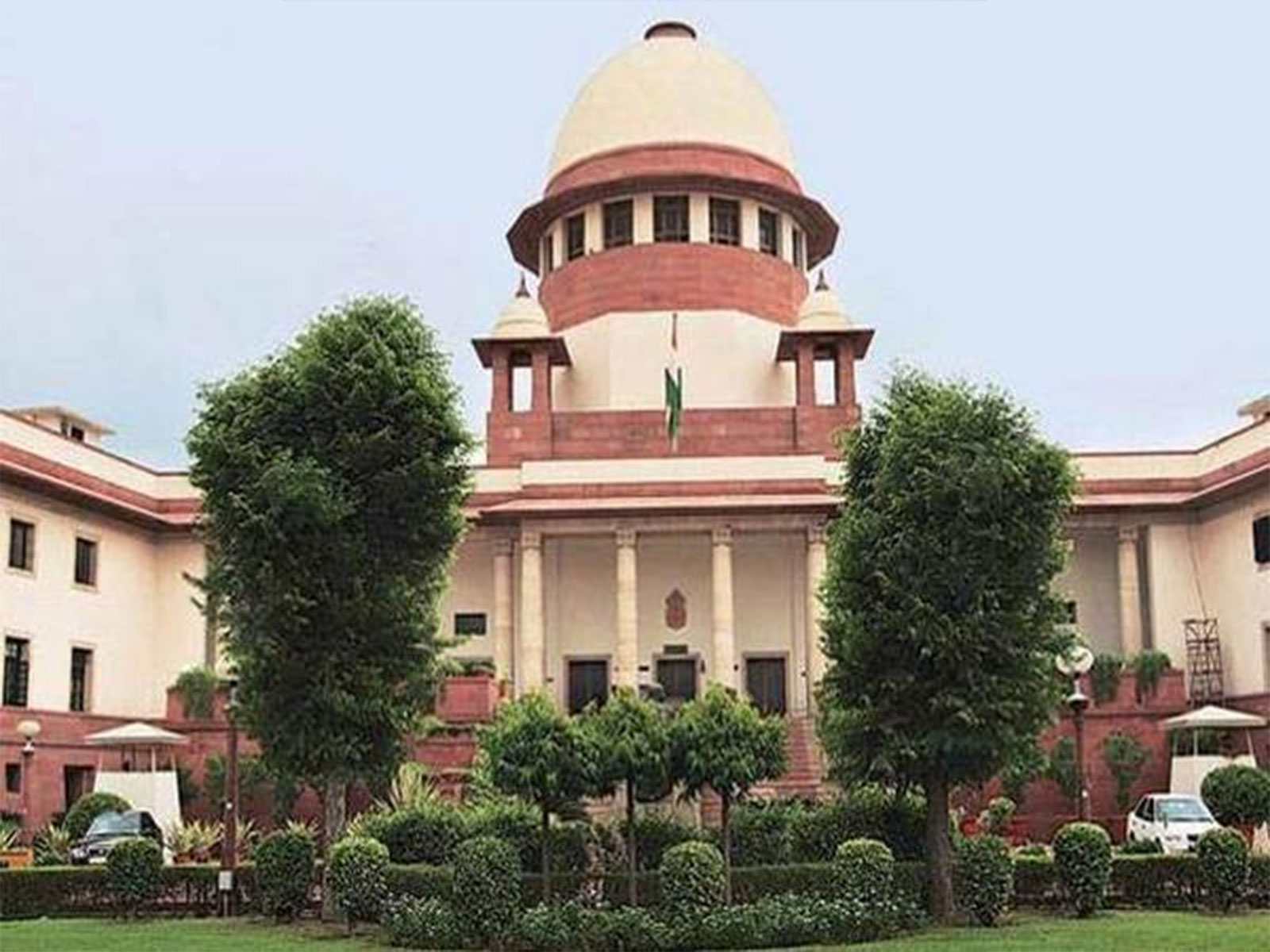
During the session, 11 Bills were introduced in the Lok Sabha and two in the Rajya Sabha, while 12 Bills were passed by both Houses. Two of those replaced ordinances the President had promulgated before the session -- the Supreme Court (Number of Judges) Amendment Ordinance and the Income-Tax (Amendment) Ordinance, both of 2026.
But productivity told a different story. Lok Sabha functioned at roughly 19 per cent of its allotted time, Rajya Sabha at about 39 per cent.
Among the major legislations cleared during the session was the Public Examinations (Prevention of Unfair Means) Amendment Bill, 2026, introduced amid the ongoing political debate over examination irregularities and student concerns.
The Bill seeks to strengthen the public examination system by ensuring speedy investigation and time-bound trials in cases related to unfair means. It provides for completion of investigations within two months and trials within three months, empowers state governments and Union Territory administrations to establish Special Fast Track Courts, allows appointment of Special Public Prosecutors and enables the Centre to create Special Task Forces wherever required.
The legislation also increases penalties for offences and introduces a time-bound appellate mechanism before a Division Bench of the High Court. The Bill was passed by both Houses and received the President's assent.
Another major development was the passage of two Bills replacing Ordinances issued before the session -- the Supreme Court (Number of Judges) Amendment Bill, 2026 and the Income-Tax (Amendment) Bill, 2026.
The Demands for Excess Grants for the year 2022-23 were also taken up. The related Appropriation Bill was introduced, considered and passed by the Lok Sabha on August 4 and returned by the Rajya Sabha on August 6.
The Parliament also passed the Prevention of Insults to National Honour (Amendment) Bill, 2026, which seeks to bring Vande Mataram, the National Song, under Section 3 of the Prevention of Insults to National Honour Act, 1971.
The legislation makes intentional obstruction of the singing of Vande Mataram or disruption of assemblies engaged in its singing an offence, thereby extending legal protection to the National Song.
The Registration of Births and Deaths (Amendment) Bill, 2026 was passed to make delayed registration procedures stricter by prescribing a streamlined verification mechanism. Under the amended framework, registration after one year and up to two years would require approval from the competent Executive Magistrate, while delays beyond two years would require approval from a Judicial Magistrate of First Class.
The Micro, Small and Medium Enterprises Development (Amendment) Bill, 2026 seeks to create a national digital platform for free and voluntary registration of MSMEs, improve access to finance, ensure faster resolution of delayed payment disputes and promote ease of doing business. It also proposes decriminalisation of certain offences by replacing conviction-based fines with graded penalties.
The Bankers' Books Evidence Bill, 2026 expands the definition of bankers' books to include physical, electronic, digital, virtual and cloud-based records. The legislation aims to create a technology-neutral framework, standardise certificates and recognise digital authentication.
The Kerala (Alteration of Name) Bill, 2026 seeks to amend the First Schedule of the Constitution to change the name of the state from "Kerala" to "Keralam".
The National Co-operative Development Corporation (Amendment) Bill, 2026 aims to strengthen the cooperative sector by expanding the definition of foodstuffs, removing geographical restrictions on industrial goods and improving financial assistance mechanisms.
The Tribunals Reforms Bill, 2026 seeks to improve transparency and independence in tribunals by bringing uniformity in qualifications, appointments and service conditions of chairpersons and members. It also proposes the establishment of a National Tribunals Commission.
The Mines and Minerals (Development and Regulation) Amendment Bill, 2026 aims to provide greater certainty and stability in the mineral sector's fiscal framework and support economic growth under the vision of Atmanirbhar Bharat and Viksit Bharat 2047.
One Bill did not make it through -- the Foreign Contribution (Regulation) Amendment Bill, 2026 was referred to a 31-member Joint Committee of Parliament (21 from Lok Sabha, 10 from Rajya Sabha) after Opposition parties, including Congress, the Samajwadi Party and Trinamool Congress, alleged the changes could be used to target NGOs, minority institutions and foreign-funded organisations.
The government defended the Bill as a transparency measure. The JPC is expected to submit its report by the last day of the first week of the Winter Session; Congress has said referral is no substitute for its demand that the Bill be withdrawn altogether.
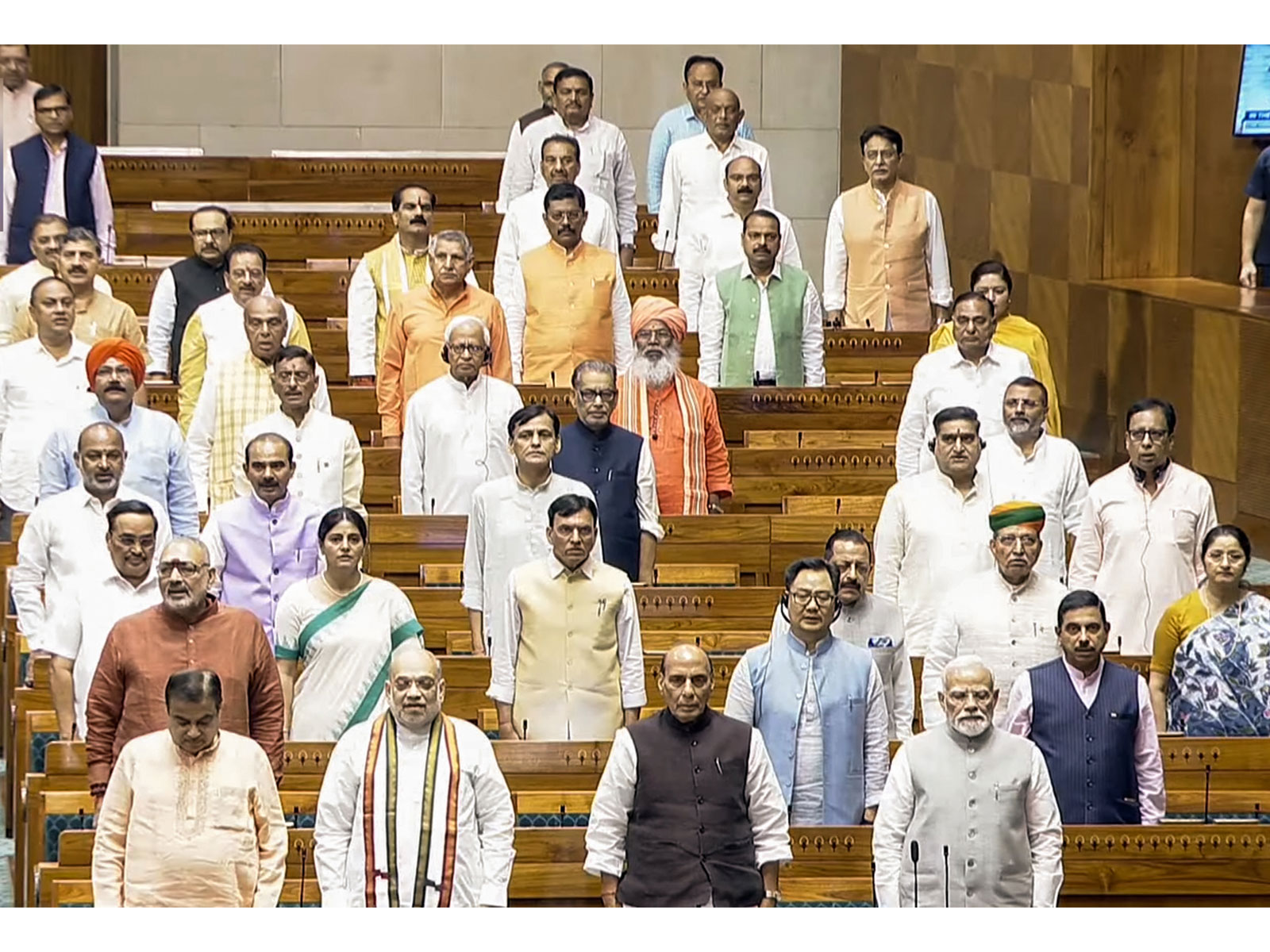
The final day began with all six stanzas of Vande Mataram being played in the Lok Sabha, marking the first such instance in Parliament, following fresh Union Home Ministry directions on the National Song's protocol -- fitting, given that Parliament had just passed a law extending statutory protection to it.
Prime Minister Narendra Modi, Home Minister Amit Shah and other Union Ministers, including Rajnath Singh, Nitin Gadkari, Kiren Rijiju, Giriraj Singh and Pralhad Joshi, were present and stood at attention as it played.
Soon after, Opposition MPs raised slogans demanding answers from Shah over the student protests, shouting "apologise" and "who ordered the lathi-charge?"
The ruling side responded with counter-protests before MPs took their seats. Speaker Om Birla then announced the adjournment of the House sine die.
Interestingly, the Speaker did not deliver the usual valedictory address highlighting the performance of the Lok Sabha during the session.
The Rajya Sabha too was adjourned sine die after a brief sitting, during which Congress raised the issue of an alleged "purification" ritual performed at a venue in Uttarakhand's Haldwani after party president Mallikarjun Kharge addressed a rally there.
Kharge alleged that the act reflected disrespect towards democratic values, while Union Minister JP Nadda condemned the incident and said the party did not support such actions.
The political temperature of the session was largely driven by the controversy surrounding student protests over alleged NEET examination irregularities and the police action during a student march towards Parliament on July 20.
The Opposition repeatedly demanded a statement from Home Minister Amit Shah over allegations of force being used against protesting students, including claims of lathi-charge and use of excessive force.
The issue remained unresolved throughout the session, with repeated disruptions preventing normal proceedings.
On Wednesday, Shah said the government was ready for a discussion on the matter and accused the Opposition of avoiding debate.
Rahul Gandhi rejected the government's offer, saying the Opposition did not want an "Amit Shah lecture" and questioned who ordered the action against students.
"The Opposition has clearly said that we are not interested in Amit Shah giving us a lecture. Who shot the students? Who gave the order to beat up the students with lathis?" Gandhi said.
The government, however, maintained that it was prepared to answer all questions -- placing the blame for the impasse on an Opposition he said was "running away."
Allegations of theft of donations at the Ram Temple in Ayodhya ran alongside the NEET issue as a recurring flashpoint through the session.
The session witnessed repeated slogan-shouting, protests inside the House and demonstrations outside the Parliament complex, with both the BJP and INDIA bloc engaging in counter-protests.
A separate controversy erupted in the Rajya Sabha when Leader of Opposition Mallikarjun Kharge accused the BJP of carrying out a "Shuddhikaran" (purification) ritual on the stage in Uttarakhand's Haldwani, where he had addressed a rally, saying he had spoken only of public problems without naming any community.
"Is this the way things should happen in a democracy? How are you protecting the Constitution?" he asked. Nadda called it "a matter of concern... not just for the Congress party, but for all of us," while insisting the BJP "does not subscribe to such activities."
Meanwhile, Congress MP Pawan Khera led opposition MPs in protest with a toy monkey, raising the slogan "56 inch ka chhota bandar, jaldi aao sadan ke andar" -- a jibe referencing Modi's oft-cited "56-inch chest." Earlier, the BJP had staged its own protest accusing Rahul Gandhi and Congress of failing to acknowledge the ongoing agitation in Jharkhand.
CPI(M) MP Amra Ram accused the BJP of "theatrics" and of passing legislation without debate -- a trend he called unprecedented in his "70 years of life."
Union Minister Sukanta Majumdar hit back, accusing the INDIA bloc of a "fear psychosis" and insisting the government was fully prepared to discuss the Jharkhand agitation but that the Opposition wouldn't engage.
Parliamentary Affairs Minister Rijiju summed up the session's paradox best: strong on business, weak on debate. Twelve Bills passed, two ordinances converted into law, a contentious FCRA amendment kicked to a joint committee, and a historic six-stanza rendition of the National Song to close it out -- all set against a backdrop of near-continuous disruption, unresolved demands for accountability on the student crackdown, and a war of words that spilled from the House onto the steps of the Parliament complex.
Rijiju said the Lok Sabha passed 11 Bills without discussion, while one Bill -- the Public Examinations legislation -- received detailed debate. He accused Congress MPs of reducing parliamentary participation to slogan-shouting and disruptions.
"The government was ready to answer every question, but the Opposition did not allow discussion," Rijiju said.
Opposition leaders, however, blamed the government for avoiding accountability and passing Bills without sufficient scrutiny.
CPI(M) MP Amra Ram accused the government of indulging in "theatrics" and said legislation was being passed without proper debate.
Samajwadi Party MP Rajiv Rai criticised Shah for making a statement only at the end of the session, alleging that the government delayed responding to student concerns.
Congress MP Priyanka Gandhi Vadra also questioned the functioning of Parliament, saying that neither the Prime Minister nor Home Minister participated during the session's crucial moments.
Rijiju said he hoped for "a change for the better" when Parliament reconvenes for the Winter Session.
With 12 Bills passed by both Houses, 11 Bills introduced in the Lok Sabha, two in the Rajya Sabha and the FCRA Bill referred to a JPC, the session recorded substantial legislative activity but limited debate.
Both Houses were adjourned sine die on Thursday, bringing the 8th Session of the 18th Lok Sabha and the 271st Session of the Rajya Sabha to an end.