Pensions and sarees on Constitution Day: Revanth Reddy’s welfare push carries political message, but delivery will be real test
Nov 19, 2026
By Pramod Chaturvedi
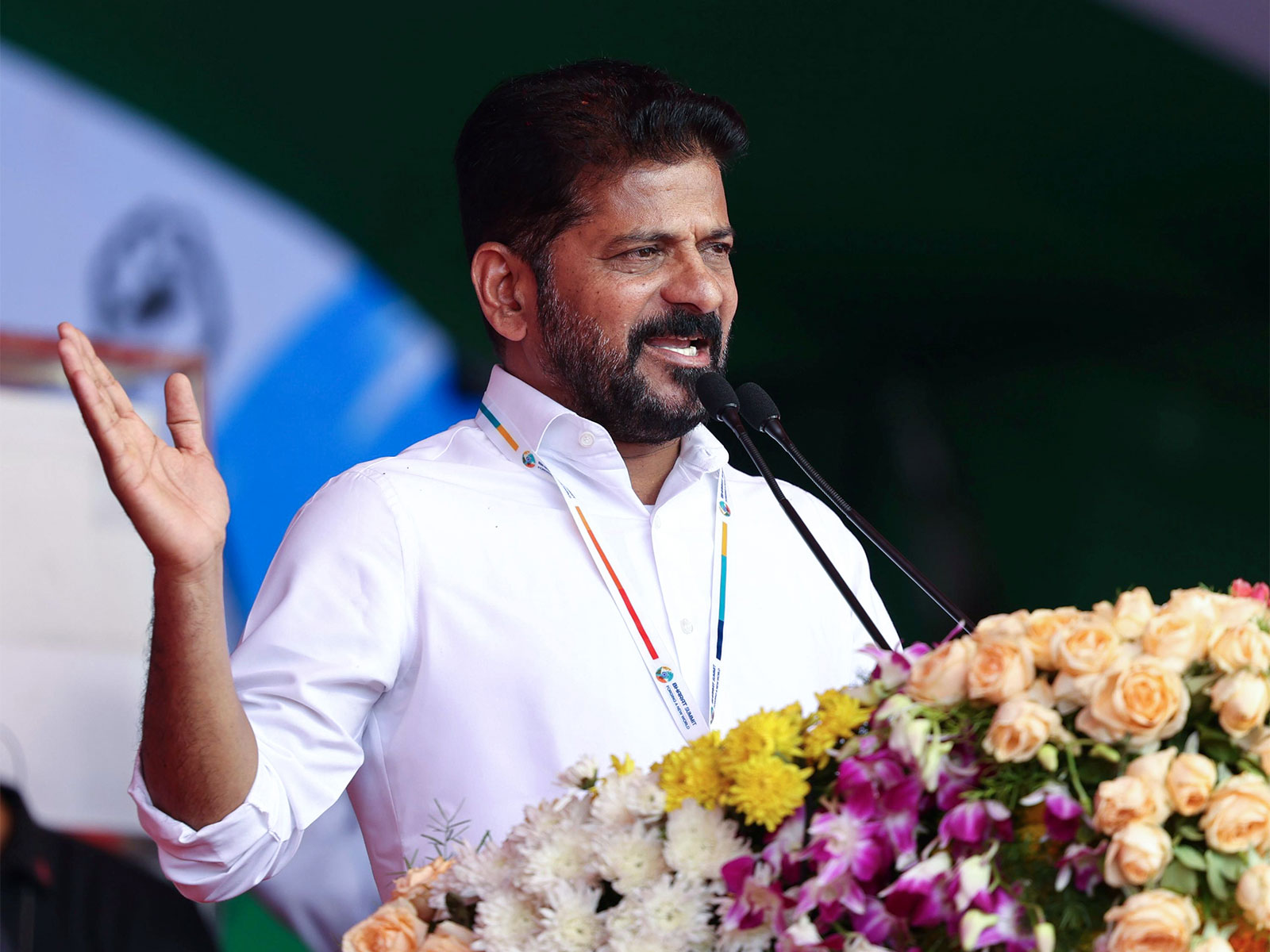
Hyderabad (Telangana) [India], November 19 : The Congress government in Telangana has chosen November 26, Constitution Day, to make a major welfare push by announcing new Cheyutha pensions for 4,63,857 beneficiaries and launching the distribution of Indiramma sarees to one crore women. While the two initiatives are being projected as significant steps towards social security and women’s welfare, their timing and scale also carry an unmistakable political dimension.
For Chief Minister Revanth Reddy, the announcements offer an opportunity to reinforce the Congress government’s welfare image at a time when the administration needs to demonstrate that its electoral promises are translating into tangible benefits. The government appears keen to communicate that its governance model is centred on reaching ordinary households, particularly women, elderly people and economically vulnerable sections.
The pension announcement is particularly important because it brings 4,63,857 additional beneficiaries into the social security network. The decision to credit the pension amounts directly into their bank accounts on November 26 gives the initiative immediate visibility. For households dependent on government assistance, a regular pension can make a meaningful difference to their daily lives.
However, the announcement also raises an important question: why did these beneficiaries have to wait until now, and how many other eligible people are still outside the pension network? Expanding the beneficiary base is welcome, but the government must also explain the criteria used for selection, the process followed to identify beneficiaries and whether all eligible applicants have been covered. Welfare expansion should not become merely a numbers game in which the announcement of new beneficiaries takes precedence over addressing existing exclusions.
The Indiramma saree distribution programme, targeting one crore women, is even more politically significant in terms of its reach. Women constitute a substantial section of the electorate, and welfare initiatives directly reaching households have the potential to create a visible connection between the government and beneficiaries. The programme also fits into the Congress government’s broader strategy of projecting itself as a champion of women’s welfare, alongside free bus travel and other women-oriented initiatives.
Yet, the critical question is whether distributing sarees can be equated with meaningful women’s empowerment. Sarees may offer immediate material assistance and carry social significance, but women’s economic independence requires much more. Access to employment, sustainable livelihoods, financial independence, education, healthcare and stronger self-help groups are essential components of empowerment. The government will need to demonstrate how the saree programme complements these longer-term objectives rather than becoming a substitute for them.
The choice of Constitution Day for launching the initiatives is also politically interesting. November 26 is associated with constitutional values, equality, dignity and social justice. By linking welfare announcements with the occasion, the Congress government can project its programmes as part of a larger commitment to inclusive development. At the same time, the political symbolism should not overshadow the constitutional responsibility of ensuring that welfare benefits reach people transparently and without discrimination.
There is also a larger political calculation behind the simultaneous announcement of the two schemes. The pension programme addresses elderly and vulnerable citizens, while the saree initiative focuses on women across a massive beneficiary base. Together, they allow the Congress to communicate with multiple social groups through two highly visible welfare interventions. This is particularly relevant in Telangana, where welfare delivery, women’s support and social justice have become important themes in political competition.
The Congress government is also attempting to establish a distinction between announcing welfare promises and implementing them. Its six guarantees formed a central part of the party’s 2023 Assembly election campaign. Every additional beneficiary brought into a scheme gives the government an opportunity to demonstrate progress on those commitments. But the political narrative of fulfilment must be supported by a transparent account of what has been delivered, what remains pending and how much public money is being spent.
The financial implications cannot be ignored either. Pension payments create recurring expenditure obligations, while distributing sarees to one crore women involves substantial procurement, logistics and administrative costs. At a time when the government has to balance welfare spending with infrastructure development, employment generation, education and healthcare, fiscal discipline becomes equally important. The government must disclose the financial outlay, procurement arrangements and implementation mechanism to establish that the programmes are economically sustainable and free from irregularities.
Another important issue is the quality and transparency of implementation. In a programme involving one crore women, the government will have to ensure that sarees are of acceptable quality, procurement is fair, distribution is timely and eligible women are not left out. Any allegations of irregularities, political favouritism or substandard material could undermine the intended social impact. Similarly, pension beneficiaries must receive their payments on time, without bureaucratic hurdles.
The opposition parties are also likely to examine these announcements against the Congress government’s broader record on its electoral guarantees. They may question whether the latest initiatives represent the fulfilment of long-pending promises or an attempt to generate fresh political momentum through large-scale welfare announcements. Such scrutiny is part of democratic accountability, particularly when public money is involved.
For Revanth Reddy, November 26 could therefore become an important occasion to showcase his government’s welfare agenda. But the larger political challenge is not simply to announce benefits or organise a high-profile launch. It is to ensure that the benefits reach the intended people and produce measurable improvements in their lives.
Ultimately, the twin initiatives reflect the growing importance of welfare politics in Telangana. The Congress government is seeking to strengthen its political identity through direct assistance to vulnerable sections and large-scale outreach to women. However, the success of this strategy will depend on whether the announcements translate into sustained delivery, financial accountability and genuine social empowerment.
In the final analysis, pensions can provide economic security, and sarees can offer material assistance, but neither can replace employment, income opportunities and long-term social development. Constitution Day may provide the government with a powerful political platform, but the real measure of its commitment to constitutional ideals will be determined by the dignity, fairness and effectiveness with which public welfare reaches every eligible citizen.