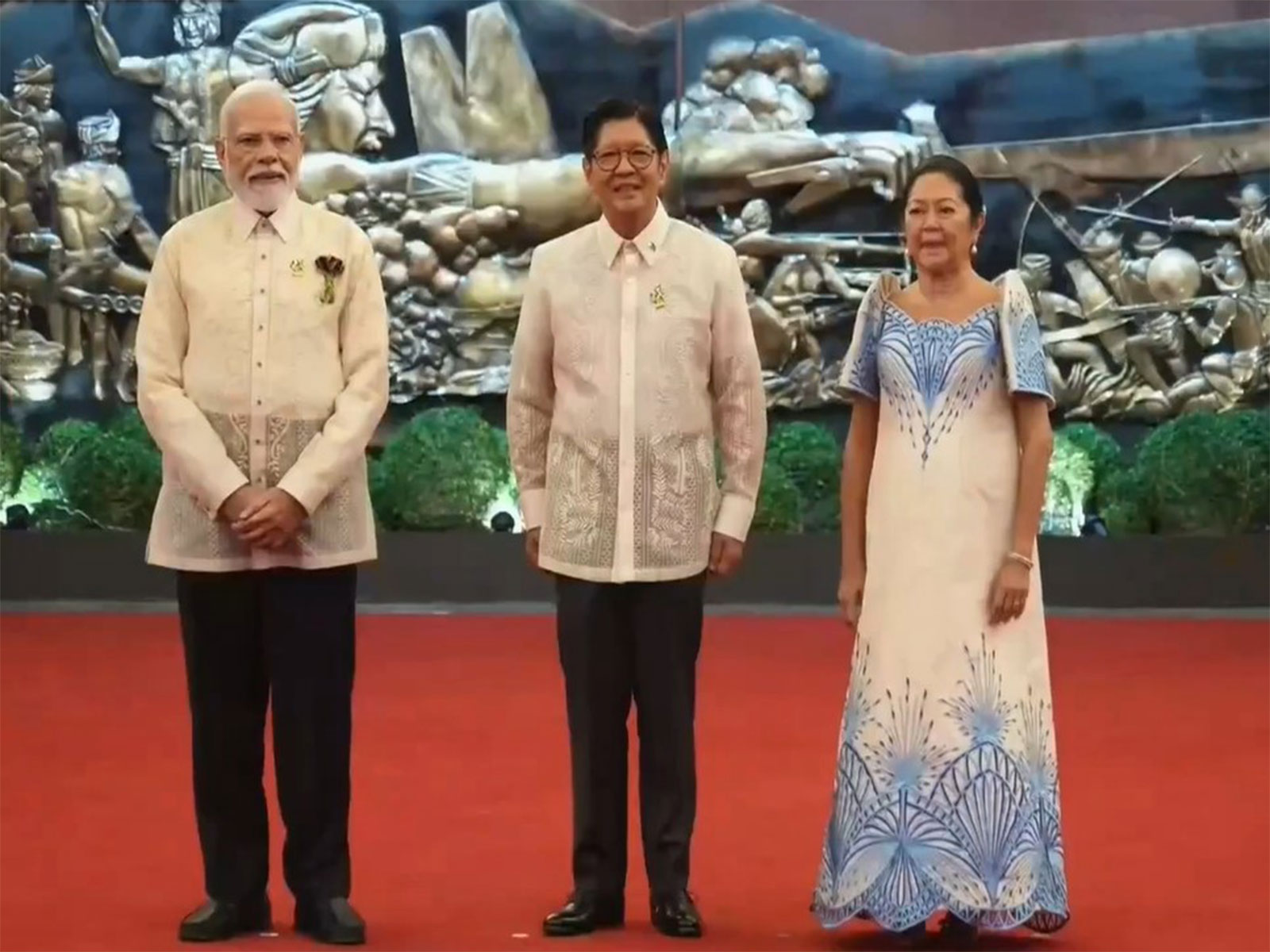
PM Modi arrives for Gala Dinner hosted by Philippines President Ferdinand Marcos in Manila
Nov 16, 2026
Manila [Philippines], November 16 : Prime Minister Narendra Modi has arrived for the Gala Dinner being hosted by Philippine President Ferdinand R. Marcos at the Philippine International Convention Centre in Manila.
The dinner is organised for the visiting dignitaries of the 49th ASEAN Summit and Related Summits, being held under the theme "Navigating the Future".
For the dinner, the Prime Minister was seen donning a Barong Tagalog, the national dress and official formal menswear of the Philippines, similar to the one worn by President Marcos.
Earlier in the day, PM Modi warmly greeted members of the Indian diaspora at Manila International Airport and attended a special theatrical staging of the Ramayana, setting a strong cultural and community-focused tone ahead of key regional summits.
Upon arriving in the Philippine capital for his visit, during which he will participate in the 23rd ASEAN-India Summit and the 21st East Asia Summit, PM Modi interacted directly with enthusiastic members of the Indian community gathered to welcome him.
Later, the Prime Minister witnessed ‘Sita: The Ramayana Revisited’, a theatrical production performed by the Integrated Performing Arts Guild (IPAG) of Iligan City. The performance highlighted how the ancient Indian epic has transcended geographical boundaries to become deeply woven into Southeast Asia's cultural fabric, underscoring the shared civilisational heritage between India and the Philippines.
Furthermore, Prime Minister Narendra Modi also witnessed the recitation of the Purna Kumbha Shloka by students of Filipino and Indian origin from Shri Sathya Sai School during a cultural event in Manila.
Members of the Indian diaspora who interacted with the Prime Minister at the airport described the engagement as a proud and inspiring moment, crediting his leadership for elevating India's global standing."It was a great privilege to meet PM Modi... He is an inspiration for all of us. We will all have to work together for Viksit Bharat 2047. We have to achieve this target," said Dinesh Mishra, a member of the Indian diaspora.
Another community member, Pankaj, noted the growing international prestige felt by Indians abroad. "We want India to grow under the leadership of PM Modi. The kind of respect and regard we are receiving, just because of his leadership, is remarkably good. There has been a dynamic shift that PM Modi's leadership has brought about," he said.
For Rohit, who has lived in the Philippines for two years, the Prime Minister's personal touch stood out during the brief exchange. "The interaction with PM Modi was a great moment. It has been two years since we have been here. PM Modi asked if we had visited Ayodhya or not... We will visit for sure," he said.
PM's visit from November 16 to 18 comes at a significant moment for the 11-member Association of Southeast Asian Nations (ASEAN),
With leaders from major global and regional powers assembling in Manila, discussions are expected to centre on regional security, maritime disputes, economic cooperation and the evolving geopolitical landscape.
For New Delhi, the engagements provide an important platform to advance its Indo-Pacific priorities, particularly stronger naval coordination and maritime security cooperation among like-minded countries, alongside expanding India's commercial and strategic engagement with Southeast Asia.
One of India's principal priorities at the regional gatherings will be strengthening maritime and naval cooperation in the Indo-Pacific, a region where security challenges and maritime disputes continue to feature prominently in diplomatic discussions.
The East Asia Summit, established in 2005, provides a key platform for regional leaders to deliberate on political, security and strategic developments.
Alongside ASEAN's member states, it brings together India, China, Japan, South Korea, Australia, New Zealand, the United States and Russia.
The Philippines' chairmanship has also brought renewed attention to maritime security, particularly the long-pending negotiations between ASEAN and China over a Code of Conduct (COC) for the South China Sea.
Philippine Foreign Affairs Secretary Theresa Lazaro has acknowledged that the bloc will not be able to conclude the agreement during Manila's chairmanship, despite progress in negotiations.
Beyond security cooperation, strengthening economic and commercial ties with ASEAN will be another important focus of PM Modi's visit.
India's partnership with the regional grouping has expanded across trade, investment, defence and security, with New Delhi seeking to deepen economic engagement and improve cooperation amid rapidly evolving geopolitical developments.
One of the important issues on the agenda is the ongoing review of the ASEAN-India Trade in Goods Agreement (AITIGA), with India seeking an early conclusion to the negotiations.
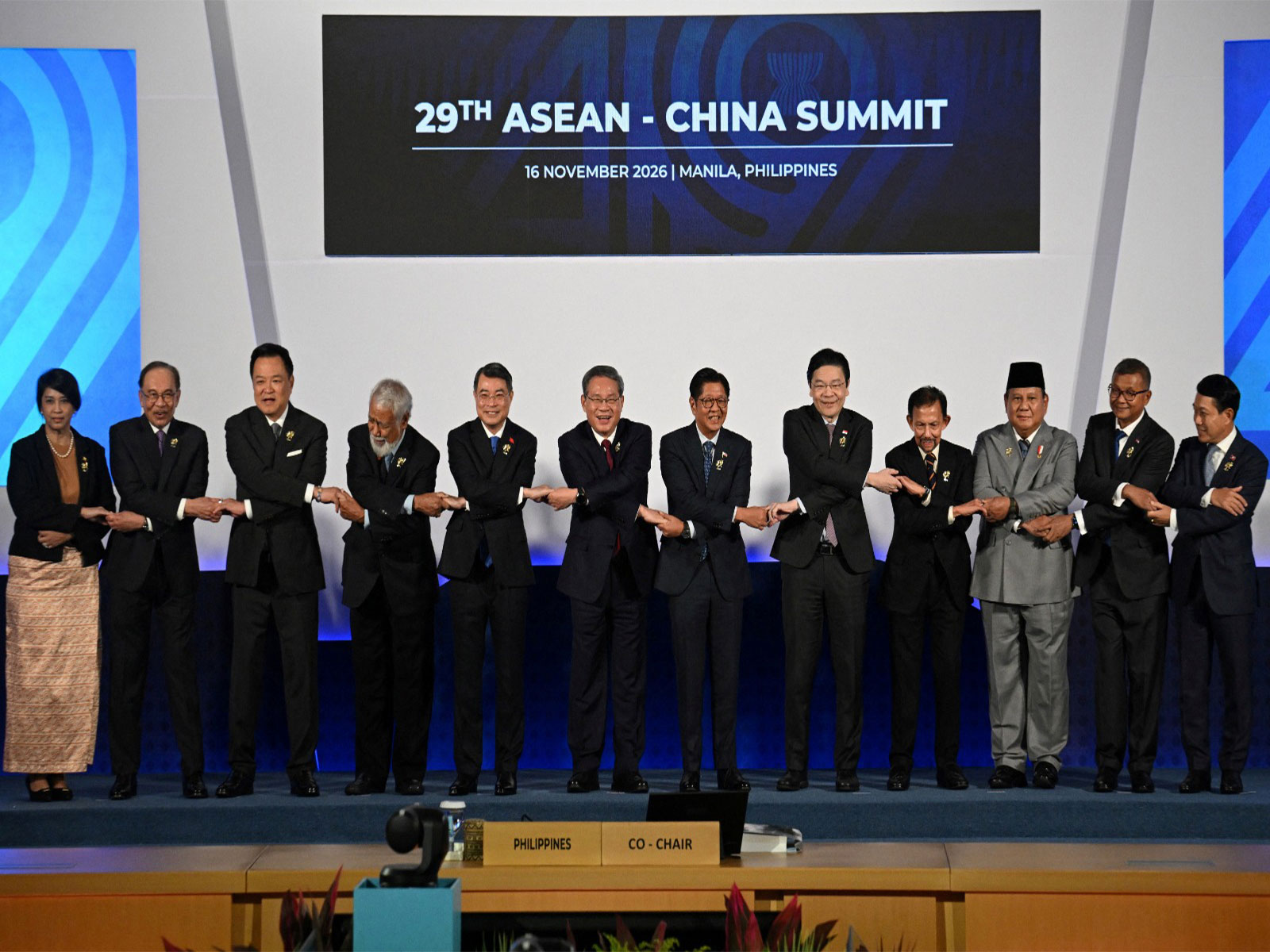
According to the Philippine government, at least 19 leaders representing sovereign nations and international organisations are set to participate.
Among them are Chinese Premier Li Qiang, Brazilian President Luiz Inácio Lula da Silva, Canadian Prime Minister Mark Carney and United Nations Secretary-General Antonio Guterres.
The gathering also includes Australian Prime Minister Anthony Albanese, Indonesian President Prabowo Subianto, Malaysian Prime Minister Anwar Ibrahim, Thai Prime Minister Anutin Charnvirakul, Singapore Prime Minister Lawrence Wong and Timor-Leste Prime Minister Kay Rala Xanana Gusmao.
With the participation of major powers, ASEAN members and international organisations, the Manila meetings are set to provide a broad platform for discussions on the region's political, economic and security challenges.
For India, PM Modi's participation comes as New Delhi seeks to consolidate its strategic partnership with ASEAN while advancing maritime security cooperation, strengthening trade relations and reinforcing its engagement with like-minded Indo-Pacific countries.
As regional leaders deliberate on the future of the Indo-Pacific, India's agenda in Manila will centre on translating its growing engagement with Southeast Asia into stronger economic partnerships and closer cooperation on shared maritime and security concerns.