"RSS is a civilizational force that needs no certification or validation": Rajnath Singh
Jul 17, 2026
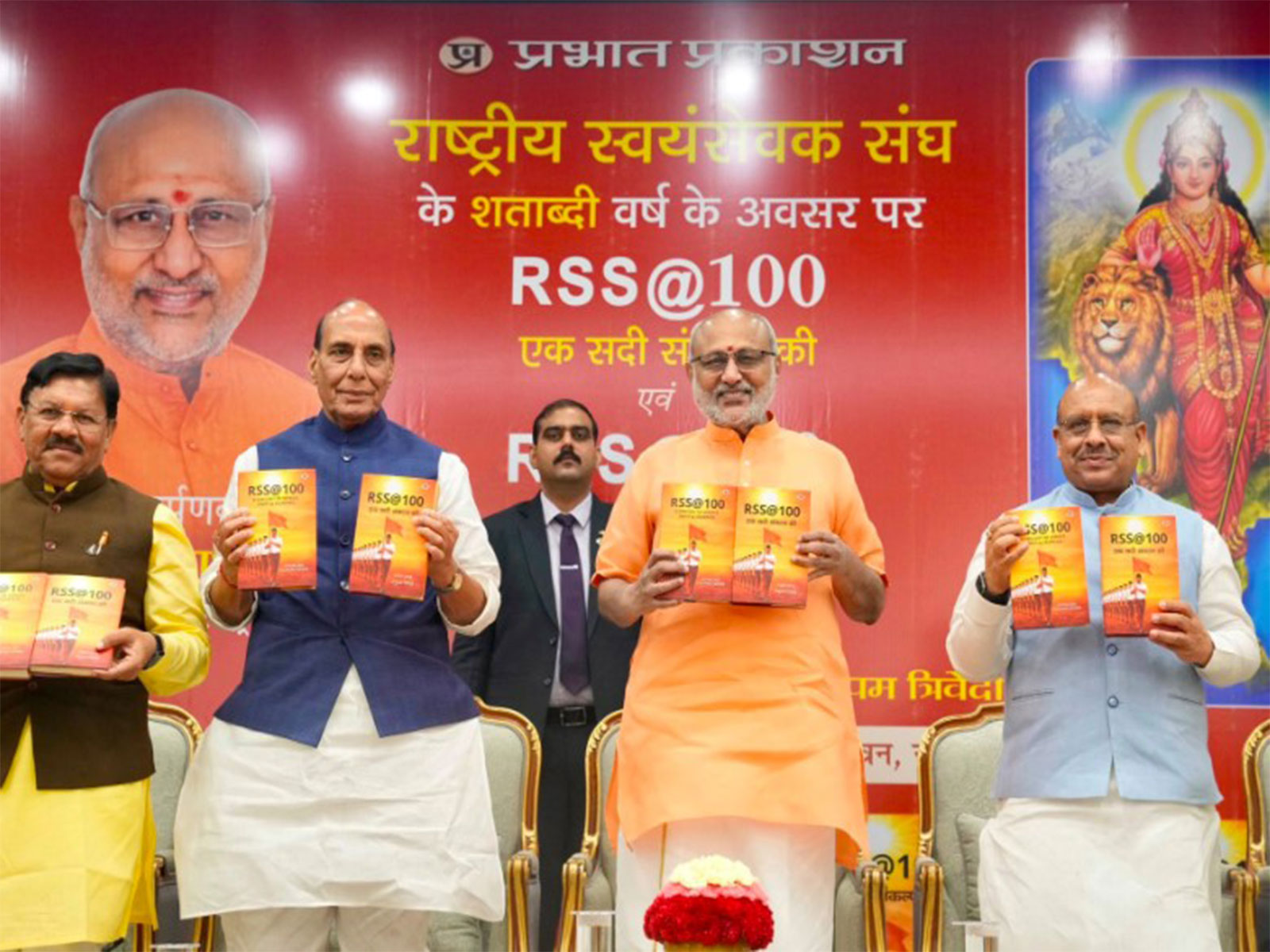
New Delhi [India], July 18 : Defence Minister Rajnath Singh on Friday described the Rashtriya Swayamsevak Sangh (RSS) as a "civilizational force that needs no certification or validation" and said every Sarsanghchalak of the organisation has opposed discrimination and untouchability, while releasing the book RSS@100: A Century of Service, Unity & Sacrifice at Uprashtrapati Bhavan in New Delhi.
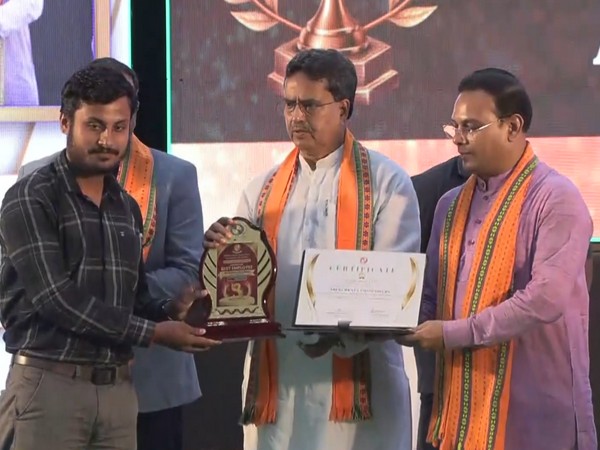
The book, authored by Shyam Jaju and Anupam Trivedi, was released in the presence of Vice President CP Radhakrishnan, Delhi Assembly Speaker Vijender Gupta, IGNCA President Ram Bahadur Rai, RSS Prant Sanghchalak Pawan Jindal and other dignitaries.
Speaking at the event, Singh said every Sarsanghchalak of the RSS had opposed discrimination and untouchability and asserted that the organisation had always operated with the spirit of "Nation First, Always First." He said this had enabled the RSS to become the world's largest financially self-reliant voluntary organisation.
Referring to remarks made by a senior Congress leader on why the RSS is not registered, Singh said such questions do not merit a response as the Constitution grants every individual the right to form an organisation.
"Every 'Sarsanghchalak' of the Sangh to date has opposed discrimination and untouchability in society. The Sangh has always operated with the spirit of 'Nation First, Always First,' and the result is that the RSS has become the world's largest and financially self-reliant voluntary organisation," he said.
"I would like to add that a mother's love requires no license. The values instilled by a 'Guru' do not depend on a government seal. Maa Ganga needs no license to flow. The sun requires no registration to radiate light. Similarly, the RSS is a civilizational force that needs no certification or validation," Singh added.
The Defence Minister said there is perhaps no other organisation in the world that has operated continuously on such a massive scale and for such a long period without ever splitting.
"This is a result of both its leadership quality and the core ethos embodied in the sentiment: 'Everything belongs to the nation; nothing is mine. ' You would never see the Sangh boasting about its own work. A fundamental tenet of the Sangh is indifference to fame," he said.
"When the time came to celebrate its centenary, the RSS maintained that it was an occasion for introspection and self-reflection rather than mere celebration. The Sangh marked this milestone by taking five pledges ('Panch Pran'). The objective of these pledges is to build a society that is grounded in values ('sanskar'), capable, self-reliant, environmentally conscious, and mindful of its duties. I believe these five pledges constitute the five pillars of a developed India," Singh said.
Singh said the new generation should also be aware of the work done by the RSS for the unity and integrity of the country.
"In 1947, Golwalkar was sent to persuade Maharaja Hari Singh to merge Kashmir with India. In 1954, volunteers played a key role in liberating Dadra and Nagar Haveli. Volunteers also sacrificed their lives for the liberation of Goa," he said.
Describing the RSS as a strong guardian of the Constitution, democracy, and citizens' rights, Singh said that in 1950, when the government attempted to suppress freedom of speech, the RSS boldly opposed it.
"When the Emergency was imposed in the country in 1975, the RSS played a very leading role in protecting the Constitution and democracy... Anyone who once visits an RSS branch and observes its work closely becomes a fan of the RSS," he said.
Recalling that in 1932, the government of the Central Provinces and Berar declared the Sangh to be a communal organisation and banned government employees from participating in RSS programs, Singh said representatives from Hindu, Muslim, Christian, Parsi, and other communities in the Provincial Assembly unanimously stated that the organisation founded by Dr Hedgewar could not possibly be against any community.
"Therefore, I believe that those who have formed misconceptions about the Sangh due to leftist propaganda will gain a correct understanding of the organisation after reading this book, and their existing misunderstandings will be dispelled," he said.
"The seed sown by Dr Keshav Baliram Hedgewar in 1925, forming the RSS, has today grown into a massive banyan tree. If there is any volunteer organisation in the world today that is both the largest and financially self-reliant, it is the RSS. For a century, the RSS has been contributing to the protection of culture, religion, and Indian identity, driven by the values, discipline, and spirit of selfless service instilled in its volunteers. Whenever the nation has faced a crisis, the RSS and its volunteers have been the first to step forward to help," Singh added.
Addressing the gathering, the Vice President said he had a long association with the RSS and that it was a personal honour to be part of the book release ceremony.
"The journey of the RSS stands as a testament to the power of organised voluntary action and the enduring value of service before self," he said.
'The RSS has also consistently emphasised the importance of character-building and leadership development,' the Vice President added.