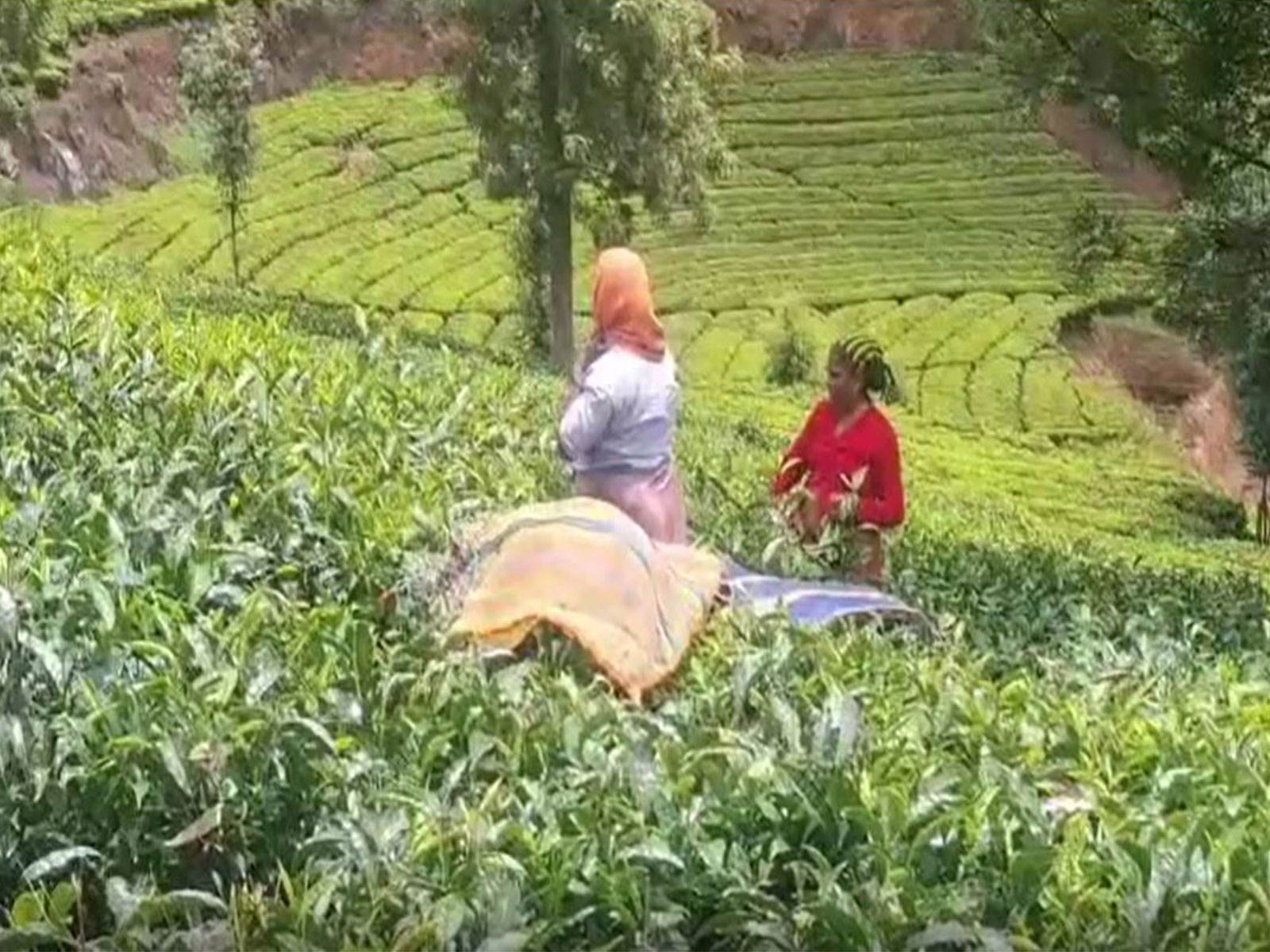
Severe drought, El Niño conditions hit Nilgiris tea production; green leaf supply drops sharply, farmers, workers seek govt aid
Sep 04, 2026
Nilgiris (Tamil Nadu) [India], September 5 : For the first time in the history of the Nilgiris, severe heatwave and drought conditions attributed to El Niño have led to a sharp decline in the supply of green tea leaves to tea factories, raising concerns over a major impact on tea powder production and the livelihoods of tea farmers and workers.
The Nilgiris district, popularly known as the “Queen of Hills,” has tea cultivation as one of the backbones of its local economy. More than 65,000 small and marginal farmers are engaged in tea cultivation across several hectares in the district.
For several years, tea farmers have been holding protests demanding that a fair and appropriate price be fixed for green tea leaves. At a time when small and marginal tea growers are already struggling due to inadequate prices, the situation has become more difficult this year as the Southwest Monsoon has failed due to the effects of Super El Niño.
The second season, also known as the spring season when flowers bloom, has now begun in the Nilgiris. During this period, tea shoots are normally expected to flourish and appear lush. However, prolonged dry conditions have caused the tender tea shoots to wither.
The supply of green tea leaves to tea factories operating in areas including Ooty, Coonoor, Kotagiri and Manjoor has declined considerably, resulting in a significant reduction in tea powder production in the district.
Tea factories that previously received around 4,000 kg of green tea leaves per day are now receiving only around 600 kg. Factory officials said factories that used to generate revenue of up to approximately Rs 4 lakh are now facing around a 20 per cent loss in revenue due to El Niño-related conditions.
According to a study report released by the UPASI Tea Research Institute, rainfall in the Nilgiris has declined by 31 per cent over the past five years. Average rainfall, which stood at 173.3 cm in 2021, declined to 119.4 cm in 2025.
As a result, tea productivity, which was 2,315 kg per hectare in 2023, fell to 2,042 kg per hectare in 2025, representing an 11.8 per cent decline.
The situation during the current Southwest Monsoon has become even worse. The Nilgiris normally receive around 874 mm of rainfall, but this year it has received only 283 mm, resulting in a 55 per cent rainfall deficit. This has reportedly been the largest deficit in the past 15 years.
Due to the rainfall deficit, where a tea estate would normally receive around 500 kg of green tea leaves per acre per month, the current yield has fallen to just 200 kg, representing a 60 per cent decline.
Overall tea production has declined by 10-20 per cent, while experts have warned that if the situation continues, production could fall by as much as 50 per cent.
Speaking to ANI, a tea factory official, Varadarajan said, “Due to the severe monsoon failure, there is a severe drop in tea cultivation. Especially the tea factories are finding it very difficult to run their daily show because we expect at least a minimum of 4,000 to 8,000 kgs per day. But now what we are getting is only 600 to 800 kgs per day.”
“Since ours is a tourist factory, we bring tea from the other factories, and we try to run the show. Otherwise, when we get the rainfall, the tea crop yield will come up, and we can run the regular show,” he added.
Another tea factory official, Kishore, said, “As far as tea production is concerned, last year in our pack we had produced around 5 lakh kgs of tea. This year there's been almost a 20 to 25 per cent drop in production. Production this year at the beginning of September is only around 4 lakh kg. So we have been having a 20 per cent drop in production.”
“Not only the tea industry, but other agricultural people who are dependent upon agriculture also they are finding it very difficult, and there is a situation that they have to buy water, giving money in a lot of places,” he added.
Kishore appealed to the Tamil Nadu Government to extend assistance to small tea growers and other agricultural communities.
“I kindly request the Tamil Nadu government to help both the small tea growers who are totally dependent upon the crop and even the agricultural community to put carrot or any other crop like onions to kindly help them in any form,” he appealed.
According to a report by the Tea Board of India, although India's tea exports increased to 257.88 million kg in 2024-25, exports from South India declined by 4.92 per cent to 96.68 million kg.
Nilgiri tea is renowned across the world. A decline in the supply of green tea leaves could lead to an increase in tea powder prices and a reduction in exports, potentially affecting not only the economy of the Nilgiris district but also the country's economy.
Around 70 per cent of the population in the Nilgiris district depends on agriculture for its livelihood.
Scientists have pointed out that the issue is not merely the total amount of rainfall but also the intervals between rainfall events. Heavy rainfall occurring within a short period, followed by prolonged dry spells, affects the young shoots of tea plants.
The temperature has also risen by around 0.5 degrees Celsius. Shade trees such as Silver Oak are also used in tea plantations to help mitigate the impact of rising temperatures and dry conditions.
With the supply of green tea leaves declining for the first time in the Nilgiris due to El Niño-related drought conditions, tea powder production in the district is at risk of being severely affected.
As the livelihoods of tea farmers and tea-plucking workers dependent on the tea industry are under threat, there is an urgent demand for the Tamil Nadu Government to constitute a special committee in the Nilgiris district and extend financial and other assistance to farmers and workers affected by the El Niño-induced drought to protect their livelihoods.