"She's the queen, leave her alone": Belgian defence minister backs Meloni following Trump's restraining order remark
Jul 07, 2026
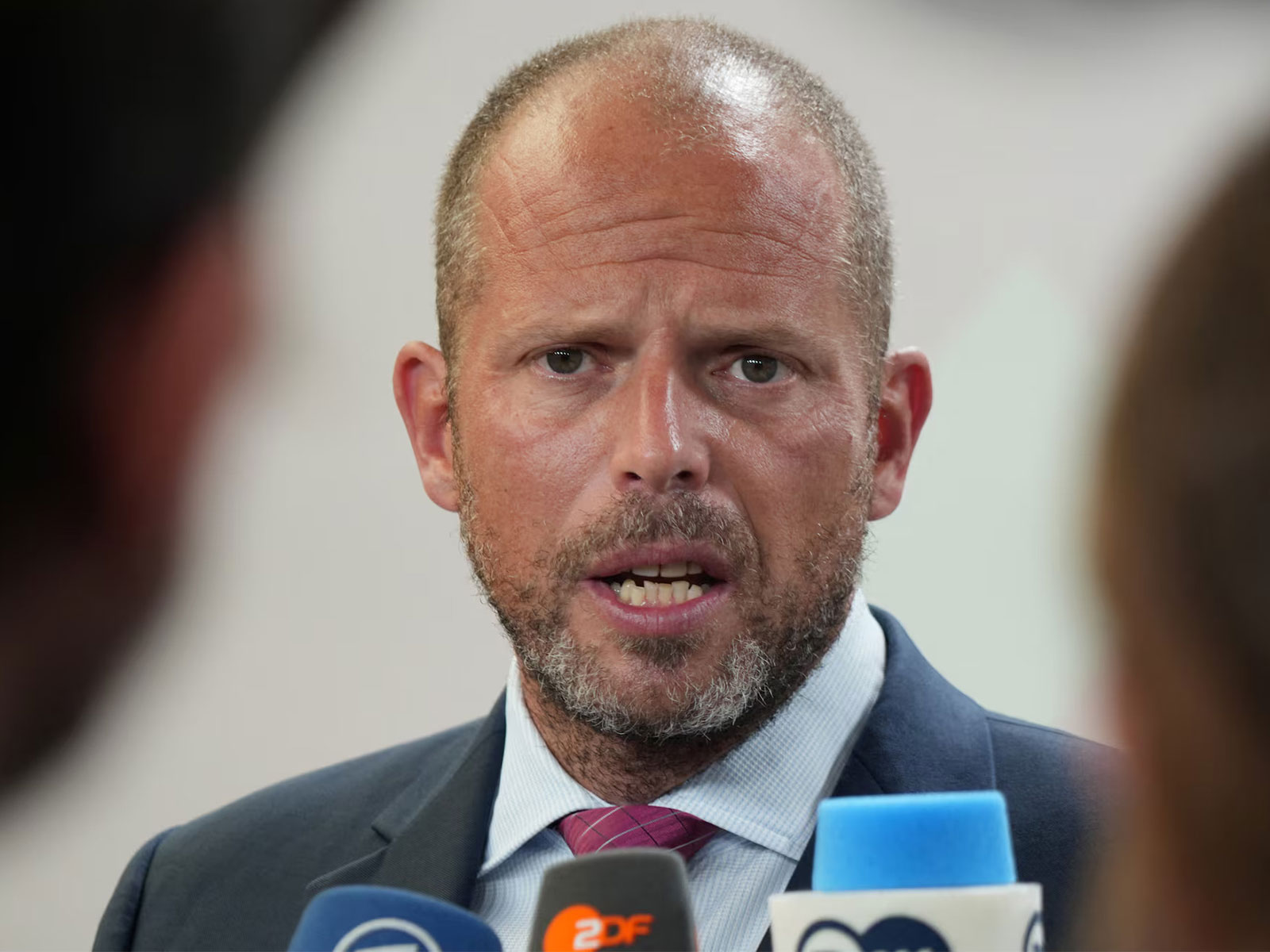
Brussels [Belgium], July 7 : Urging European leaders to maintain a diplomatic and steady relationship with Washington, Belgian Defence Minister Theo Francken has warned that Europe will remain reliant on American military protection for another five to ten years, while simultaneously cautioning US President Donald Trump against targeting Italian Prime Minister Giorgia Meloni.
The remarks follow a recent social media post by the US President, who joked about needing a restraining order against the Italian leader, reigniting diplomatic friction after an awkward encounter during the G7 summit in June.
According to a report by POLITICO, the Belgian minister emphasised that Europe cannot risk alienating the United States while the continent actively seeks to bolster its own independent security framework.
While calling for strategic patience with Washington, Francken strongly defended the Italian Prime Minister, elevating her status within the continental political landscape.
"Of course we need him as an ally, but don't touch Meloni. She's the queen of centre-right in Europe. She's the alpha. Leave her alone," the Flemish nationalist minister asserted.
The controversy was triggered after Trump shared a photograph of Meloni on Sunday, adding a joke that he would require a protective order against her.
The friction traces back to an uncomfortable interaction between the two leaders at the G7 summit held in Evian, France. Trump subsequently claimed that the Italian Prime Minister had pleaded for a photo opportunity, an allegation that Meloni flatly denied.
Expressing utter astonishment over the public spat, Francken questioned the rationale behind the dispute.
"I love her, she's conservative, she is totally on the same line... and then you're going to have a fight over what? A picture!" the Belgian minister exclaimed.
Highlighting Europe's current strategic vulnerabilities, Francken noted that the continent is still deeply dependent on the United States to secure its borders, estimating that it would take five to ten years to build up the conventional military capabilities that Washington presently provides.
"We need the Americans, be diplomatic, listen to what they say, try to be gentle," Francken counselled.
The strategic warning arrives at a time when Trump is maintaining heavy pressure on NATO alliance members regarding financial contributions, coupled with a reassessment of the American military presence across the continent.
Last week, the US President criticised alliance members for falling short on defence expenditure, while US Secretary of War Pete Hegseth recently initiated a six-month review of America's military footprint across Europe.
Faced with a rising threat from Russia and relentless pressure from Washington, European administrations have begun scaling up defence budgets and reinforcing the regional defence industry.
Supporting deeper continental integration, Francken expressed his vision for the bloc's economy, stating, "I want to see a single market on everything."
The Belgian minister also took aim at the frequent deployment of legal exemptions that permit European governments to give preferential treatment to domestic arms manufacturers over regional rivals, describing the mechanism as "totally protectionist."
Francken maintained that Belgium utilises such loopholes only under exceptional conditions, though records indicate Brussels invoked an exemption in 2023 to grant a light-arms contract to Belgian manufacturer FN Herstal without launching a competitive bidding process.
Concurrently, Belgium's domestic defence allocations continue to face intense scrutiny.
While official government data suggests the country hovers slightly above NATO's previous baseline of spending 2 per cent of GDP on defence, a monitoring report published on Monday revealed that Belgium's current fiscal trajectory will only reach 1.93 per cent by 2029.
This projection falls drastically short of NATO's upgraded target of 3.5 per cent of GDP by 2035, leaving Brussels highly exposed to renewed criticism from Washington.