Submit restoration request with I4C if your money frozen in scammer's account
Aug 20, 2026
By Rajnish Singh
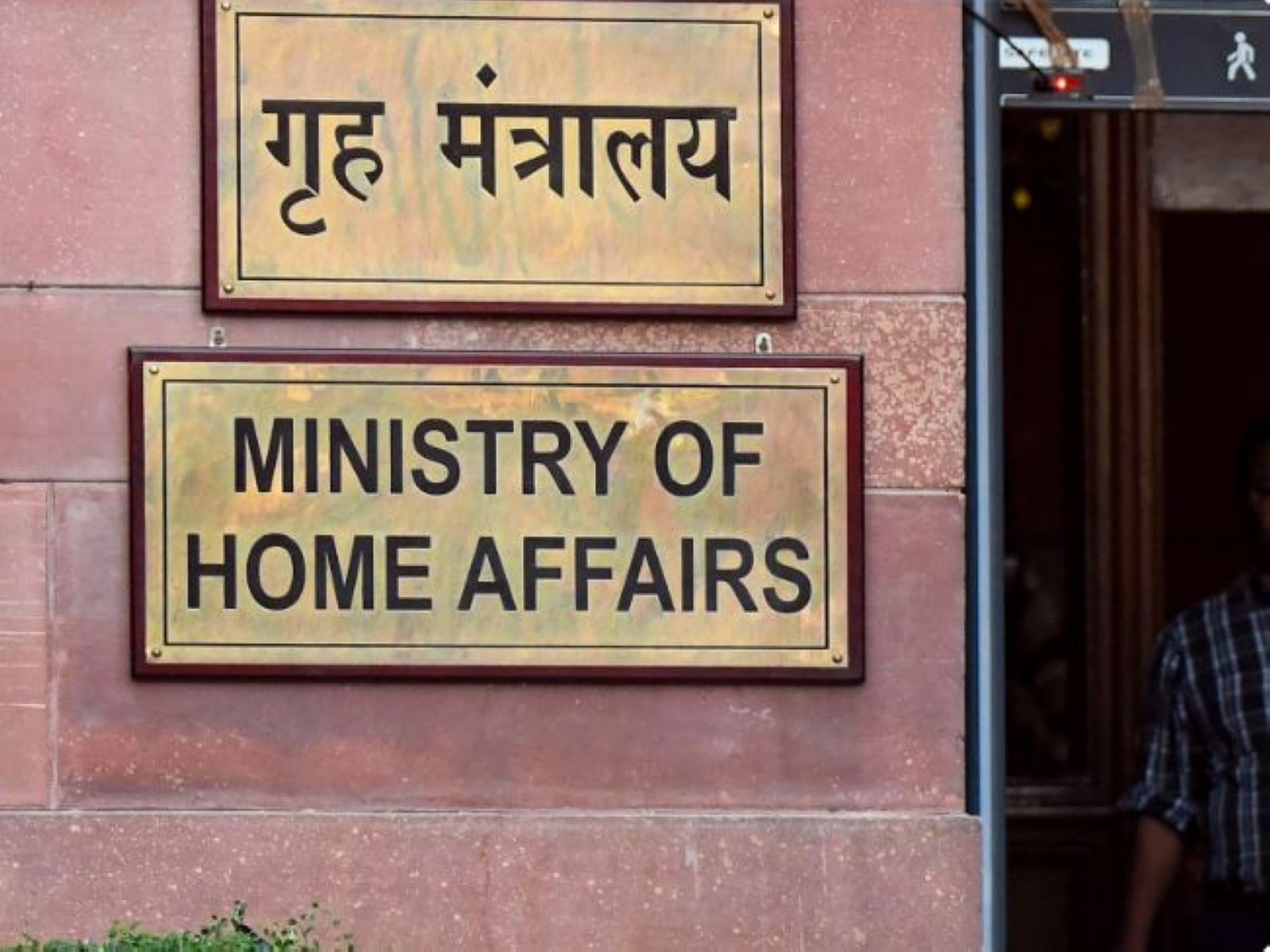
New Delhi [India], August 20 : If your fraud complaint has resulted in an eligible amount being held in the beneficiary's or scammer's account, there is no need to panic now, as your restoration request to the Indian Cybercrime Coordination Centre (I4C) under the Ministry of Home Affairs (MHA) ensures a refund of the amount as per applicable legal procedure.
What you need to do is report and submit a restoration request through the Money Restoration Module (MRM) launched by the I4C--an attached office of the MHA established in New Delhi to combat cybercrime comprehensively. It lets cyber fraud victims apply online to recover and restore frozen or held funds in beneficiary accounts without visiting government or bank offices.
"If the victim's money is held after a cyber fraud and the cyber fraud complaint has resulted in an eligible amount being held in the beneficiary's bank account, he or she can submit a restoration request through the Money Restoration Module (MRM) launched by I4C, MHA," officials linked to the division told ANI.
Explaining the process to get back the stolen money, the officials in the 14C wing advised, if the cybercrime victims had lodged a complaint on 1930 at cybercrime portal, he or she had to first visit the MRM site and click on "Raise Refund Request" tab and then enter a 14 digit National Cybercrime Reporting Portal (NCRP) acknowledgement ID received at the time of complaint registration and verify the One Time Password (OTP).
The victim will be shown the refund account details under the tab "Refund Account Details", where the refunded amount will be credited, they said, adding, "the victim must enter the correct account details of the respective banks, where the refunded amount will be credited." In case the victim has a court order, it is advised to upload the same using the option "Select Court Order".
Besides, the victim is suggested to submit their PAN card copy, enter a captcha and submit the request by clicking on the submit button. "A request ID of 14 digits will be generated and sent to the complainant's mobile and email. The 14C wing suggests the 14-digit ID should be noted by the victim for future reference, and that all details provided are accurate. It also pointed out that incorrect information may delay or reject the restoration process," they said.
"Wait for the SMS or email informing you that an eligible amount has been identified for restoration. Log in to the MRM portal using your 14-digit NCRP Acknowledgement Number and OTP. Verify your complaint details, refund account details and the restorable amount. Upload your PAN card, enter your bank account details and submit the request to receive a Unique Request Number (URN) for tracking. Submit the indemnity bond to the police.
The restoration process will then proceed as per the applicable legal procedure," they explained.
In updated data, collated by the MHA, which was recently shared by the Union Minister of State (MoS) for Home Bandi Sanjay Kumar in the Rajya Sabha, a financial amount of more than Rs 11,158 crore has been saved in more than 32.80 lakh complaints till June 30.
The MoS cited the data of Citizen Financial Cyber Fraud Reporting and Management System (CFCFRMS) under the I4C, as it was shared with the MHA. The CFCFRMS was launched in 2021 for immediate reporting of financial frauds and to stop siphoning off funds by the fraudsters.
As part of its continued actions against the cyber criminals, the MoS also mentioned that the I4C has blocked more than 2,77,053 illegal and fraudulent Apps, content, websites, e-mail accounts, URLs and links across various platforms through the 'Sahyog' portal and proactive action by informing concerned IT intermediaries.
To facilitate the removal or disabling of access to any information, data or communication link being used to commit an unlawful act, the MHA launched the 'Sahyog' Portal in 2024 to expedite the process of sending notices to IT intermediaries by the appropriate government or its agency under clause (b) of sub-section (3) of section 79 of the IT Act, 2000.
The portal brings together all authorised agencies of the country and all the intermediaries on one platform for ensuring immediate action against unlawful online information. This portal aims to help achieve a safe cyberspace for the citizens of India.
Till June 30, 2026, a total of 3,718 mobile apps, including fraudulent loan apps, have also been blocked by the I4C under Section 69(A) and Section 79(3)(b) of the IT Act, 2000, another written reply of the MoS in the Lok Sabha on August 11 mentions.
Pointing out that a suspect registry of identifiers of cyber criminals was also launched by the I4C on September 10, 2024, in collaboration with banks and financial institutions, the MHA said more than 30.48 lakh suspect identifier data received from Banks and 32.08 lakh layer 1 mule accounts have been shared with the participating entities of the suspect registry and declined transactions worth Rs 25,698 crores till June 30, 2026.
The MoS also mentioned that more than 15.75 lakh SIM cards and 5.77 lakh IMEIs, as reported by police authorities, have also been blocked by the Central government till June 30, 2026.
The MHA supplements the efforts of states and UTs by providing policy guidance, technological support, capacity-building assistance, and financial resources to strengthen cybercrime management and enforcement capabilities.
The Massive Open Online Courses (MOOC) platform, namely the 'CyTrain' portal, has been developed under I4C for capacity building of police officers and judicial officers through online courses on critical aspects of cybercrime investigation, forensics, prosecution, etc. Till June 30, more than 1,63,344 police officers and judicial officers from states and UTs are registered, and more than 1,61,957 Certificates have been issued through the portal.
Cyber Commando programme was launched by the Union Home Minister Amit Shah on September 10, 2024, to establish a Special Wing of Cyber Commandos equipped with specialised training to counter cybersecurity threats in the country.
The programme envisions the creation of a dedicated, skilled workforce capable of securing critical information infrastructure and supporting national cybersecurity efforts. 281 cyber commandos completed training. The I4C is regularly organising 'state connect', 'thana connect', 'bank connect', and peer learning sessions to share best practices and enhance capacity building.