Supreme Court largely upholds Bangalore water supply definition of industry, but says it won't anchor future disputes
Aug 20, 2026
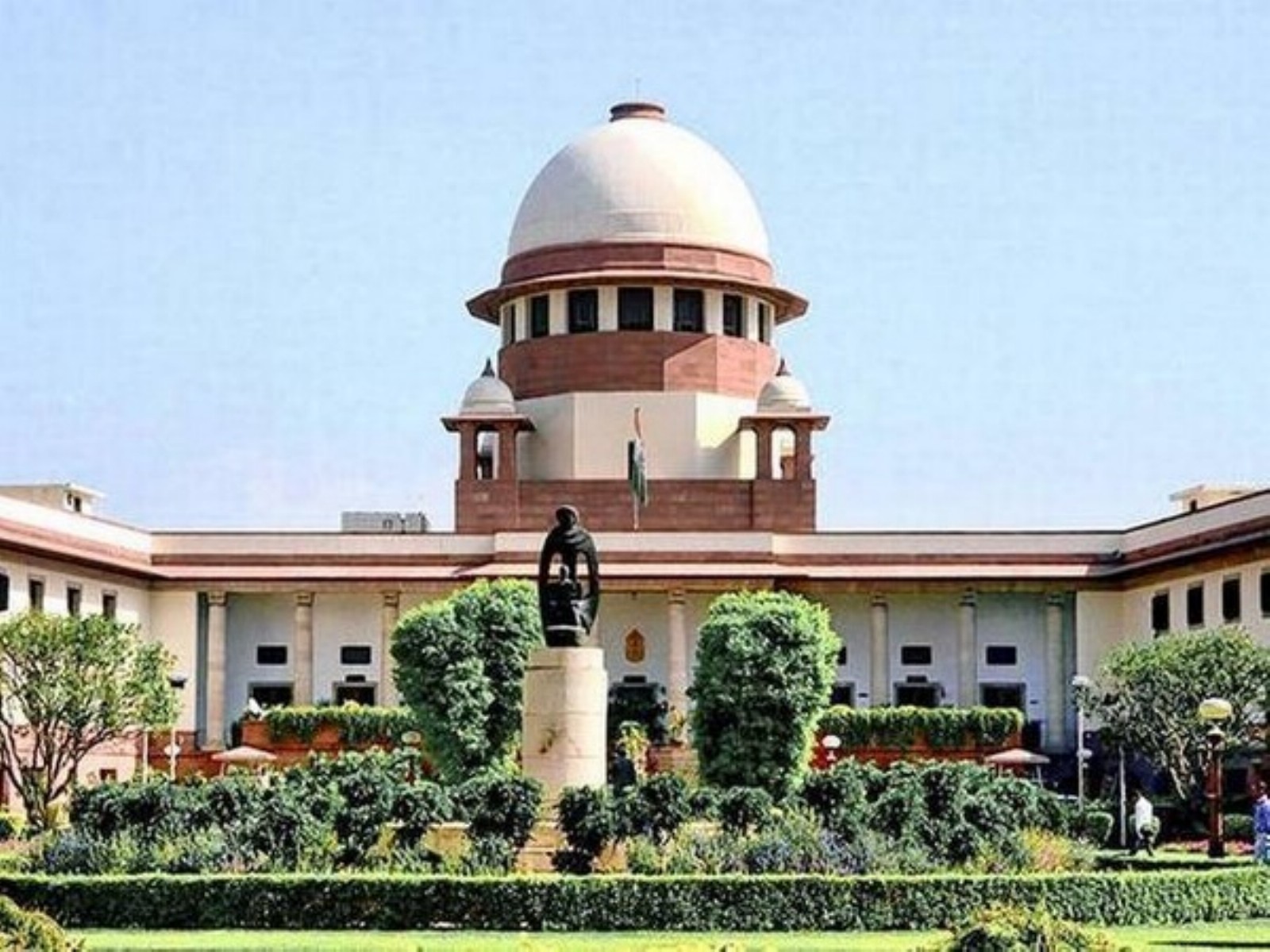
New Delhi [India], August 20 : The Supreme Court has largely upheld the 1978 Bangalore Water Supply judgment's interpretation of "industry" under Section 2(j) of the Industrial Disputes Act, 1947, but clarified that it will not anchor future disputes. The judgment will continue to govern pending disputes under the 1947 Act, while future disputes will be decided under the Industrial Relations Code, 2020, the Court clarified.
A nine-judge Constitution Bench led by CJI Surya Kant, by a 6:3 majority, held that the reference seeking reconsideration of the 1978 judgment was validly made and maintainable. The majority retained the essential framework of the "Triple Test" laid down in Bangalore Water Supply.
It, however, said certain aspects of the test and the guidelines accompanying it were capable of refinement. The Court held that while some elements could have been articulated differently to better reflect the scope of Section 2(j), the basic framework had "stood the test of time".
The Court accordingly proposed to reformulate certain aspects of the Triple Test but did not seek to displace the governing legal position under the 1947 Act. It clarified that disputes arising under the 1947 Act, including pending disputes, will continue to be decided in accordance with the law laid down in Bangalore Water Supply. The clarification will not disturb matters already decided.
For future disputes, however, the Industrial Relations Code, 2020 will apply. The Court said the new Code must be interpreted based on its own text and context. The Bangalore Water Supply judgment cannot be treated as an "anchor" for interpreting the new legislation.
Justice B.V. Nagarathna, along with Justices Ujjwal Bhuyan and Deepankar Datta, disagreed with the majority on the maintainability of the reference. Justice Nagarathna held that there was no need to reopen the interpretation of Section 2(j), which had operated for nearly five decades.
She noted that questions surrounding the provision had resurfaced before the Court earlier and could have been addressed by a smaller Bench. She also pointed to the enactment of the 2020 Code and said reopening the settled position could create uncertainty in pending industrial disputes.
Justice Nagarathna separately examined whether activities undertaken by government departments could fall within the definition of "industry". She held that government departments cannot be excluded merely because they perform statutory or welfare functions. What is relevant is the nature of the activity and not who carries it out. She also held that the "Dominant Nature Test" laid down in Bangalore Water Supply remains correct.
Justices Ujjwal Bhuyan and Deepankar Datta concurred with Justice Nagarathna on the maintainability of the reference and held that it should not have been made. They favoured treating the Bangalore Water Supply ruling as a settled chapter rather than reopening it through a nine-judge reference.
On the other side, Justice P.S. Narasimha and Justice Joymalya Bagchi held that the reference was validly made and could be answered on merits. They were joined by CJI Surya Kant and Justices V.M. Pancholi, S.C. Sharma and Alok Aradhe, who formed the majority on maintainability. On the substantive issue, the majority judges agreed that the core Triple Test did not require rejection. Justice Bagchi also stressed stare decisis, holding that overruling a judgment that had operated for decades could cause greater uncertainty.
Thus, Justices Nagarathna, Bhuyan and Datta formed the minority on maintainability, while the other six judges held that the reference was validly made. On the substantive issue, the Bench largely preserved the Bangalore Water Supply framework, while allowing refinement of parts of the Triple Test and its accompanying guidelines. The 1978 judgment will continue to govern pending disputes under the 1947 Act, but will have no controlling role in future disputes under the 2020 Code.
The matter originated in the Supreme Court's landmark Bangalore Water Supply & Sewerage Board v. R. Rajappa judgment, decided by a seven-judge Bench on February 21, 1978. The Bench comprised then CJI M.H. Beg and Justices Y.V. Chandrachud, P.N. Bhagwati, V.R. Krishna Iyer, Jaswant Singh, V.D. Tulzapurkar and D.A. Desai. Justice Krishna Iyer authored the principal judgment.
The judgment settled years of conflicting decisions on the meaning of "industry" under Section 2(j). It laid down the Triple Test, under which an activity would generally fall within the definition if it involved systematic activity, organised cooperation between employer and employee, and production or distribution of goods or services to satisfy human wants and wishes.
The judgment also evolved the "Dominant Nature Test" for establishments carrying out a mixture of industrial and non-industrial activities.
The interpretation was later challenged by the State of Uttar Pradesh, the National Remote Sensing Agency and the Coir Board. In May 2005, a five-judge Constitution Bench hearing the reference noted concerns over the expansive interpretation and observed that it had contributed to a "docket explosion" in labour courts. It referred the matter to a larger Bench and recorded Justice Krishna Iyer's later caution about "definitional expansionism" and an "industrial hazard".
In January 2017, a seven-judge Bench led by then CJI TS Thakur directed that the reference be placed before a nine-judge Constitution Bench.
"Reference is disposed of," the Court concluded.