“Tamil Nadu’s 7.18% share must not be reduced”: DMK resolution backs 'fair delimitation', accuses Congress of 'U-turn'
Nov 28, 2026
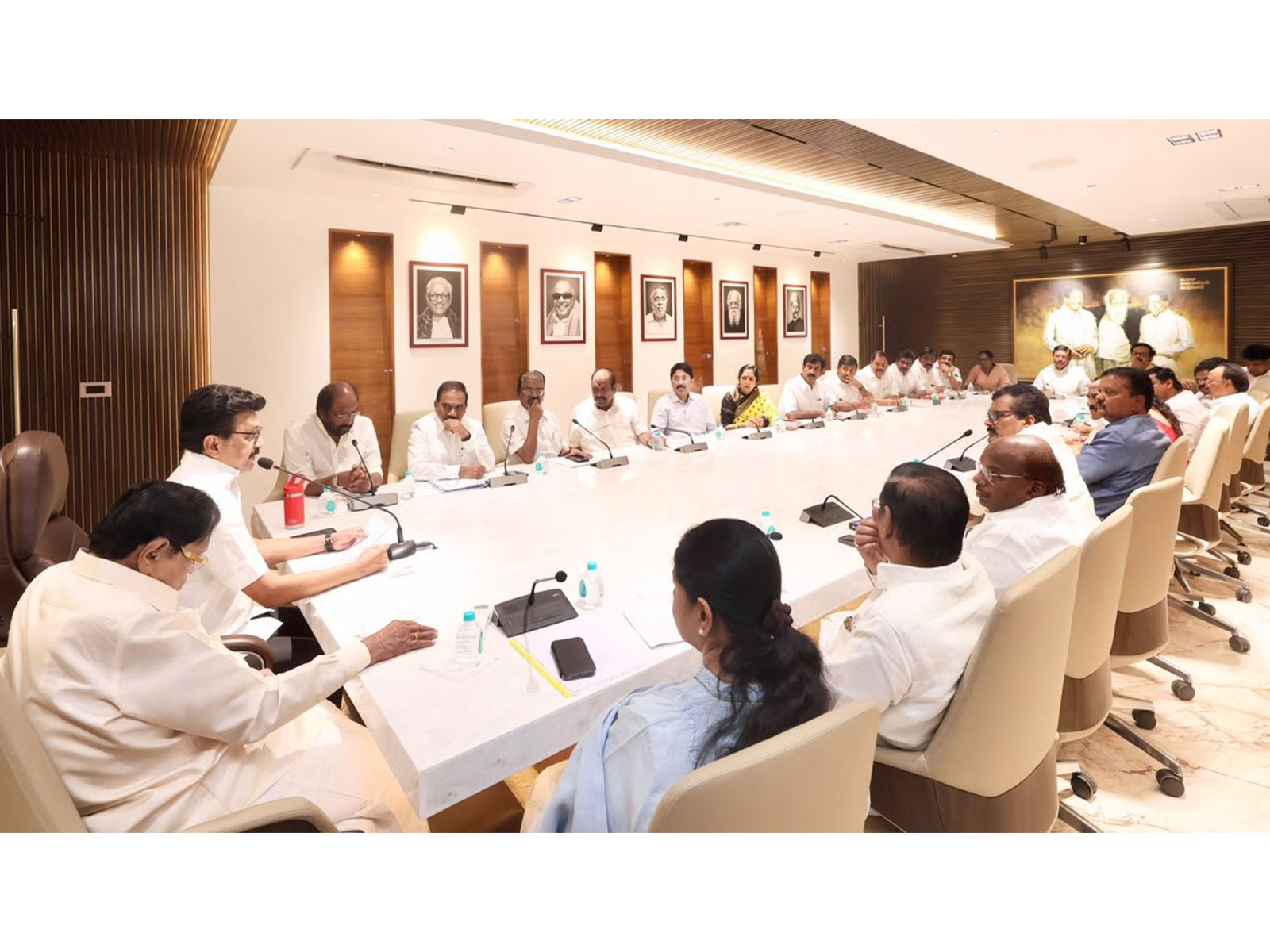
Chennai (Tamil Nadu) [India], November 28 : The Dravida Munnetra Kazhagam (DMK) on Saturday adopted a resolution asserting that Tamil Nadu's existing 7.18 per cent share in the allocation of parliamentary constituencies must not be reduced under any circumstances and demanding that the proportion of representation among states, based on the 1971 Census, remain unchanged for another 25 years.
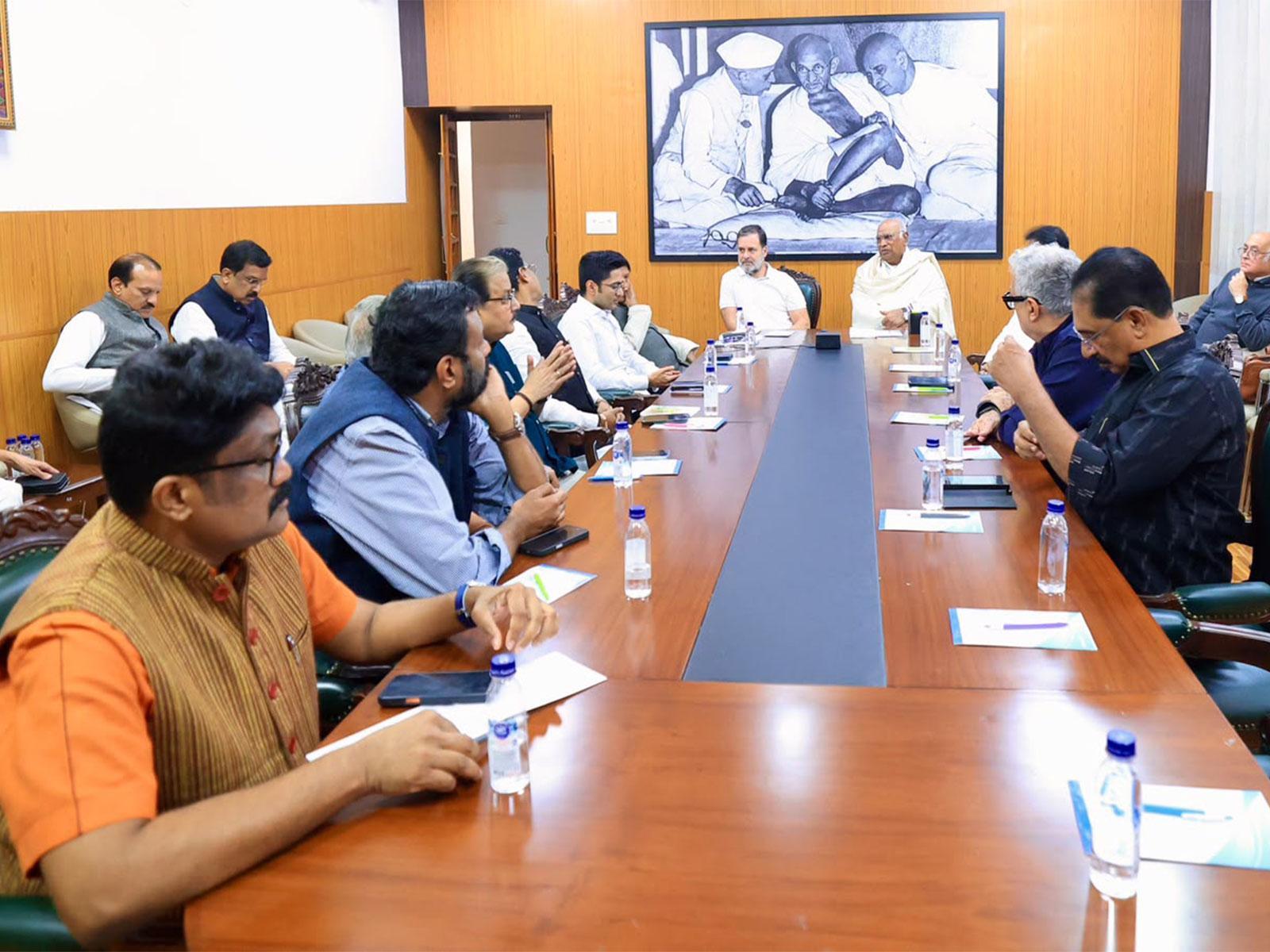
The resolution, adopted at a meeting of DMK Members of Parliament (MPs) ahead of the special session of Parliament, said the party would continue to press for the protection of Tamil Nadu's parliamentary representation and the interests of southern states during the upcoming session.
"Underscoring that the DMK has been emphatically and unequivocally insisting that Tamil Nadu's existing representation of 7.18 per cent must not be reduced under any circumstances, this meeting resolves that the MPs of the DMK shall assert Tamil Nadu's right, namely that 'Tamil Nadu's existing representation of 7.18 per cent in the allocation of parliamentary constituencies must not be reduced, and the proportion of parliamentary representation among the States, determined on the basis of the 1971 census and frozen earlier, must remain unchanged for another 25 years'," the resolution stated.
https://x.com/arivalayam/status/2126559314638967180
The party said it had consistently advocated "fair delimitation" and opposed any exercise that could adversely affect states, particularly those that had successfully implemented population-control measures.
Recalling the resolution adopted by the Tamil Nadu Legislative Assembly on February 14, 2024, the DMK said the existing proportion of seats among states, determined on the basis of the 1971 Census, must continue if the number of constituencies in Parliament and State Assemblies is increased.
The party also referred to an all-party meeting held in Tamil Nadu on March 5, 2025, which had resolved that any increase in parliamentary seats should be accompanied by a constitutional amendment ensuring that southern states, including Tamil Nadu, receive an increase in the same proportion as their existing allocation.
"Under no circumstances should the Union Government alter Tamil Nadu's existing representation of 7.18 per cent in Parliament on account of delimitation," the resolution quoted the earlier decision.
The DMK said it had initiated efforts to bring together political parties and state governments to address concerns over delimitation. It recalled that party president MK Stalin, then Chief Minister of Tamil Nadu, had written to Chief Ministers of seven states and political party leaders on March 7, 2025, proposing the formation of a Joint Action Committee.
A meeting of the committee was subsequently held in Chennai on March 22, 2025, with Chief Ministers and representatives of political parties from states that could be affected by the exercise. The resolution recalled that the committee had called for a transparent delimitation process involving political parties, state governments and other stakeholders.
It also sought an extension of the freeze on parliamentary constituencies based on the 1971 Census by another 25 years, arguing that states which had effectively implemented population-control programmes should not be penalised.
The resolution also criticised Congress party over its position on delimitation, accusing it of changing its stand from advocating "fair delimitation" to demanding "no delimitation". It said Congress had earlier supported the demand that constituency expansion should not disadvantage states that had implemented social and economic development programmes.
"For the Congress party to find fault today with our party President... is an act of vileness and sheer political immaturity," the resolution said.
"The Congress party, however, threw its principles into the dustbin, surreptitiously jumped ship from the alliance at midnight and sought refuge elsewhere for just the sake of office," it said.
Claiming that Congress had changed its position, the DMK said, "It is the Congress party which, having advocated 'Fair Delimitation' initially, has now made an impracticable U-turn to 'No Delimitation'! Making U-turns is an ingrained vice of the Congress party!"
The resolution called upon the Congress "to put an end to the farce of lecturing the DMK on principles and to desist from the treacherous act of lending support to attempts that would adversely affect the interests and the right to parliamentary representation of States, including Tamil Nadu."
The DMK further said the 25-year freeze provided through the constitutional amendment in 2002 was nearing its end and warned that delimitation based on the 2011 Census could adversely affect Tamil Nadu's representation.
The resolution said the party had opposed any exercise that would reduce the representation of southern states and reiterated its commitment to protecting Tamil Nadu's existing share.
The DMK, which has 22 Lok Sabha MPs, had earlier announced its decision to support the proposed 50 per cent increase in parliamentary seats across states, while maintaining that Tamil Nadu's existing share must be protected.
DMK MP A Raja had said the party's consistent demand was that Tamil Nadu's 7.18 per cent share in the Lok Sabha should not be altered, adding that the revised proposal appeared to preserve the state's representation.
"Our consistent demand is that the share of 7.18% (seat share in Lok Sabha) should not be altered. Now it is being maintained. Of course, procedural issues are there; we will address them. If necessary, we will give an amendment," Raja had said.
The Union Cabinet has cleared three revised draft legislations, including the Constitution (132nd Amendment) Bill, 2026, the Delimitation (Second) Bill, 2026, and a proposed amendment to Union Territories laws. The Bills are set to be taken up during the special session of Parliament beginning November 30.
The proposed legislation provides for a 50 per cent increase in the number of Lok Sabha seats allocated to every state and Union Territory, along with a corresponding increase in the total number of seats in State Legislative Assemblies. The maximum strength of the Lok Sabha is proposed to rise to 850, with up to 815 members representing states and 35 representing Union Territories.
The legislative package is also aimed at facilitating the implementation of the Nari Shakti Vandan Adhiniyam, which provides for 33 per cent reservation for women in the Lok Sabha and State Assemblies.
The Centre has proposed using the 2011 Census for redrawing constituencies and determining SC/ST-reserved seats, while retaining the 1971 population basis for state-wise allocation of Lok Sabha seats until 2051.