The perception deepens that USA is abdicating to China
Nov 23, 2026
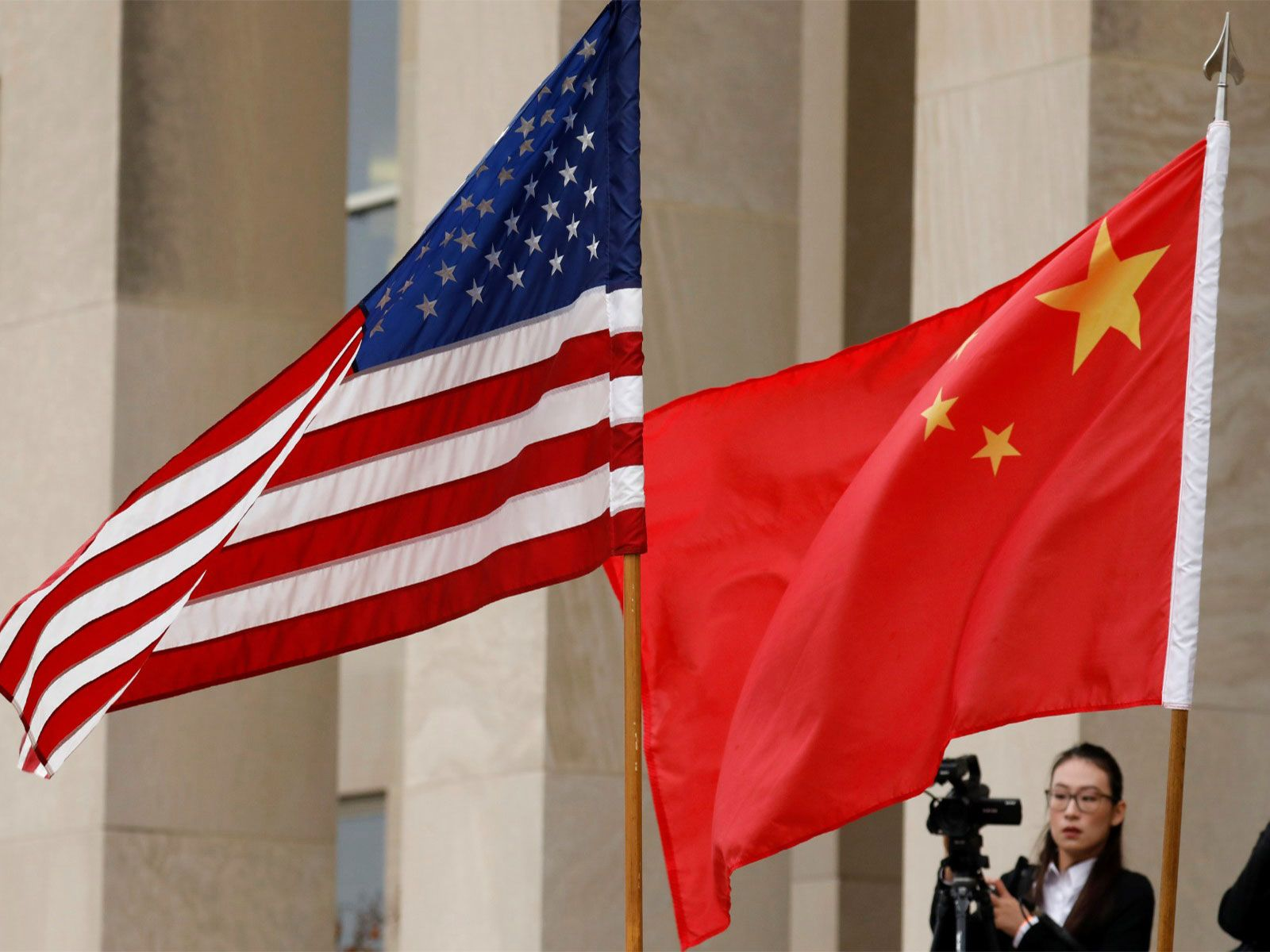
Hong Kong, November 23 : Signs point to a weaker US presence – militarily, diplomatically, economically and in other ways too – in the Indo-Pacific region. Simultaneously, China’s influence is stronger than it has ever been throughout the same region.
This rebalancing could be seen in the recent APEC Summit held in Shenzhen, southern China, where Chairman Xi Jinping hosted US President Donald Trump and Russian tsar Vladimir Putin. The event was carefully orchestrated to show China’s preeminence. For example, official photos – taken and released by state bureaus – showed Xi in a position of power at a circular table, whilst Trump and Putin were seated like supplicants bringing their pleas to the Middle Kingdom.
The same kind of state posturing was evident when Japanese Prime Minister Sanae Takaichi was at the APEC Summit. Suffering from rheumatoid arthritis, she was forced to awkwardly climb from her aircraft onto stairs that were around 40cm too low. She was met on the tarmac by retired Chinese diplomat Zhang Qiyue, compared to other guests who enjoyed bands and full honor guards. Official Chinese photos were also carefully cropped to make it appear that Takaichi was always on the periphery.
These petty Chinese shenanigans aside, China’s self-proclaimed “inexorable” rise and the West’s decline are also partially evident in the 2026 Asia Power Index, which the Lowy Institute of Australia updates annually. This index from the Australian international-policy think-tank measures scores in the eight categories of economic capability, military capability, resilience, future resources, economic relationships, defence networks, diplomatic influence and cultural influence.
In summary, the Lowy Institute stated, “The 2026 Asia Power Index shows a more contested regional balance, with the gap narrowing owing more to Washington’s missteps than Beijing’s advances. US diplomatic influence underwent its largest decline on record following the Trump administration’s war with Iran and other unpopular policy decisions."
Certainly, images of Trump eagerly pursuing “bromances” with Putin and Xi will not help Asia’s view of this lame-duck American president. Trump’s comments, such as “He’s my friend” whilst pointing at Putin moments before they met, were a slap in the face of many.
Putin is currently waging a brutal and bloody war against Ukraine, and such sentiments by Trump make many question whose side he is actually on. Polish Prime Minister Donald Tusk immediately tweeted, “God, protect us from such friends.”
Hunter Marston and Jack Sato, both academics at the Lowy Institute, commented on the respective scores for the USA and China, out of a possible 100. “The gap in comprehensive power between the United States (78.9) and China (73.6) continues to shrink this year, reaching its narrowest point since the inception of the index, with the two superpowers now separated by only 5.3 points. This dramatic change largely reflects the Trump administration’s preoccupations in the Middle East, which have diverted US attention and resources from Asia, as well as China’s growing power and deepening partnerships in the region."
Even as Washington DC presses Asian states to spend more on their own defence – which is a fair enough admonishment – and implements slapdash tariffs on all and sundry, the USA softened its own approach towards China. This was primarily after Trump and Xi agreed in Beijing in May 2026 to pursue “constructive strategic stability”. Trump has embraced this notion and largely scaled back efforts to contain China. There are also serious doubts about Trump’s commitment to Taiwan, as the mercurial US leader’s transactional foreign policy repeatedly throws extant partners under the bus.
Marston and Sato also discussed economic might. “The two superpowers remain almost tied in economic capability. The United States still leads China by a significant margin in its number of corporate giants and the strength of the US dollar as a global reserve currency. However, China’s economy continues to outgrow that of the United States when adjusted for purchasing power parity, and China’s official reserves are nearly three times those of the United States. Further levelling the playing field, global purchases of US dollars fell in 2025-26, eroding the dollar’s reserve-currency status – though de-dollarisation remains a long way off.”
They also pointed out, “The United States and China are closer in power than at any time recorded. The gap between their military capabilities is at its narrowest since the Asia Power Index began in 2018.”
David Vallance, a research associate in the International Security Program at Lowy, concurred. “The gap between American and Chinese military capabilities is smaller than it ever has been. The People’s Liberation Army’s (PLA) expansion is such that the United States can no longer lay claim to being Asia’s uncontested military hegemon.”
Vallance also noted, “The scope and scale of China’s military expansion are unlikely to slow down any time soon. The PLA might not be a ‘world-class military’ today, but its growth has ended unchallenged American military supremacy in Asia.”
For some time, the PLA Navy (PLAN) has had more hulls than the US Navy (USN), perhaps 35% more by some accounts. Nowadays it is building larger warships at a far greater pace than the USA can.
Of course, a navy’s capability is not based on the number of vessels it owns. The USN has considerably more combat experience at sea, and its overall tonnage of vessels is higher than that of the PLAN. Its warships have historically been more technically sophisticated and capable than Chinese ones, although this advantage is being continually eroded.
What about defence budgets? According to official figures, the USA spends nearly three times as much as China on defence. However, analysts are unanimous in believing that China’s defence budget is significantly higher than what it declares it to be. Nonetheless, from 2000-26, China’s defense spending snowballed by an astonishing 1,000%.
China also has the advantage of getting more for its dollar – or yuan in this case – than the USA does. Production costs are lower in China. For example, Vallance quoted figures of US$850-920 million for China to construct a Type 055 cruiser, compared to US$2.7 billion for the USA to build a workhorse Arleigh Burke-class destroyer.
The USN’s newest Gerald R Ford-class aircraft carriers are taking something like at least twelve years each to construct, whereas China can build new carriers much faster. It is currently constructing what most observers believe is its first nuclear-powered carrier, and it could launch as early as next year. Last year, the Pentagon assessed that China will build six new carriers by 2035. Although the USA might have more carriers overall, China enjoys a sharp numerical advantage in the Indo-Pacific region.
The war against Iran also demonstrated how the US military is being stretched by multiple commitments and crises. Vallance noted, "It is worth asking the question: in a worst-case scenario of major conflict in this region, would America be able to marshal all its available military power to confront China without compromising its security interests elsewhere?”
The PLA leads the USA in terms of ground-based missiles and the size of its ground forces. Because it is operating on home soil, and the USA is deployed far from its own shores, the PLA’s posture and ability to deploy forces rapidly is superior to that of the USA. Beijing is also showing greater willingness and determination to bully neighbours such as the Philippines, all the while testing Washington DC’s resolve.
The PLA is also investing heavily in enabling capabilities such as transport, aerial refuelling and special-mission aircraft. It is also incredibly active in space. In October 2026, a US Defense Intelligence Agency report stated, “Beijing aims to become the preeminent leader in space, to shape international norms to be more supportive of China’s positions on space issues, and to exploit other nations’ perceived reliance on space-based systems to deter and counter China’s military operations.”
It further noted that China’s rapidly expanding space programme is second in size only to that of the USA. Last year, Beijing conducted a record 92 orbital launches, and each launch nowadays puts more satellites into orbit on average. Last year, China deployed 384 satellites.
As of mid-2026, China had more than 510 intelligence, surveillance and reconnaissance satellites in orbit, which is triple the figure it had in 2018.
Vallance noted one major difference compared to China, however. “One gap which China cannot close with the US is in warfighting experience. China was last at war when it invaded Vietnam in 1979. The United States has been at war or had combat forces deployed around the world almost continuously for the whole of the 21st century. This kind of experience money just can’t buy.”
Marston and Sato remarked, "The conflict in the Middle East, following coordinated US and Israeli strikes on Iran in February, has fuelled perceptions of Washington’s waning interest in Asia. The Trump administration’s reallocation of military resources from the 7th Fleet in the Pacific to the Persian Gulf to support its war effort has underscored this shift in US attention. Meanwhile, the United States has held fewer joint exercises and defence dialogues with its primary regional allies over the past year, including Australia, Japan and South Korea. US strikes on Iran have also depleted American missile stocks and weakened its military capabilities.”
The diversion of US resources – such as military assets from the Pacific to the Middle East – created a negative impact in Asia. Furthermore, Trump’s call for a reduction in American exercises with South Korea, which was a sop to Kim Jong-un, also fell flat. As the USA’s focus shifted to the Middle East, its treaty allies deepened their defence ties with one another.
This strengthening was particularly seen in Japan-Philippines, Australia-Japan and Australia-Philippines ties.
Marston and Sato also commented, “China, by comparison, held steady, deepening its diplomatic and cultural influence across the region, and continued its progressive military modernisation, adding to its comprehensive power. China’s research and development personnel – more than triple that of the United States – have driven dramatic gains across high-tech sectors. Chinese artificial intelligence (AI) models now rival their American competitors in quality. The race to dominate AI has become the frontline of US-China tech competition.”
The index also recorded deepening authoritarian alignment. "Defence cooperation between China, Russia and North Korea accelerated in 2026, alongside closer economic ties.”
Of interest, the Asia Power Index recorded growing influence for India. It said, “Despite a dip in relative economic capability and a year focused on internal challenges, India played a much more influential role in Asia.”
In particular, its scores for future resources, military capability, cultural influence, economic relationships and defence networks all rose. Where are Sino-US relations heading?
Observing Trump-Xi interactions at the APEC Summit, Ryan Hass, Director of the Brookings Institution’s John L. Thornton China Center, commented, “From hugging on the tarmac to helping each other up an escalator, chatting throughout the leaders’ dinner, accompanying each other throughout the summit and giving each other public praise, both leaders went out of their way to project warmth and shared purpose in guiding their relationship. Trump’s performance stood athwart political winds in Washington. A question at the heart of forecasting the future direction of the relationship is whether Trump will continue to shield the US-China relationship or whether ‘geopolitical gravity’ will take over.”
Hass continued, “I’m often asked whether Trump’s approach toward China will follow the arc of his first term, i.e., whether pursuit of a deal will give way to anger and a decision to unleash the hawks on China. It’s certainly possible, but not preordained. Here’s why: Trump’s second-term staff is markedly different: COVID, a once-in-a-century shock, was the impetus for the pivot in his first term; Trump is now keenly aware of the PRC's capacity to weaponise chokepoints; and Trump is keenly focused on his legacy and views China as part of it.”
Hass concluded, “I expect 2027 will be more turbulent for US-PRC relations than 2026. Congress will reassert its voice, there will be fewer summits, stresses on relationships will compound, etc. Shenzhen is a reminder, though, that Trump marches to the beat of his own drummer on China.”