Trump-class battleship anchor US Navy's expansive USD 377.5B "Golden Fleet" budget request to counter PLAN's rise
Apr 23, 2026
Washington DC [US], April 23 : The United States Navy has placed its proposed next-generation battleship programme, the BB(X) or "Trump-class", at the centre of a USD 377.5 billion Fiscal Year 2027 budget request to shore up its intent to "restore" maritime dominance and accelerate fleet modernisation, as China's PLAN numbers grow rapidly.
The budget, released by the Department of the Navy on Tuesday, marks a 23 per cent increase over the previous fiscal year and forms part of President Donald Trump's USD1.5 trillion national defence topline submitted earlier this month.
It combines large-scale shipbuilding, aircraft procurement and munitions expansion, with the design and development of a new class of large surface combatants emerging as the most notable feature.
"This is a strategy-driven budget," said former Secretary of the Navy John C Phelan, adding, "It's not about business as usual - it's about making generational investments in real, usable capability for our warfighters."
The former Secretary of the Navy, during the Sea-Air-Space 2026 event that took place on Tuesday [local time], said that the new BBG(X) battleship is being built for future wars and is designed so it can be produced efficiently.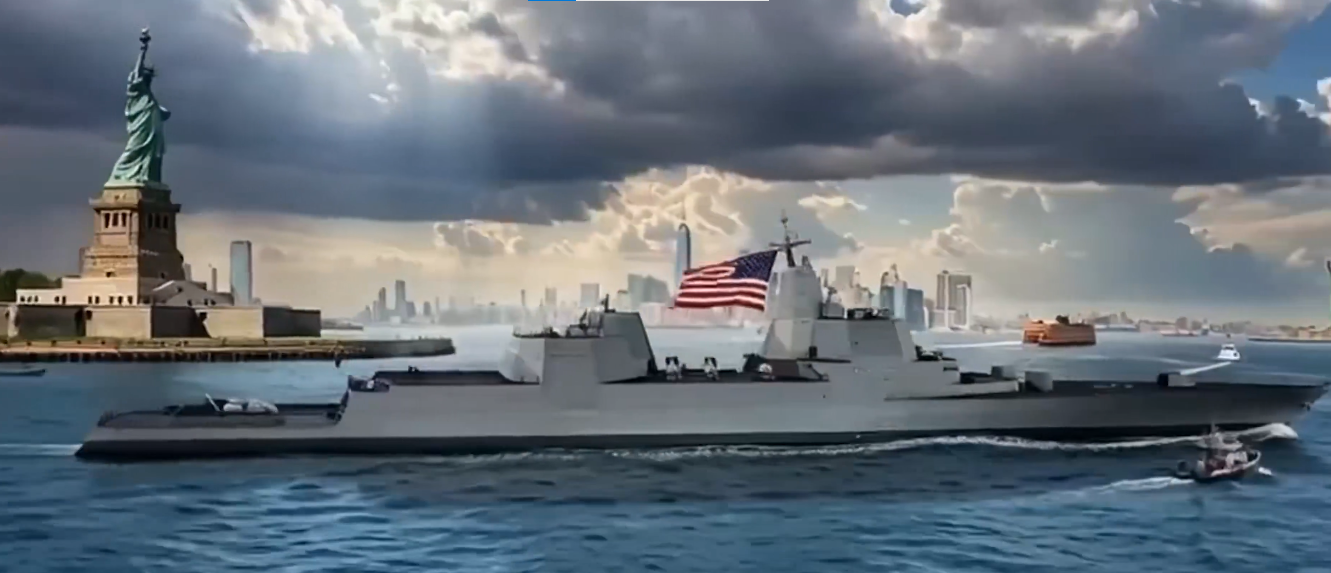
He added commanders will not have to choose between different roles like air defence, anti-submarine warfare, anti-surface warfare, or long-range strikes, as the ship will be able to handle all of them at a high level.
He added that these battleships will operate with unmanned systems, onboard command teams, layered defence systems, and long-range weapons.
Phelan said, "@USNavy BBG(X) is built for the fight ahead and designed for producibility. No commander should have to choose between air defense, ASW, ASuW, or long-range strike. This platform delivers all of it at the highest level. Battlegroups will integrate unmanned systems, embarked staff elements, layered defenses, and high-speed long-range fires. The next-generation battleship anchors the high end of the Fleet of the Future and delivers decisive combat power from the 2030s into the next century."
Interestingly, following the budget request and his introduction to BBG(X)'s capabilities, the US Department of War announced that Phelan has stepped down with immediate effect.
Chief Pentagon spokesperson Sean Parnell confirmed the move and said Undersecretary Hung Cao will take over as Acting Secretary of the Navy.
Back to the budget request, at the core of the shipbuilding plan is USD 65.8 billion earmarked to procure 34 vessels, including 18 battle force ships and 16 auxiliary platforms. Alongside submarines, destroyers and amphibious ships, the Navy has confirmed continued investment in the design phase of the BB(X) battleship, which officials describe as the future centrepiece of a "Golden Fleet Initiative".
The battleship programme was first announced by Trump on December 22 last year, when he approved a new class of 30,000 to 40,000-ton warships. Following which the US navy hinted at a doctrinal shift back towards heavy surface combatants.
"As commander in chief, it's my great honour to announce that I have approved a plan for the Navy to begin the construction of two brand-new, very large -- largest we've ever built -- battleships," Trump said at the time.
The lead ship, USS Defiant, is expected to enter construction in the early 2030s, with long-term plans for a fleet of 20 to 25 such vessels. The ships are intended to replace the previously planned DDG(X) destroyer programme while incorporating its advanced technologies.
Phelan, back then, had underlined the offensive role envisioned for the platform, drawing comparisons with historic US battleships. "The Iowa was designed to go on the attack with the biggest guns, and that's exactly what will define the Trump-class battleships: offensive firepower from the biggest guns of our era," he said.
"This ship isn't just to swat the arrows; it is going to reach out and kill the archers," the former US Navy Secretary had then said.
According to the Navy, the new battleships will combine traditional heavy naval artillery guns with hypersonic weapons, railguns, and directed-energy systems.
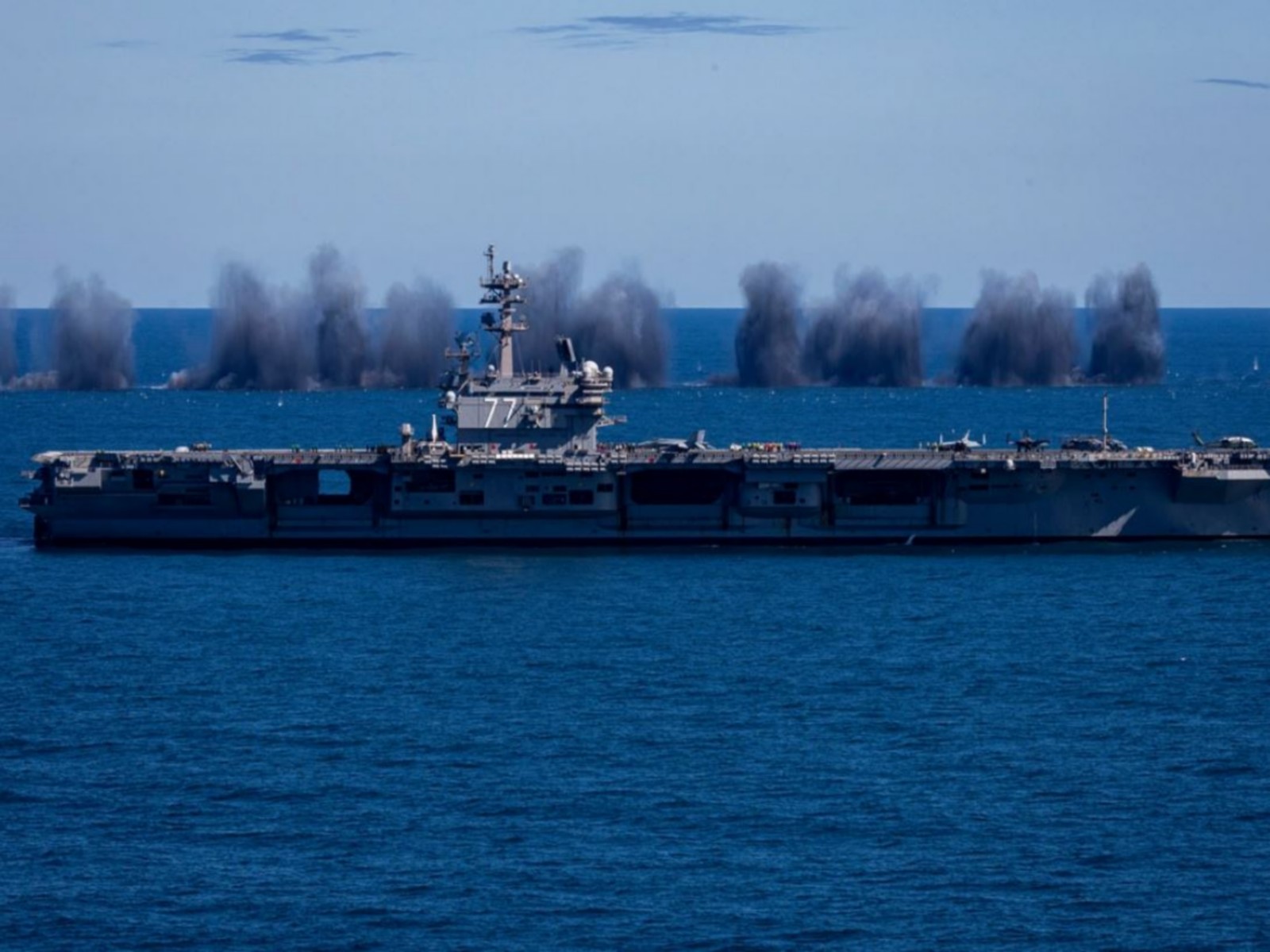
The FY27 budget also outlines wider force expansion. The US Navy plans to acquire one Columbia-class submarine, two Virginia-class submarines, an Arleigh Burke-class destroyer, a new FF(X) frigate, and multiple amphibious and logistics vessels. It will also continue funding for Ford-class aircraft carriers CVN 80 and CVN 81.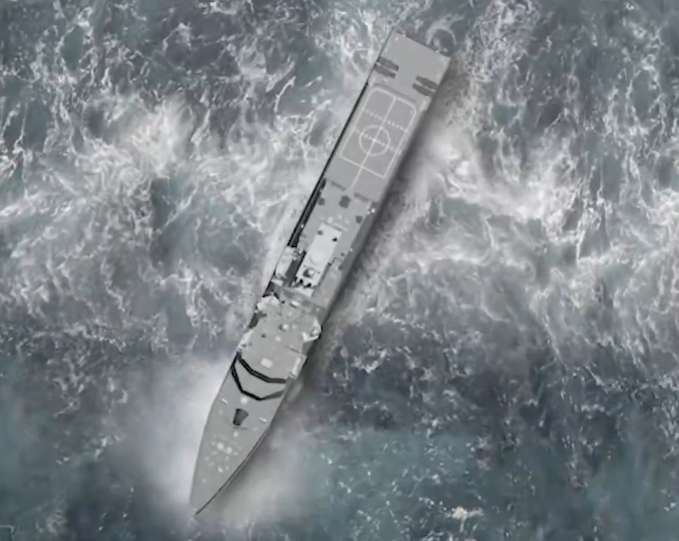
US Rear Admiral Ben Reynolds highlighted the scale of procurement. "This is the money that builds the future fleet. It funds the acquisition of 34 new ships and 123 new aircraft, directly translating dollars into the steel and systems that will guarantee our maritime dominance for decades to come," he said.
Aircraft procurement stands at USD34.4 billion, including 47 F-35 fighter jets. Additional acquisitions include 12 P-8A Poseidon long-range maritime patrol aircraft, six E-2D Hawkeye (AW&EC) airborne early warning aircraft, 22 CH-53K King Stallion heavy-lift helicopters, three MQ-25 carrier-based refueling drones, and five MQ-9A Sea Guardian drones.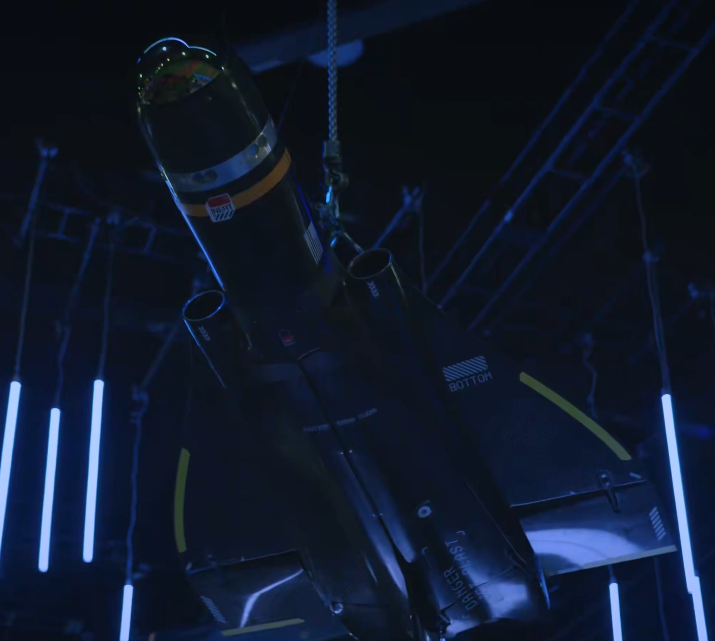
A further USD22.6 billion has been allocated for weapons such as Standard Missiles and Tomahawk cruise missiles. The Marine Corps is set to receive USD 6.3 billion for ground systems, including NMESIS launchers and Naval Strike Missiles.
Operational readiness also remains a key focus, with USD150 billion set aside for maintenance and training to push the Navy towards an 80 per cent combat-ready posture.
US Chief of Naval Operations Admiral Daryl Caudle framed the budget as a strategic shift. "The FY27 budget request is a definitive order to shift our Navy from a peacetime posture to a warfighting footing," he said., adding, "We are not just observing the security environment; we are actively shaping it with credible tailored forces to ensure peace through strength."
The renewed focus on battleships is a departure from decades of carrier-centric naval doctrine. Battleships last saw combat use during the Gulf War, when USS Missouri and USS Wisconsin carried out shore bombardment missions.
Historically, battleships dominated naval warfare from the late 19th century until the Second World War, when aircraft carriers overtook them as the primary instruments of sea power. The US Navy built 59 battleships between 1888 and 1947, with the era effectively ending after the war.
The USS Missouri remains the last-built US battleship, while the HMS Vanguard, commissioned in 1946, is the last battleship ever built globally.
With the BB(X) programme now embedded in its budget roadmap, the US Navy appears set to revive the concept in a modern form.
The push comes amid growing concern in Washington over the rapid expansion of China's People's Liberation Army Navy (PLAN).
An earlier US Congressional report stated that China now operates the world's largest navy, with more than 370 platforms, and that it is projected to expand to 395 ships by 2025 and 435 by 2030.
By comparison, the US Navy had 296 battle force ships as of September 30, 2024, with projections indicating a slight decline to 294 ships by 2030. US officials have repeatedly raised concerns over the pace of China's shipbuilding, the scale of its industrial base, and the widening gap in fleet size.
Hence, the US Navy, likely keeping concerns over the PLAN's rising numbers in mind, said in its official statement during the budget request, "We are making key investments in the Golden Fleet Initiative that will revitalise America's maritime industrial base and restore American maritime dominance."