Trump says Iran war will end "very quickly", oil prices will "come tumbling down"
Oct 07, 2026
Washington [US], October 8 : US President Donald Trump on Wednesday (local time) said the war with Iran will end "very quickly" and claimed that oil prices will "come tumbling down", while asserting that the US has taken away Iran's nuclear power.
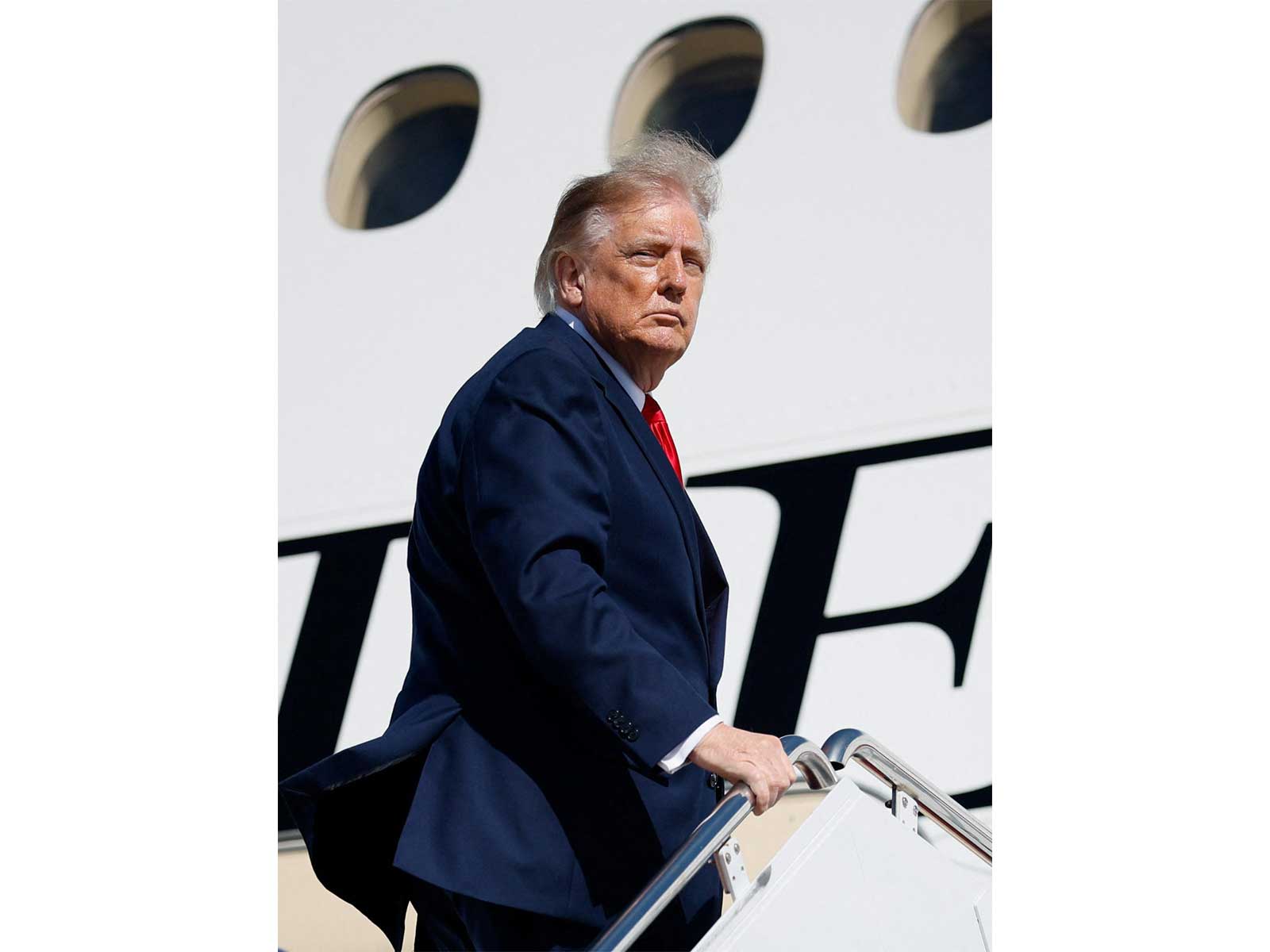
"It is a war from the standpoint of what we have to do. We have to get rid of the nuclear weapons for Iran. We have taken away their nuclear power. If they had nuclear power, you would have had problems like you have never had before," Trump told reporters while departing Washington for a San Antonio Republican campaign rally.
"Their whole country right now is wiped out. It will be over very quickly, and when it does, oil prices will come tumbling down," he added.
Meanwhile, an Iranian government spokesperson, Fatemeh Mohajerani, has rejected Trump's claims that Iran's oil minister resigned due to pressure from the US war, describing the claim as "a futile effort to hide his own failures," Al Jazeera reported.
Spokesperson Mohajerani said the oil minister's resignation was "not a sign of weakness", but an example of flexibility within a stable political system.
While speaking to reporters yesterday, Trump had said the Iranian oil minister "just quit", claiming that the official told him, "We have no economy, we have no oil, we have nothing."
Iranian Foreign Minister Abbas Araghchi has meanwhile said that while Iran remains determined to defend itself, officials are serious about using diplomacy to secure the country's interests and national security, as reported by Al Jazeera.
In a meeting with Iranian officials, Araghchi said Iran's delegation to the United Nations General Assembly in New York used the visit to present a seven-day proposed peace plan to the US to reopen the Strait of Hormuz, Al Jazeera reported, citing his Telegram channel.
Trump rejected the Iranian proposal a day after it was presented late last month, and US officials issued a counterproposal seeking to revive negotiations to end the war.
Meanwhile, US Vice President JD Vance earlier made clear that Tehran must carry out a "meaningful" cut in its nuclear enrichment capacity before Washington will agree to halt the seven-month war with Iran.
In an exclusive interview with Reuters, Vance said the United States remains open to a negotiated settlement but will insist on concrete steps from Iran rather than assurances about future nuclear limits.
"If you don't want a nuclear weapon, then why do you need 60% enriched fuel?" Vance said. "If you want to show commitment to not building a nuclear weapon, don't build highly enriched fuel. That's a very basic threshold issue," he added.
"I think if they want to show a commitment to not building a nuclear weapon, they would do something meaningful on their enrichment capacity," he further said.
In recent weeks, the two sides have traded proposals aimed at ending the war and restoring free passage through the Strait of Hormuz, a vital artery for global energy supplies.
Trump has already dismissed Iran's most recent offer and cautioned that US military action could escalate after the November midterm elections.
As a key figure in the talks, Vance stressed that verbal pledges alone would not suffice. "We're not going to trade words for actions," he said.
The prolonged war has unsettled energy markets and piled political pressure on the Trump administration, with rising fuel prices emerging as a sensitive issue ahead of the midterms.
Vance further noted that Washington still lacks clarity on who holds ultimate decision-making power in Tehran.
Although US officials have been engaging Iranian President Masoud Pezeshkian and Foreign Minister Abbas Araghchi, Vance cast doubt on the extent of their authority inside Iran's political system.
"One of the things we picked up on is it's not totally clear how their country makes decisions," he said.
Iran pushed back against that characterisation. Foreign Ministry spokesman Esmaeil Baghaei said American officials are fully aware of their Iranian counterparts and understand how decisions are taken in Tehran.
"The problem is actually the opposite; it lies in the contradictory positions and mixed messaging from US officials," Baghaei said.
Vance also revealed that he has conferred with US field commanders about the war and rejected suggestions of critical munitions shortages.
He assessed that Iranian forces retain the ability to hit commercial vessels in the Strait of Hormuz but are largely incapable of blocking energy shipments through the waterway.