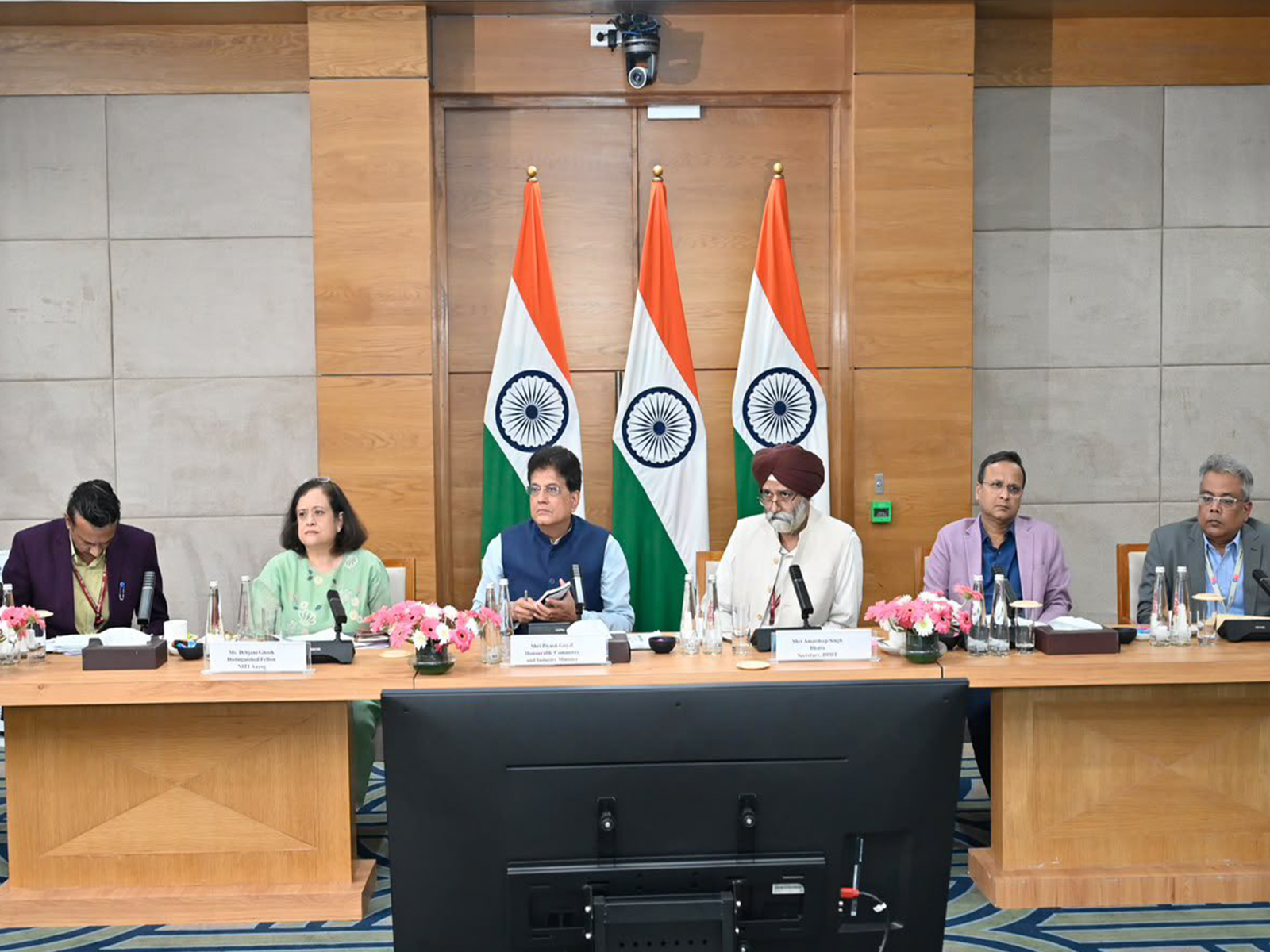
Union Minister Piyush Goyal holds talks with biotech startups on regulatory easing, funding support
Nov 02, 2026
New Delhi [India], November 2 : Union Minister of Commerce and Industry Piyush Goyal engaged with India’s biopharma and biotechnology startups to review operational bottlenecks and unlock fresh growth pathways across the sector.
The high-level interactions focused on identifying specific interventions required to accelerate the domestic bioeconomy, with an emphasis on institutional support for emerging innovators.
According to Goyal, the discussion examined the need for collective steps to ease procedural hurdles and bolster the domestic ecosystem.
“Discussed the need for coordinated action to simplify regulatory processes, improve access to funding, expedite patent approvals, and strengthen indigenous procurement and research infrastructure,” Goyal said on X.
The discussion also underscored the importance of cross-sectoral partnerships to enable young ventures to scale commercial operations.
“Stronger collaboration between government, industry and research institutions will help innovative startups scale and contribute to India’s growing bioeconomy,” Goyal added.
The outreach to the biotechnology segment followed another high-level industry interaction led by the minister earlier last week, where he engaged fast-moving consumer goods (FMCG) firms to expand digital commerce channels.
Goyal chaired a roundtable with over 40 industry leaders under the Bharat Commerce Chintan Shivir to deliberate on mechanisms to strengthen general trade via digital procurement, according to a statement from the Ministry of Commerce and Industry.
During that meeting, Goyal urged FMCG companies to jointly expand the Open Network for Digital Commerce’s DigiDukaan initiative across the country to drive adoption among neighbourhood kirana stores.
“ONDC’s DigiDukaan shows that when open digital infrastructure is built around the needs of the small retailer, adoption follows,” Goyal said at the roundtable.
The deliberations at the retail forum addressed several core structural interventions, including establishing a common digital identity for kirana store operators, setting up shared logistics and micro-warehousing facilities, and expanding access to formal credit through transaction records.
The participants also examined measures to streamline technology integration for consumer goods manufacturers and distributors while aligning commercial incentives to broaden participation across retail networks.