US Fed's Anna Paulson says recent inflation improvement 'only one step', keeps open mind on future policy
Aug 05, 2026
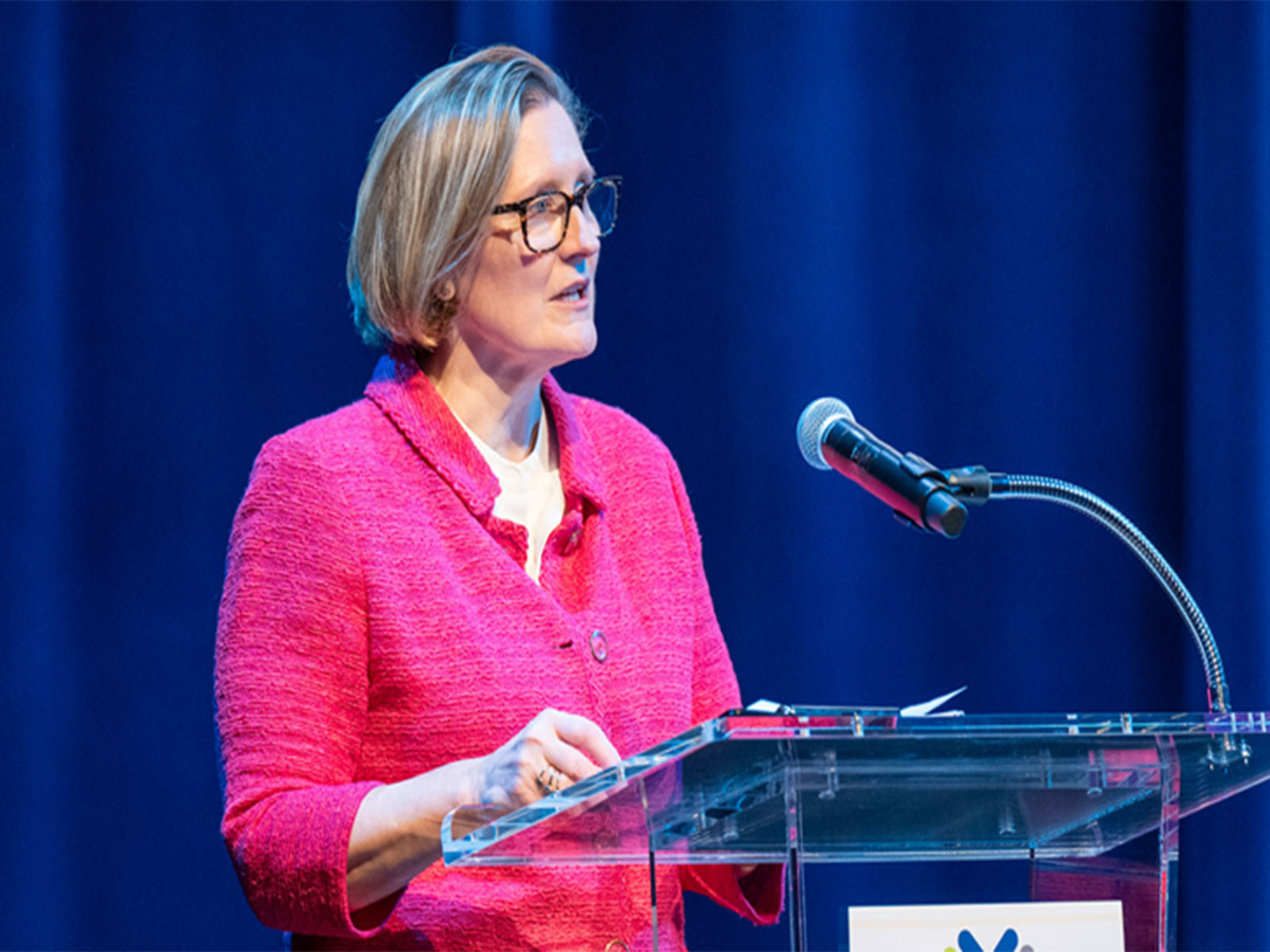
Washington DC [US], August 5 : Philadelphia Federal Reserve President and CEO Anna Paulson said the recent improvement in inflation was encouraging but not sufficient to determine the future course of monetary policy, adding that she is keeping "an open mind" to ensure policy achieves price stability and maximum employment.
In an essay released after the Federal Open Market Committee (FOMC) decided to keep the target range for the federal funds rate unchanged, Paulson said policymakers need more evidence on underlying inflation and the impact of supply-side shocks before making further policy decisions.
"The recent improvement in some inflation data is welcome. It is a step in the right direction, but it is only one step," Paulson said.
"I am focused on gathering more information to better understand what's happening to underlying inflation and the impact of supply shocks from energy and tariffs. And I am keeping an open mind to ensure policy delivers price stability and maximum employment," she added.
Paulson said that despite recent developments, including geopolitical tensions in the Middle East, changes in tariff policies and rapid investments in artificial intelligence, the broader economic outlook has remained largely stable.
The US economy expanded by 1.5 per cent in the second quarter, while headline Personal Consumption Expenditures (PCE) inflation eased to 3.7 per cent in June, largely due to lower energy prices. However, she estimated underlying inflation, after excluding the temporary effects of tariffs and energy prices, remained between 2.4 per cent and 2.8 per cent.
"The ability to look through supply shocks depends, in part, on inflation expectations and underlying inflation. Expectations remain well-anchored," Paulson said.
"However, when I try to assess underlying inflation... I estimate that underlying inflation is running somewhere between 2.4 and 2.8 per cent. Underlying inflation has been elevated for a long time, and it is what I am most focused on as I evaluate our progress toward the 2 per cent target," she added.
On the labour market, Paulson said conditions remained stable, with the unemployment rate staying between 4 and 4.5 per cent since June 2024 and standing at 4.2 per cent.
She said there were two possible interpretations of the current policy stance. "I see two plausible scenarios for how current policy is affecting inflation, and the incoming evidence will clarify which path we're on and what adjustments, if any, may be needed," she said.
"If policy is appropriately calibrated, I would expect to see growing signs that inflation is coming down -- more months of improving inflation data; reports from those making pricing and hiring decisions that align with a gradual return to 2 per cent; signs that pressures from tariffs, energy, and AI are contained rather than intensifying; and inflation expectations that are well-anchored and consistent with 2 per cent," Paulson said.
She added that if underlying inflation continues to remain elevated, policymakers may have to consider tighter monetary policy.
"If instead underlying inflation remains stubbornly elevated, the passage of time without progress would itself signal that more restrictive policy is needed," Paulson said.