"We don't trust Pakistan": Israeli envoy Reuven Azar slams Islamabad's 'anti-semitic' remarks
Jun 01, 2026
By Sahil Pandey
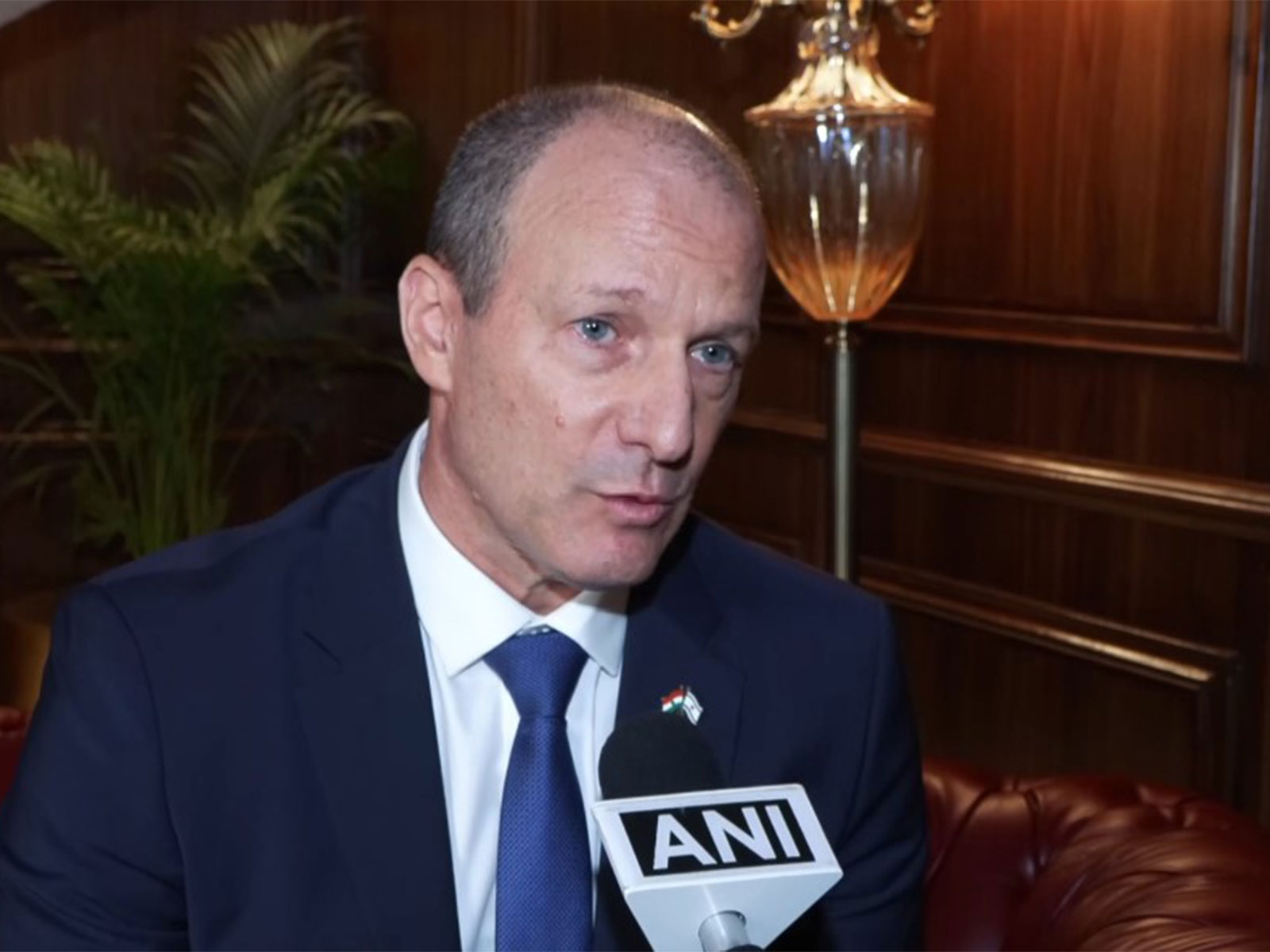
New Delhi [India], June 1 : Expressing deep scepticism towards Islamabad, Israeli Ambassador to India Reuven Azar on Monday stated that Israel does not trust Pakistan, citing its "terrible anti-Semitic statements."
Speaking on the sidelines of the Greater West Asia Forum, India (GWAFI) in the national capital, Ambassador Azar also addressed the ongoing tensions with Hezbollah, the broader West Asia conflict, and India's pivotal role in regional stability.
Reacting to Pakistan's rejection of the Abraham Accords, the Israeli envoy emphasised that joining the peace initiative requires a fundamental shift in mindset.
"The issue of Abraham Accords derived from the clear view that comes from President Trump that Israel is a force for stability, wants peace and prosperity in the region, can be part of the Abraham Accords. We are not rushing into anything, and we don't trust Pakistan, which is making these terrible anti-Semitic statements against the State of Israel," Azar told ANI.
He further noted that Israel's historical and religious ties to the land are documented across scriptures. "I think it will take a long time for them to recognise the rights of our indigenous people to the land of Israel, because Israel is part of this territory, not only according to our writings but also according to Islamic writings. And anyone who isn't willing to recognize this doesn't have much hope of joining the Abraham Accords," he added.
Detailing the volatile situation on Israel's northern border, the Ambassador revealed that Hezbollah launched an unprovoked attack on March 2, violating the existing understanding.
"There is a very imminent threat coming from Hezbollah; they fired more than 1,000 rockets since the ceasefire was called and killed more than 12 Israeli civilians and soldiers," Azar stated, adding that Israeli forces are currently "taking the high ground" to better counter the unmanned aerial vehicle (UAV) threat.
Highlighting Israel's diplomatic and military objectives, he said, "What we are trying to do now is to leverage that together with our peace negotiations with the Lebanese government in order to create a situation that we have a sustainable ceasefire that will ultimately lead to a sovereign Lebanon that is capable of controlling itself and neutralising the Hezbollah attempt."
Emphasising that Israel holds no animosity toward the Lebanese state, Azar remarked, "We have zero conflict with the state of Lebanon. We have, unfortunately, a conflict with a radical force that is sworn to annihilate us... It remains to be seen whether the Lebanese government will be capable of changing the situation internally."
Shifting focus to Iran, the Ambassador called for sustained global pressure on Tehran, noting that the Iranian regime is attempting to reverse its recent military defeats.
"They must renounce the two existential threats they built against Israel and the region... Iran will continue facing pressure, including through the naval blockade, until it agrees to the terms that the United States has put forward," Azar said, praising the resolute stance of the US President.
Downplaying fears of a global energy crisis, Azar observed that international markets have successfully adapted. "What we are actually seeing is a drop in oil prices... It means that the international community has been able to cope with the situation," he said, while warning that hesitation to pressure Iran could invite a "much bigger" crisis in the future.
The Ambassador lauded India's growing economic footprint, describing it as a vital anchor for future prosperity in West Asia.
"India has a huge role to play because India is the fastest growing economy in our region... We will see trillions of dollars worth of goods, a lot of investment, and our region, West Asia, can enjoy that if we have stability," Azar said. "We have to achieve stability, we have to neutralise the radical elements, and then India and we and all the countries in the region will be able to enjoy the prosperity."
Explaining Israel's participation in GWAFI, Azar concluded that the forum serves as an ideal platform to informally discuss concerns and better align Israel's strategies with the Indian perspective to strengthen their multi-faceted bilateral partnership.