WHO seeks more information from Russia on Irkutsk lab worker’s death, says unable to complete risk assessment
Oct 08, 2026
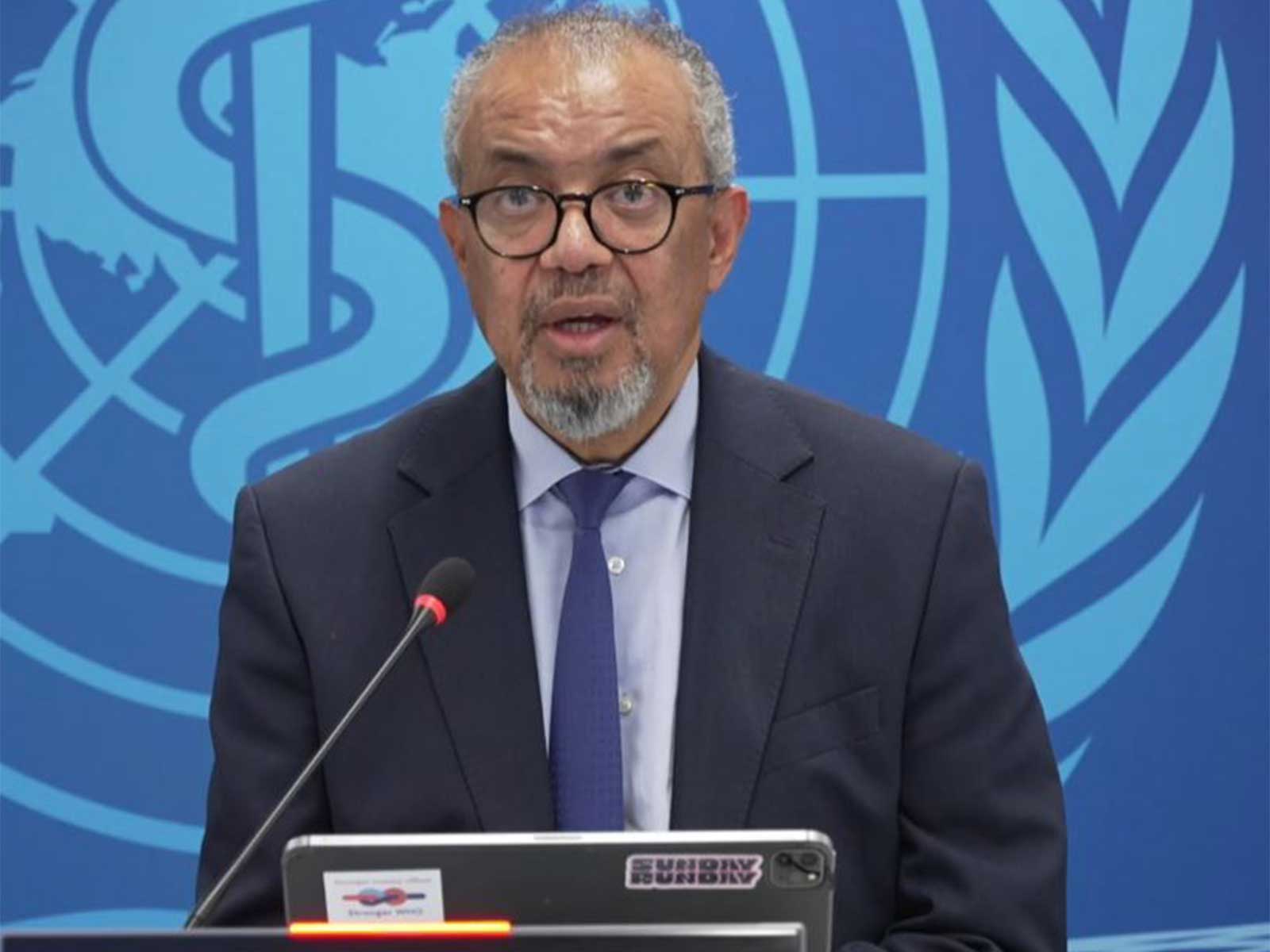
Geneva [Switzerland], October 8 : World Health Organisation Director-General Tedros Adhanom Ghebreyesus said the UN health agency has sought further information from Russia over the death of a laboratory worker in Irkutsk after severe pneumonia, saying WHO does not yet have the full picture of the incident to conduct a complete risk assessment.
Speaking at a media briefing on Wednesday, Tedros said initial media reports had suggested a suspected case of pneumonic plague following an accidental laboratory exposure at the Irkutsk Antiplague Research Institute.
"Last Friday, October 2, the first media reports emerged of a suspected case of pneumonic plague in a laboratory worker at the Irkutsk Antiplague Research Institute in the Russian Federation," Tedros said.
"The lab worker died after being hospitalised with severe pneumonia. Initial media reports suggested pneumonic plague following an accidental lab exposure," he added.
Tedros said WHO was aware that the Russian government had held a meeting on October 2 after suspecting that a resident of the Irkutsk oblast had contracted a dangerous infection.
"On Saturday, WHO asked the Russian Federation for more information, in accordance with the International Health Regulations," he said.
According to Tedros, Russia responded on Tuesday that no case of plague had recently been reported in the Irkutsk oblast, while around 200 contacts had been placed in quarantine.
"However, WHO has requested further information on the laboratory tests conducted on the individual who died and the contacts, more detail on what prompted the public health measures, and details about the health status of the contacts," he said.
WHO has also sought verification of media reports concerning a second employee who was reported to have pneumonia of undetermined cause.
"We have also sought verification of media reports of a second employee with pneumonia of undetermined cause," Tedros said.
He added that WHO had offered technical support related to plague as well as laboratory biosafety and biosecurity.
"As we don’t yet have the full picture of this event, we are not able to conduct a full risk assessment," Tedros said.
"Timely, complete and transparent information sharing under the International Health Regulations is essential to clarify conflicting reports and enable an accurate assessment of potential public health risks," he added.
In the same media briefing, Tedros also highlighted WHO's new guidelines addressing the rise in obesity among children and adolescents.
He said the prevalence of obesity among children and adolescents had quadrupled over the past 25 years, rising from 2 per cent to 8 per cent.
"More than 170 million children and adolescents globally now live with obesity," Tedros said.
The new guidelines strongly recommend structured changes to diet, behaviour and physical activity for children and adolescents living with obesity. They also include advice on pharmacological treatment, bariatric surgery and weight-loss devices.
Tedros said obesity management should go beyond weight loss and focus on improving health, functioning and well-being.
"As always, prevention is better than treatment. WHO continues to call for policies and measures that make healthy diets and physical activity more accessible and affordable," he said.
Earlier, WHO said Russian health authorities had reported that no recent cases of plague were registered in Irkutsk oblast following the laboratory worker's death. The authorities also reported that no high-threat pathogens had been detected among identified contacts.
According to WHO, Russian authorities said an epidemiological investigation had been conducted, preventive and control measures had been implemented, and identified contacts had been placed under medical observation and tested.
The authorities also reported that medical observation of all identified contacts had been completed.
According to Euronews, citing Russia's national health watchdog Rospotrebnadzor, tests of biological material from Daria Shipilova, a 28-year-old laboratory assistant at the Irkutsk anti-plague institute, found no microorganisms associated with her work.
The watchdog also said no accidents involving pathogenic microorganisms had been detected at the institute.
Shipilova died on October 2 after developing severe pneumonia. Earlier reports citing unnamed sources close to regional security services had raised concerns that she may have contracted pneumonic plague after a test tube broke in the laboratory.
Plague is a bacterial disease with several forms, with pneumonic plague being the most contagious form, according to WHO. It can spread between people and can be fatal without early antibiotic treatment.
Russia has recorded isolated plague cases since 2014, most involving transmission from rodents during skinning, and has contained them successfully.