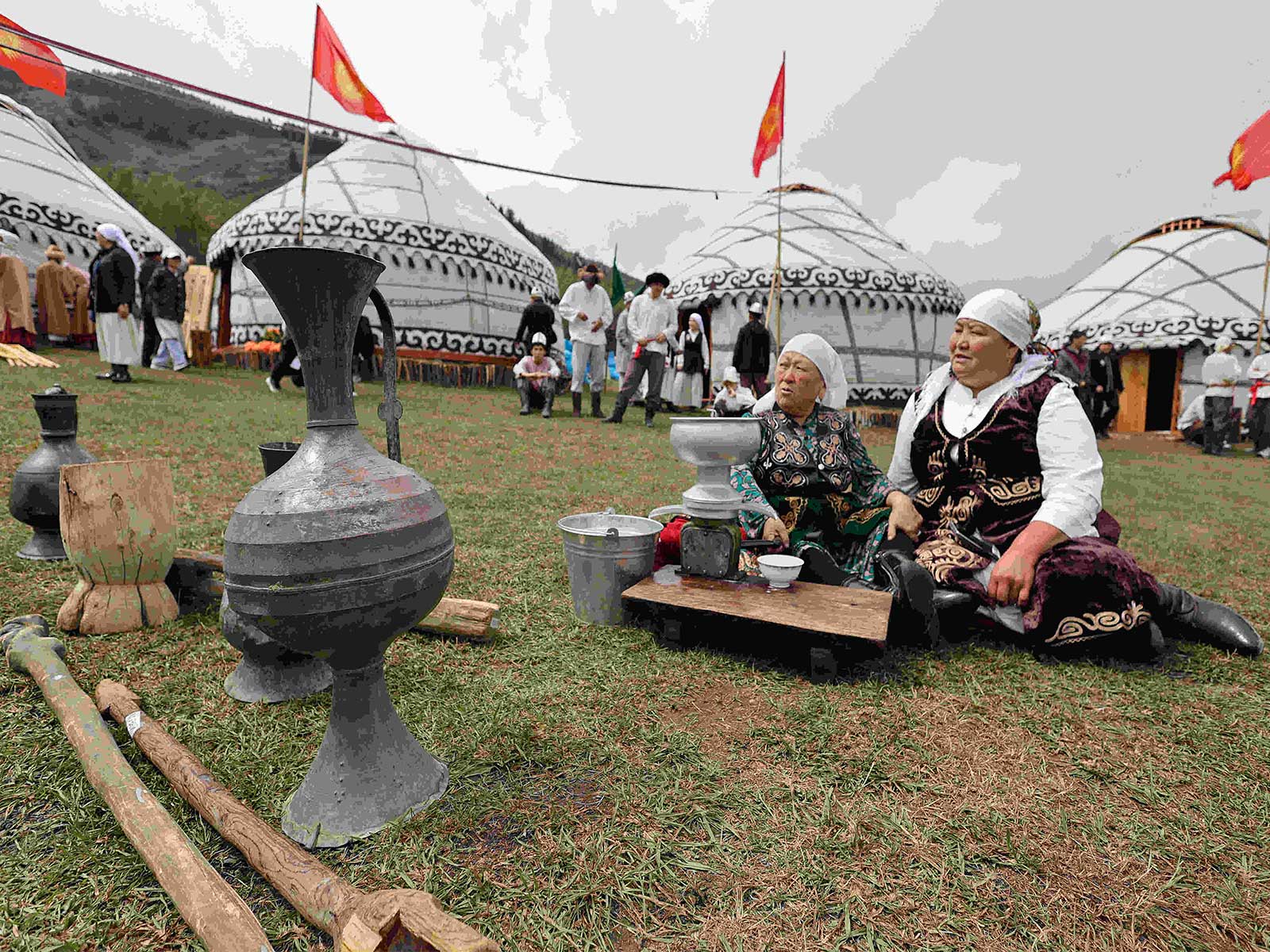
World Nomad Games: 16 stone sculptures installed at Centre for Nomadic Civilisation
Sep 06, 2026
Ysyk-Kol [Kyrgyzstan], September 6 : As part of the cultural program of the 6th World Nomad Games, a collection of 16 monumental stone sculptures has been created at the Centre for Nomadic Civilisation in the village of Ornok, Issyk-Kul region, as per the Kabar News Agency.
The sculptures celebrate the history, culture, and philosophy of nomadic civilisation.
The sculptures were created especially for the Games and will remain at the Centre as part of its permanent open-air art collection, according to the World Nomad Games 2026 Media Headquarters, as quoted by the Kabar News Agency.
The project followed a competitive selection process organised as part of the Games’ cultural program. More than 75 proposals were received, from which a special commission selected 16 projects to be brought to life in stone.
Following the selection process, the participating sculptors travelled to Ornok, where they spent a month creating their works in the run-up to the Games. Uzgen travertine was chosen as the primary material, enabling the artists to create large-scale monumental compositions.
All 16 sculptures have now been installed on the grounds of the Centre. Their themes reflect the history, traditions, spiritual values, and worldview of nomadic peoples.
Among the works are “Ozök” (“Basis”), “Return of the Nomads,” “Tradition,” “Nomadic Spirit,” “Zhargylchak,” “Music,” “Freedom,” “Sayapker,” “Shaman,” “Toguz Kyrgool,” and “Meikindik,” among others, as per the Kabar News Agency.
Sculptor Bakyt Imanbaev presented “Zhargylchak,” a decorative composition inspired by a traditional household tool once used by Kyrgyz women. The zhargylchak played an important role in nomadic daily life, serving to process grain and prepare flour and talkan.
Imanbaev said he first sketched the concept while studying at the Kyrgyz State Art Academy. The original work was later purchased by a foreign tourist. Given the opportunity to take part in the sculpture symposium, he revisited the idea, noting that its concept closely aligned with the theme of nomadic civilisation, as per the Kabar News Agency.
One of the project’s key works, “Ozök,” explores the roots and foundations of nomadic culture. The composition blends traditional ornamental elements with contemporary artistic forms, highlighting the ongoing evolution of nomadic cultural heritage.
Organisers and participating artists stressed that the sculptures were created as permanent works rather than for a temporary exhibition and will remain at the Centre for visitors to experience.
“Today, when we look at balbals, we can determine the period and era to which they belong. In the same way, our compositions will tell future generations that the 6th World Nomad Games were held here in 2026 and convey the ideas we sought to express,” Imanbaev said.
The collection is expected to support the development of the Centre for Nomadic Civilisation as an open-air museum, combining contemporary sculpture with the historical and cultural heritage of nomadic civilisation.
The 16 stone sculptures will remain on the Center’s grounds as a lasting cultural legacy of the 6th World Nomad Games and a reflection of how contemporary artists interpret and preserve the heritage of the nomadic world.
The 6th World Nomad Games are taking place in Kyrgyzstan from Aug. 31 to Sept. 6, 2026. The Games officially opened at Bishkek Arena in the capital on Aug. 31, while the main competitions are being held in the Issyk-Kul region from Sept. 1 to 6. More than 3,000 athletes representing 109 countries are taking part in the Games.