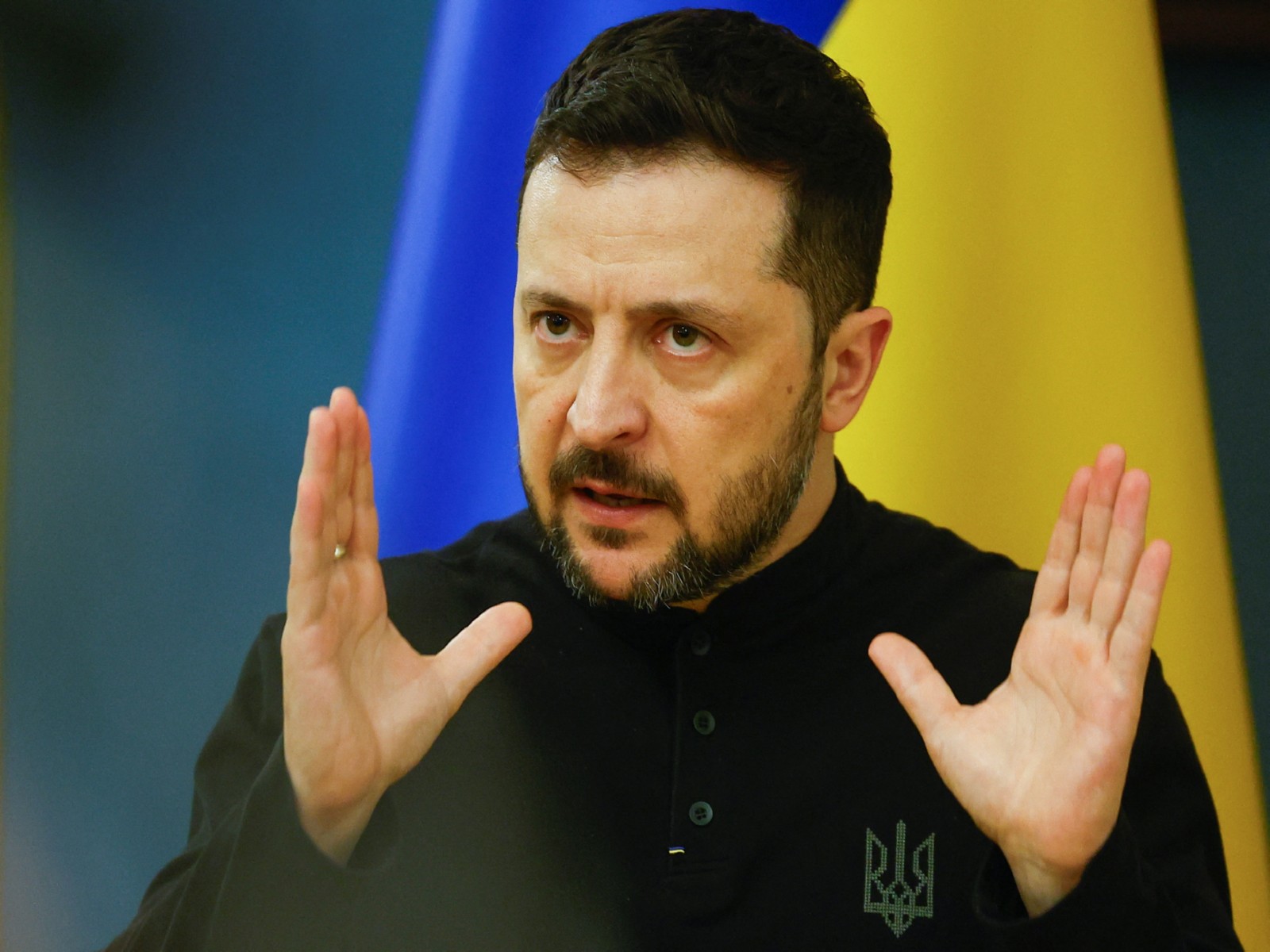
Zelenskyy demands "more pressure", sanctions to push Putin to negotiating table
May 31, 2026
Kyiv [Ukraine], June 1 : Ukrainian President Volodymyr Zelenskyy has called on world leaders to apply "more pressure", including targeted sanctions, on Russian President Vladimir Putin to compel him to enter peace negotiations. The appeal comes as the conflict enters its fifth year, with Zelenskyy actively exploring avenues to bring an end to the hostilities.
Zelenskyy suggested that significant battlefield advancements over the subsequent six months could considerably strengthen Ukraine's position in future diplomatic talks. His remarks mirrored an assessment shared earlier by Brigadier General Andriy Biletsky, a top Ukrainian military commander.
"Before the winter, we need to find a way, a diplomatic way, to sit and to speak," Zelenskyy stated during an interview on CBS News' "Face the Nation with Margaret Brennan". The conversation, recorded on May 29, was broadcast on Sunday.
According to a May 25 analysis published by the US think tank Institute for the Study of War (ISW), frontline dynamics appear to be shifting in Kyiv's favour. "Russian forces' rates of advance are stagnating while Ukrainian forces are employing novel tactics and operational concepts in efforts to break out of positional warfare," the ISW reported. However, the think tank cautioned, "It remains too early to tell whether Ukrainian forces will successfully restore manoeuvre to the battlefield."
Prompted by these battlefield conditions, Zelenskyy renewed his urgent pleas for enhanced military support from Washington. CBS News reported that he dispatched a formal letter to US President Donald Trump and Congress requesting a fresh consignment of Patriot ballistic missile interceptors. The request followed a massive Russian aerial assault on Kyiv, where dozens of cruise and ballistic missiles were deployed in the heaviest strike since the full-scale invasion commenced in 2022.
"We need to increase production," Zelenskyy remarked to Brennan regarding the Patriot supply chain. "Sixty, 65 missiles per month for today's challenges, it's nothing."
Addressing the procurement request, US Secretary of War Pete Hegseth noted that Washington is actively restructuring its defence manufacturing pipelines. "Listen, we're changing the way we make all those types of important munitions to ensure that our companies are delivering not just a little bit more, but a lot more, across the spectrum," Hegseth told reporters at a security forum in Singapore.
He added, "Where we can help Ukraine, we have; where we can enable Europe to do more, we have, and I'm encouraged by the European commitment. You look at the amount of money that's been spent, Europe has stepped up, and Ukraine has been just as, if not more, effective in the process, so we want them to be able to defend, and we'll find a way to make sure we can help them."
The ISW's tracking data indicates that the window for decisive action is narrow. "Ukraine likely has a unique and time-constrained opportunity to exploit its current initiative while Russian forces remain vulnerable," the think tank noted, urging international allies to scale up assistance. "Ukraine's partners should expand their support to these Ukrainian efforts at a moment when Russia is reeling from both battlefield setbacks and Ukraine's deep-strike campaign with the aim of forcing Russian President Vladimir Putin to re-evaluate his approach to this conflict."
On the diplomatic front, US Secretary of State Marco Rubio acknowledged that peace talks have temporarily stalled, though he maintained that Washington remains prepared to step back in should an opening emerge. When questioned on whether Moscow would ever accept a negotiated settlement, Zelenskyy replied, "Yes, of course." He cited past trilateral discussions involving the US as a potential blueprint for future engagements.
"It was a priority then, the United States was open, and we have to be open. Between us, we are partners," Zelenskyy noted, referring to those earlier sessions. "The United States moved and shifted its focus to the Middle East, and because of this, I think the Middle East is a priority. That's why we have some pauses in our diplomatic negotiations."
Zelenskyy noted that "we count on" American negotiators, specifically naming Rubio, Steve Witkoff, and Jared Kushner, to travel to Kyiv for direct consultations, expressing optimism that the visit could materialise within the next fortnight. A White House official confirmed that such a trip has been discussed, though it has not yet been formally scheduled.
Zelenskyy pointed out that "I think that we need to see an American negotiation group in Ukraine."
"They've never been here. I think it's important, not only for us," he remarked. "It's useful for them to understand, to see people, that their life is going on, but we want to stop this war."
Beyond Washington, Zelenskyy is exploring a European framework to exert diplomatic leverage, though he maintained that a unilateral track would be insufficient. "I will always be on the side that it can't be just a United States track or a European one," he explained. "The strongest position is when Ukraine, Russia, America, the United States, and Europe are involved. I think that this is the strongest, most powerful negotiation format," he said, adding, "But we have what we have. Now, Europe tries to find its way of pushing Russia towards peace."
A third alternative remains direct bilateral discussions with Moscow. Zelenskyy stated, "I'm ready to meet with Putin if he is ready," adding that heightened international economic leverage remains the key catalyst. "I think we need more sanctions. I think we need more pressure," he said. "With more sanctions and more pressure, they will be ready for dialogue."
The Ukrainian leader claimed that Russia's military is sustaining up to 35,000 casualties each month. "I think all these things will push them to dialogue," he noted, adding, "They are on the way to a big crisis with the people."
While Russia has been subject to extensive international sanctions since 2022, its energy sector experienced a temporary reprieve regarding certain oil sales amid overlapping global tensions with Iran, allowing Moscow to navigate high global oil prices. When questioned by CBS News regarding the enforcement of these economic measures, US Treasury Secretary Scott Bessent defended the current strategy, stating, "This administration has put the hardest sanctions on Russia of any country."
Reflecting on those restrictions, Zelenskyy remarked, "I hope that the United States will do it."
Turning to military technology, Zelenskyy expressed optimism regarding an upcoming drone procurement strategy with Washington. "I hope that we are on the way," he said, adding, "But we already have drone deals with some Middle Eastern countries, and we already have drone deals with some European countries. Now we're preparing a big drone deal with the EU, and I hope that we will have such agreements with American partners. I count on it."
He noted that US technology firms possess sophisticated artificial intelligence platforms that could be fused with Ukraine's active combat insights. "I think this cooperation can be huge and the most powerful in the world," Zelenskyy said. "So we need to negotiate already, not just speak about it, but make steps and do it as quickly as possible."
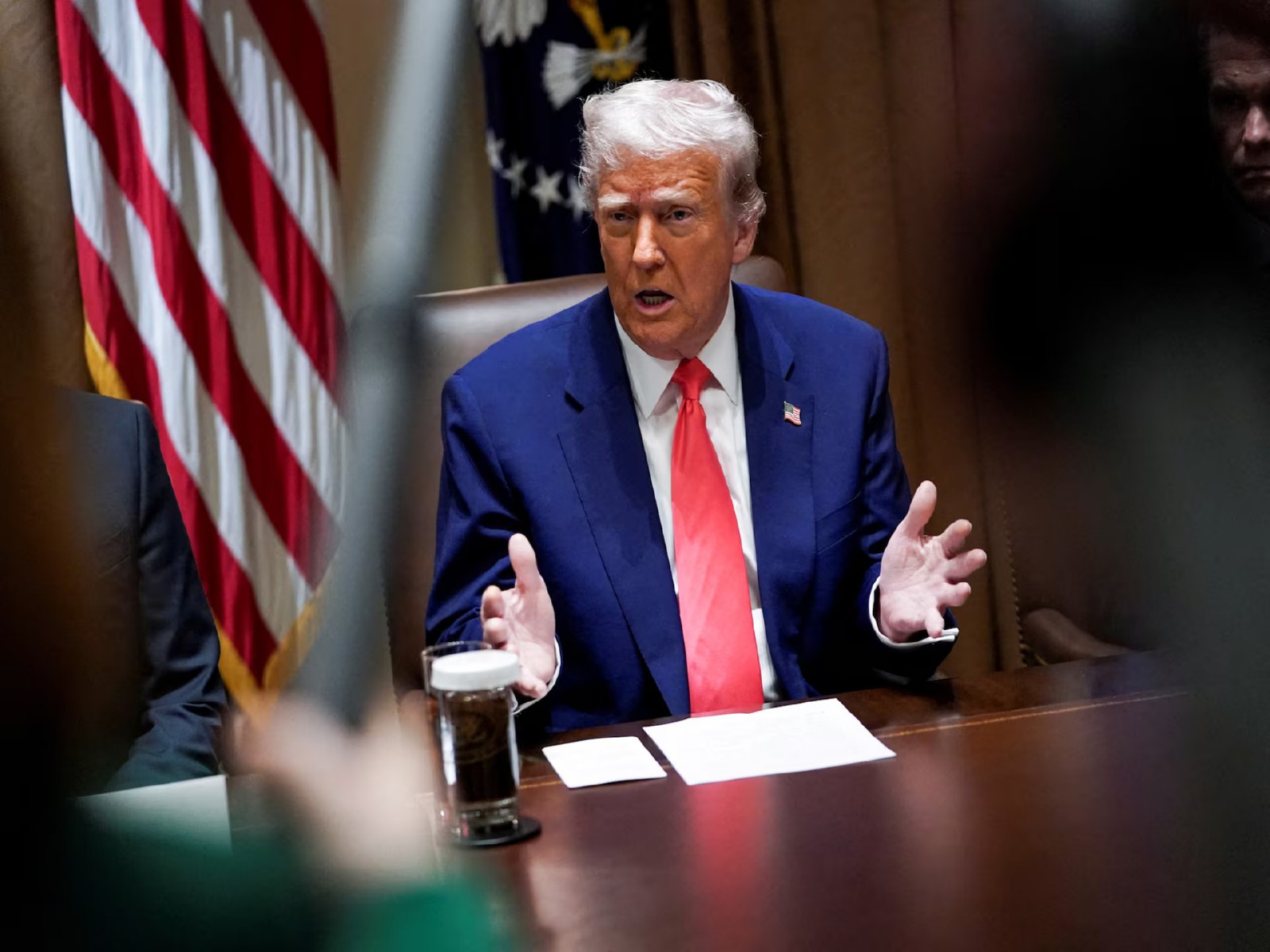
He concluded, "We need President Trump to say yes."