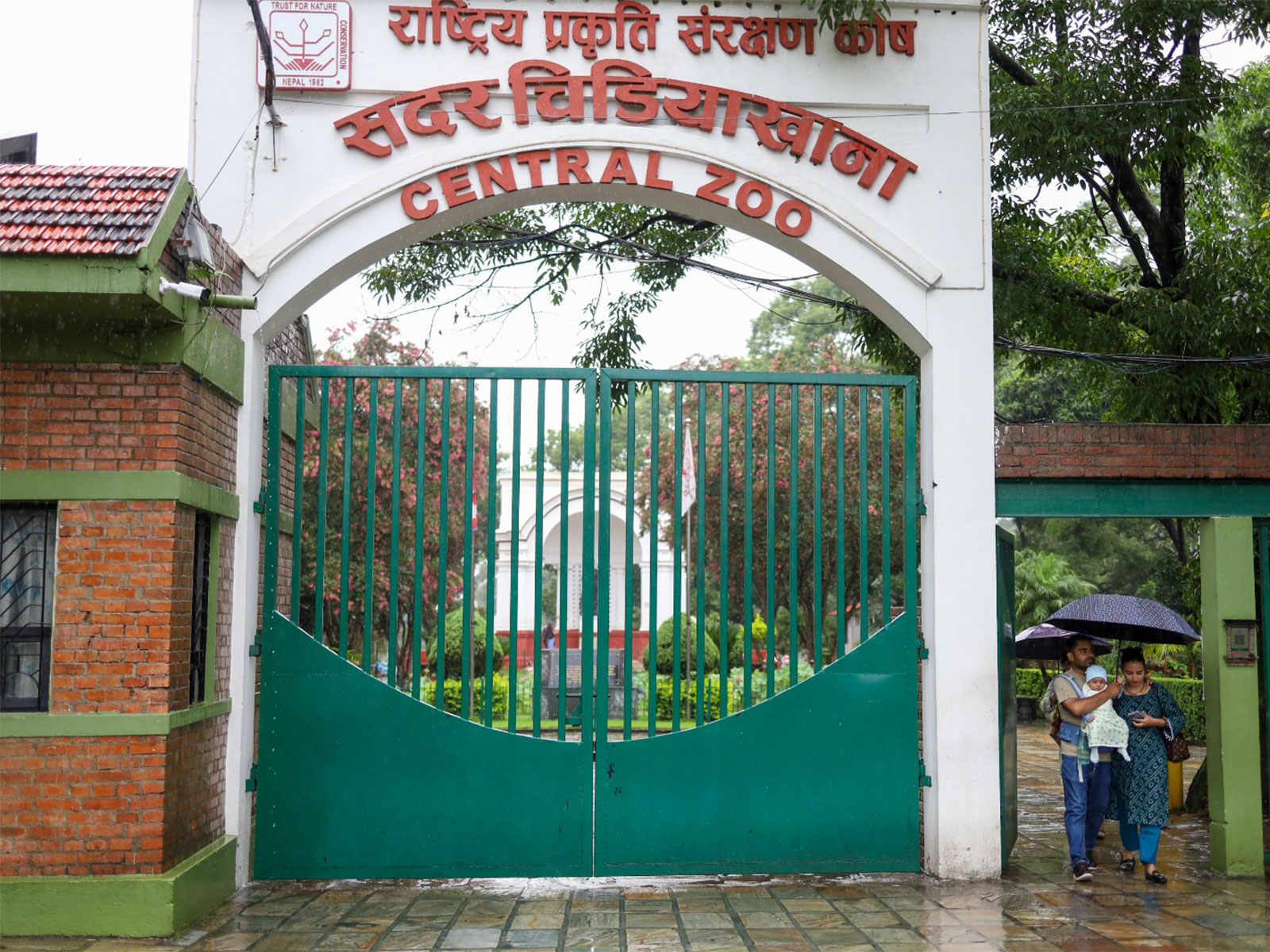
Zoo-ming back: Nepal's Central Zoo welcomes visitors after 27 days of Bird Flu closure
Jul 17, 2026
Lalitpur [Nepal], July 17 : Nepal's Central Zoo has reopened its doors for the public after nearly a month of closure following the bird-flu outbreak.
The only animal and bird enclosure in the Himalayan nation reopened on Friday with environmental samples of wild birds collected from its premises tested negative for avian influenza.
The zoo has been shut down since June 19 following an outbreak of the bird flu virus among vultures, owls, swans and other rare birds, as well as a jungle cat and civets kept at the facility. Avian influenza A (H5N1) was confirmed in samples from the dead birds.
"The zoo had remained closed to the public from June 19 and it has reopened from July 17; it was closed for about 27 days. It was only closed for the visitors but the staffs and officials were working continuously to contain the contagion," Babu Lal Tiruwa, acting head of Central Zoo, Lalitpur told ANI.
"Till today, the day when zoo has reopened, the last confirmed death due to the bird flu was on June 26, no subsequent deaths has been recorded after that. Over the time, a total of 65 fatalities has been recorded out of which 41 had actually died because of the bird-flu out of which 27 are bird species and additional 14 small mammals. Following the suggestion from the experts, some of the local species of birds were culled to prevent further risk of spread- 21 has been culled as well," Tiruwa added.
The zoo has issued a code of conduct for the visitors who are now back for a visit to ensure their safety. Cages where the contagion was traced and culled have been marked with blank white boards, and red ribbon has been drawn over the cage.
Before the reopening, the authorities also had conducted multiple tests on samples collected from its premises, including dead crows. The official claimed that the crows were the primary carriers of the virus at the zoo, which later spread, prompting closure.
"The origin of the transmission, as per the investigation by the experts' identification we think the crows as the main source for the infection. All the crows which were lying around have been confirmed to be infected with bird-flu. We also had tested the crows that were found dead around the zoo," Babu Lal Tiruwa, acting head of the central zoo told ANI.
The closure for nearly a month resulted in revenue losses of around NRs 30 million, as the zoo normally receives around 2,000 visitors on weekdays and up to 5,000 on public holidays.
The zoo houses around 1,300 animals across more than 100 species, including the endangered snow leopard and chimpanzee. The zoo also serves as a rescue centre for wild animals.
Meanwhile, the Department of Livestock Services said that the spread of the bird flu virus has slowed in all three Valley districts- Kathmandu, Lalitpur and Bhaktapur, as well as in Kavrepalanchok district.
As many as 119 poultry farms in the three Valley districts and Kavrepalanchok district witnessed bird flu outbreaks in recent days.
According to officials, more than 835,563 chickens and ducks have been culled since mid-March after outbreaks were detected. Bird flu has now been confirmed at poultry farms in 11 districts across the country. Authorities have also destroyed around 1.3 million eggs and approximately 300,000 kilograms of poultry feed from infected farms.
Nepal is currently witnessing outbreaks caused by several avian influenza viruses, including Influenza A (H5N1), Influenza A (H9N2) and Influenza A (H5Nx). These highly contagious viruses primarily affect domestic birds such as chickens and ducks.
Nepal first confirmed an outbreak of bird flu in January 2009. Since then, outbreaks have occurred almost every year, destroying millions of birds and large quantities of poultry products.