Advanced anti-drone systems, surveillance network strengthen security for Amarnath Yatra 2026
Jun 30, 2026
By Rajnish Singh
Anantnag (Jammu and Kashmir) [India], June 30 : Security forces have established a multi-layered aerial surveillance and anti-drone security grid along the Amarnath Yatra route, deploying advanced technologies to ensure foolproof security for pilgrims undertaking the annual pilgrimage that begins on July 3.
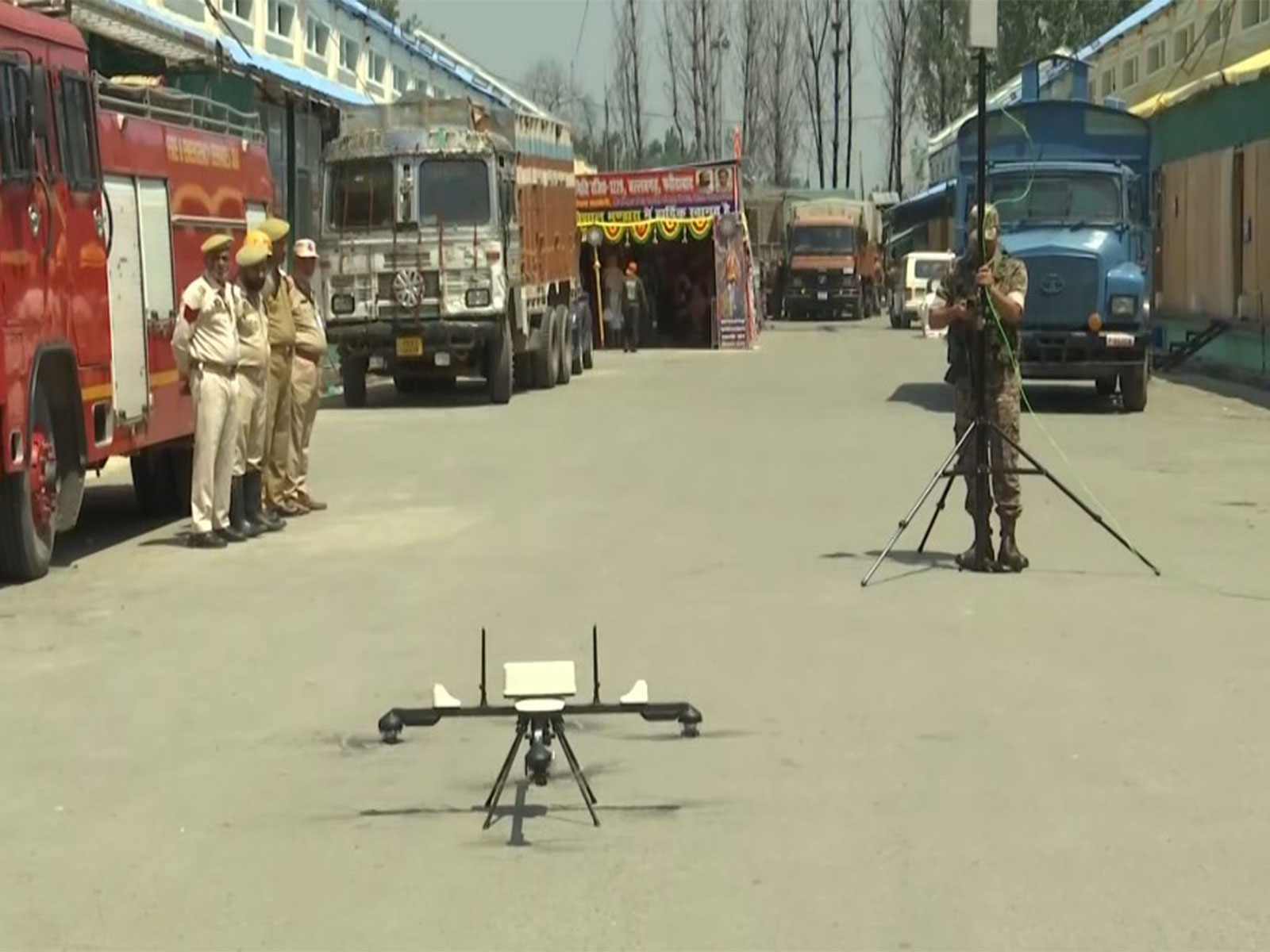
Officials said drones are being operated regularly by all major security agencies, including the Central Reserve Police Force (CRPF), the Indian Army, the Jammu and Kashmir Police, and other sister security organisations. Drone sorties are conducted during morning and evening hours, besides additional flights whenever required, in accordance with Standard Operating Procedures (SOPs).
Depending on their operational capability, the drones monitor areas ranging from five to 15 kilometres, providing real-time surveillance of the pilgrimage route, transit camps and surrounding mountainous terrain.
Nearly 100 transit camps established along the twin routes (Pahalgam and Baltal) of the Amarnath Yatra are under continuous aerial surveillance. Apart from these camps, surveillance systems have also been installed on strategically located high ridges to maintain a close watch over vulnerable areas and movement along the route.
The entire anti-drone network is coordinated by the Army Air Defence (AAD), which oversees aerial security across the pilgrimage route.
As part of the anti-drone security architecture, the Integrated Drone Detection and Interceptor System (IDDIS) has been deployed once again after its successful use during last year's Yatra.
Officials said every security agency is required to obtain prior permission before flying its drones to avoid any confusion or misidentification.
The IDDIS is equipped with both soft-kill and hard-kill capabilities. The soft-kill mechanism neutralises hostile drones by jamming their communication and navigation systems, while the hard-kill capability can physically destroy or bring down a rogue drone using laser-based interception technology.
In addition to electronic countermeasures, the Army has temporarily deployed L-70 and ZU anti-aircraft guns to provide protection against potential aerial threats during the Amarnath Yatra pilgrimage, concluding on August 28. These land-to-air weapon systems can effectively secure an area extending beyond a five-kilometre radius around key locations.
In a significant technological upgrade this year, the Low Level Lightweight Radar (LLLR) has been deployed for the first time during the Amarnath Yatra. The radar operates in two surveillance modes, capable of detecting low-flying aerial objects at ranges between 20 and 50 kilometres. Once an unidentified object is detected, the system immediately relays the information to the central control room, enabling security forces to take swift and coordinated action.
Officials said the integrated surveillance network is aimed at ensuring a safe and secure pilgrimage amid heightened security arrangements across Jammu and Kashmir.
The 57-day annual pilgrimage begins on July 3 from two routes, the traditional 48-km Nunwan-Pahalgam track in Anantnag and the shorter 14-km Baltal route in Ganderbal district.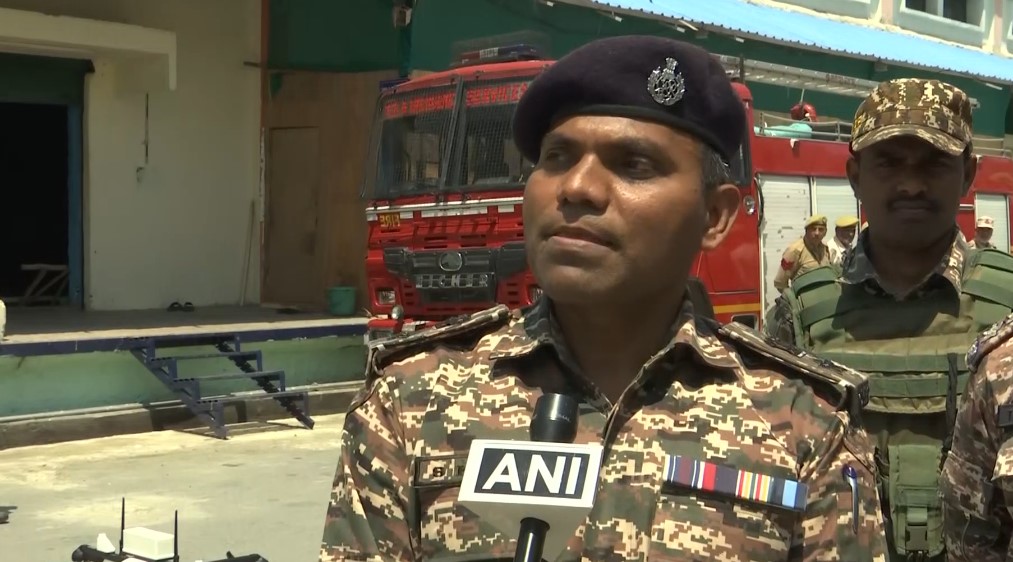
Meanwhile, speaking to ANI, SK Pal, Second-in-Command of the 46th Battalion, CRPF, said drones act as a force multiplier by enabling surveillance beyond the capabilities of physical deployment.
"The use of drones acts as a force multiplier for the security of any campus. We already have physical manpower and other surveillance devices, but drones can see beyond their range. We can conduct surveillance up to 4-5 kilometres around the campus. They help verify any suspicious movement and reach remote locations much faster than ground vehicles," Pal said.
He said drones have been deployed keeping in mind the safety and security of pilgrims undertaking the Amarnath Yatra.
"Special arrangements have been made for the Amarnath Yatra, with drones deployed keeping the safety of pilgrims in mind. Anti-drone systems have also been installed. Anti-drone systems are employed to neutralise potential drone threats and distinguish between friendly and enemy drones," he said.
He further said that around 12 to 15 transit camps, including the four major camps at Baltal, Srinagar and Jammu, have been equipped with drone and anti-drone systems to ensure enhanced security and better traffic management during the pilgrimage.
"Approximately 12 to 15 transit camps, especially the four main ones in Baltal, Srinagar and Jammu, are equipped with these systems to ensure enhanced security and traffic management during the yatra," he added.