Amidst deficit of trust, Xi hosts Trump in high-stakes meeting
May 15, 2026
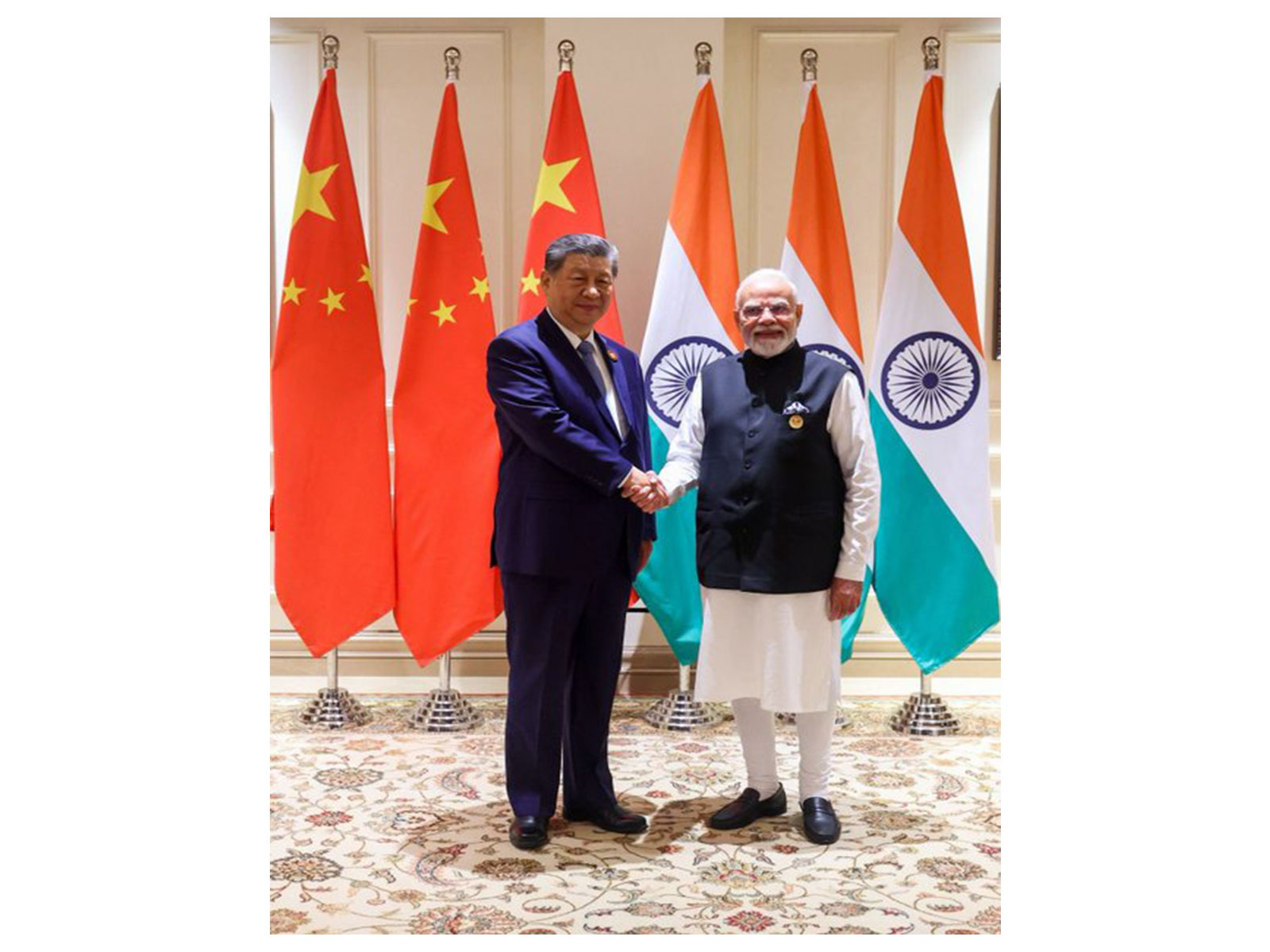
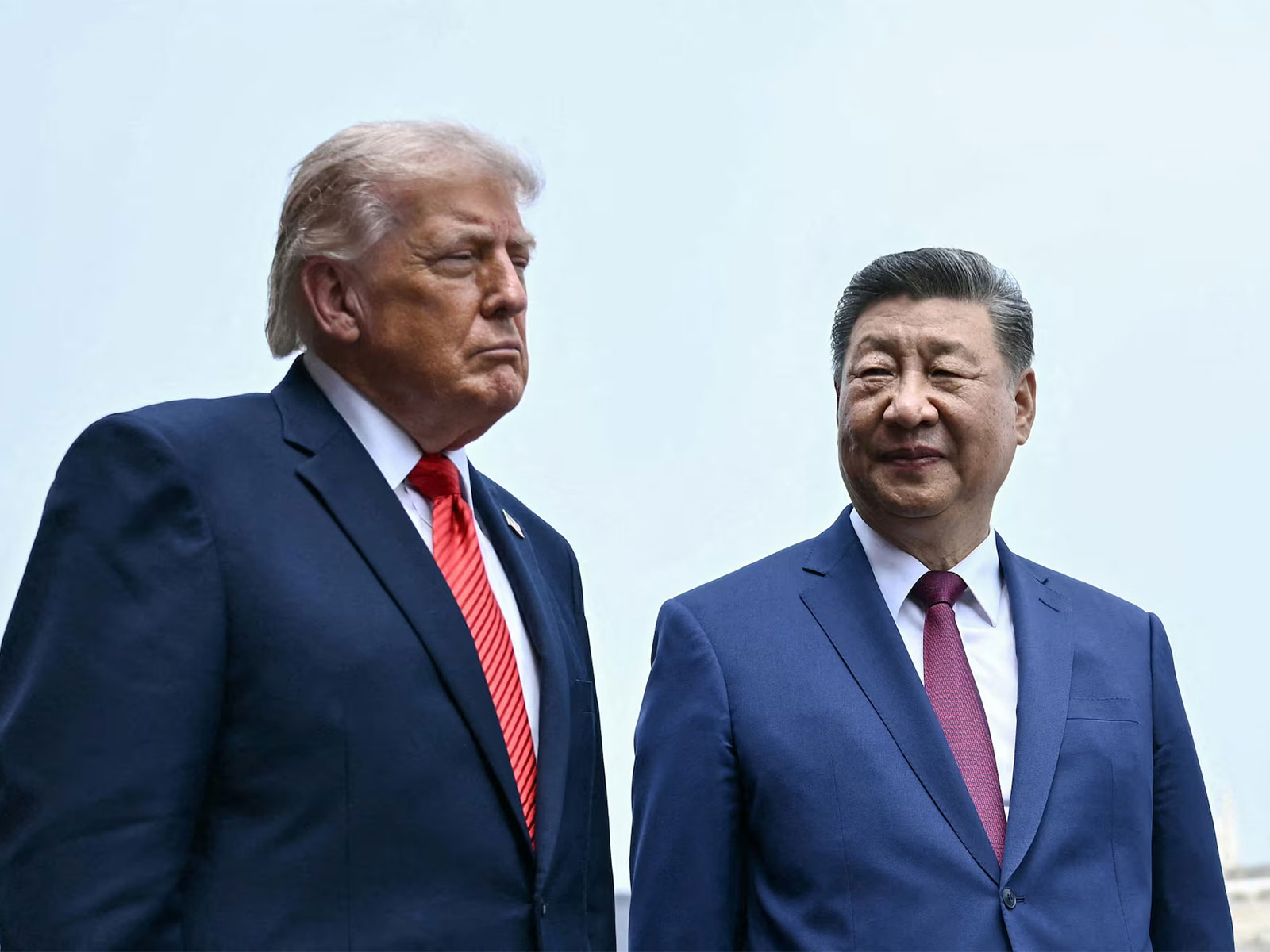
Beijing [China], May 15 : Chairman Xi Jinping laid out the red carpet for his American counterpart in Beijing this week, as the leaders of the world's two most powerful countries met to discuss critical matters. However, trust and suspicion dominated on both sides.
The fact that President Donald Trump was going to Beijing put him in the role of supplicant. Xi's last visit to the USA was in 2023 for an APEC summit, and before that, his last state visit was in 2015.
Trump seemed overwhelmed at times by the lavish treatment he received. Enthused by the sight of choreographed children jumping up and down with excitement, Trump told Xi, "I was particularly impressed by those children. They were happy, they were beautiful. Those children were amazing."
Trump fancies himself a master negotiator, but others believe he is easily manipulated, especially in the presence of authoritarian figures. He told Xi early on, "You're a great leader. Sometimes people don't like me saying it, but I say it anyway, because it's true." It will be interesting to see if Xi's greatness rubs off and Trump starts parroting Chinese talking points in the weeks to come.
With a binder of talking points in front of him, Xi focused on his script and on principles. Trump, meanwhile, eschewed such aids. Instead, he ad-libbed on his relationship with Xi, flattered him and vowed their relationship would grow "better than before".
Delayed by a month because of the war with Iran, the summit on May 14-15 was dominated by four "T's" - Taiwan, Tehran, trade and technology.
Beginning with the first topic, perhaps none anticipated this meeting with as much trepidation as Taiwan. Trump has a track record of throwing others under the bus, consider Ukraine, for example.
It is not so much that Trump will trade Taiwan away, but that the nation might become part of a wider grand bargain between China and the USA. Is Taiwan a core security partner for the USA, or is it regarded as a problem requiring management as part of their relationship?
However, Drew Thompson assessed, "Trump is not going to trade Taiwan for a handful of beans. I think fears that Trump is going to somehow 'trade' Taiwan away are overblown. Bottom line, Xi Jinping isn't going to 'open up' China's markets and give Trump what he wants most. Trump isn't going to give Xi what he wants most either."
US Secretary of State Marco Rubio, in an interview with NBC News, offered some reassurance.
"They always raise it on their side. We always make clear our position, and we move on to the other topics."
He added that US policy toward Taiwan was "unchanged", but warned it would be "a terrible mistake" for China to take Taiwan by force.
Nathan Atrill noted, "Taiwan will be the most sensitive issue raised at the meeting. Beijing will push hard on arms sales and official contact with Taiwan, but Washington is unlikely to make a clear public concession. The more likely outcome is caution around timing: fewer high-profile Chinese military actions near Taiwan around the meeting, followed by continued US arms support to Taiwan. The risk is that Beijing reads any delay, softer language or transactional framing as a sign that US support for Taiwan is negotiable. That could encourage more pressure on Taiwan after the summit."
On May 14, Xi warned Trump that the two nations could clash if the Taiwan issue is not handled properly. On this issue, Chinese Foreign Ministry spokesperson Mao Ning tweeted, "If it is handled properly, the bilateral relationship will enjoy overall stability. Otherwise, the two countries will have clashes and even conflicts, putting the entire relationship in great jeopardy."
In his opening remarks, Xi also starkly asked "whether the two countries can transcend the 'Thucydides trap' and forge a new model for relations between major powers".
He also said, "Achieving the great rejuvenation of the Chinese nation and making America great again can go hand in hand. We can help each other succeed and advance the wellbeing of the whole world."
Bonnie Glaser remarked, "The overall message from Xi to Trump is that handling Taiwan properly is essential for stable US-China relations. That's consistent with Xi's prior messaging. Xi did not previously state that if Taiwan is not handled well, the two countries will 'collide or enter into conflict'. However, he did warn Trump in June 2025 to 'avoid allowing a very small number of Taiwan independence separatists to drag China and the United States into a dangerous situation of conflict and confrontation.' In my view, this is similar language."
Nonetheless, Xi's threats were stark. Dr Malcolm Davis concluded, "Xi is in effect saying 'Accommodate our geopolitical interests. Or else!' This starts with Taiwan but goes well beyond. If the Trump administration buys into this messaging, expect steadily increasing pressure from Beijing on all sorts of issues. The US defence cooperation with key Indo-Pacific allies and partners would be high on the Chinese agenda."
The next "T" is Tehran, with the USA mired in a self-initiated conflict with Iran, where the Strait of Hormuz is still essentially closed to international shipping.
American allies have proven recalcitrant to help the USA in the Persian Gulf, so there is little chance China will side with the USA against Iran. China agreed that the Hormuz Strait must remain open, but nearly every country in the world wants that.
Ryan Hass noted, "There's an interesting paradox between Beijing's reticence to challenge Trump on Iran and geopolitical issues, versus its tolerance for friction on trade, i.e. new measures to punish US companies that comply with sanctions and/or shift supply chains."
"On one hand, Beijing appears to have sought to avoid inflaming tensions with Washington over issues relating to Iran. There have been perturbations, but at a macroscopic level, the Iran conflict hasn't dramatically shifted the course of US-PRC relations."
The third "T" is trade, and this is a topic close to Trump's heart. He visited China with an impressive trade delegation, as he hoped to secure major trade deals.
Business executives from Apple, Blackstone, Boeing, Cargill, Citi, GE Aerospace, Goldman Sachs, Illumina, Mastercard, Micron, Nvidia, Qualcomm, Tesla/SpaceX and Visa were in attendance.
Bilateral Sino-US trade in 2024 reached US$660 billion, but this figure dropped by a massive 25% last year. Nonetheless, the structure of trade remained the same, with the USA importing two-thirds of the shared amount and China buying the other third.
Doubtlessly, Trump wants to change that and increase American sales to China. However, this is difficult because the USA is wary of selling its highest technology, and other manufactured goods are too expensive. More soya bean sales, beef and aircraft are perhaps the best he can get.
Trump has midterm elections in November, and the Iran war and its economic impact are threatening to overshadow them.
Hass shared, "Historically, Beijing tends to press hardest when it senses it has an advantage or when it perceives the US leader needing Beijing's assistance on a thorny challenge."
He continued, "The more Beijing perceives Trump as being stuck in Iran and contending with its fallout, the harder Beijing may press on its priorities and concerns."
Hass said Beijing rolled out fairly muscular new trade measures ahead of Trump's trip to China.
"This may suggest that Beijing is allocating risk and tolerating friction in areas that it views as most central to its top objectives and concerns."
Those top interests presumably include self-reliance, economic resilience and Taiwan.
China has newfound confidence in dealing with the USA, and officials have become bolder in using trade as a retaliatory measure. This is precisely what Beijing did when it played the rare earths card in October 2025.
Beijing also seems less worried about Trump's threat of tariffs after the US president was forced to back down. The two nations agreed to a trade truce late last year, but China is likely to strike back at any imposition it feels is unfair or unnecessary.
China's ability to reinstate restrictions on rare earth exports is just one example of the leverage it has over the USA.
The final "T" refers to technology. Artificial intelligence (AI) supremacy, for example, is regarded as the holy grail for both countries. Xi will want the USA to withdraw export controls on advanced microchips.
A Xinhua op-ed reported that, since Xi and Trump met at an APEC summit in Busan in October 2025, "China-US relations have maintained overall stability and a positive momentum, a development widely welcomed by both countries and the international community."
It continued, "As Xi has noted, dialogue is better than confrontation. The two sides should think big and recognise the long-term benefit of cooperation. Meanwhile, the world today is confronted with many complex challenges. China and the United States can jointly shoulder their responsibilities as major countries."
The sentiment is unmistakable: China and the USA are now equals. Both need "to work in the same direction in the spirit of equality, respect and mutual benefit," Xinhua opined.
A new phrase emerged too: "constructive strategic stability".
Patricia M. Kim explained, "Despite the new branding, it largely repackages familiar PRC formulations, from the 'new type of great power relations' to 'mutual respect, peaceful coexistence and win-win cooperation'."
"Xi's presentation makes clear that 'constructive stability' is contingent on what Beijing sees as 'concrete actions' by both sides. Notably, this is immediately paired with a warning that the United States must handle Taiwan with caution."
"The emphasis on 'equal-footed consultation' is also significant, as Beijing will likely use that formulation to criticise what it views as future US 'unilateral actions'."
Officials on both sides were professional and observed protocol during the state visit.
Looking good was paramount for both sides, "win-win", as the Chinese like to call it, and that was achieved.
Yet, despite the feigned bonhomie, the two leaders and countries remain far apart on key issues. This was evident in the separate readouts published by both sides.
Hass assessed, "The two readouts, when read side by side, describe almost two different meetings. Importantly, neither side has contradicted the other's characterisation, though."
He elaborated, "Key points in the US readout that are not reflected in the PRC readout include: Chinese investment in the US; fentanyl; shared understanding on the Strait of Hormuz; joint opposition to Iran possessing nuclear weapons; and PRC purchases of US oil to reduce dependence on the strait."
Conversely, key points in the Chinese readout not reflected in the US one included geopolitical framing around transformations in the international system, principles surrounding the establishment of US-PRC "constructive strategic stability", bilateral communications channels and Taiwan.
Hass concluded, "The fact both sides characterised the meeting in such different terms suggests both sides are giving each other space to emphasise their respective priorities. This is presumably being done in service of thickening the stability both leaders seek for the relationship."
As Air Force One prepared to take off from Beijing, American officials took all merchandise, such as press credentials, burner phones and delegation pins, and threw them into a rubbish bin. Nothing from China was allowed aboard the presidential aircraft.
This sums up the degree of trust between the two powers.
Ironically, Tsar Vladimir Putin is likely to visit Beijing next week, hot on the heels of Trump.