Baloch Yakjehti Committee accuses Pakistan of 'state repression' after judge's killing, bus attack
Jul 25, 2026
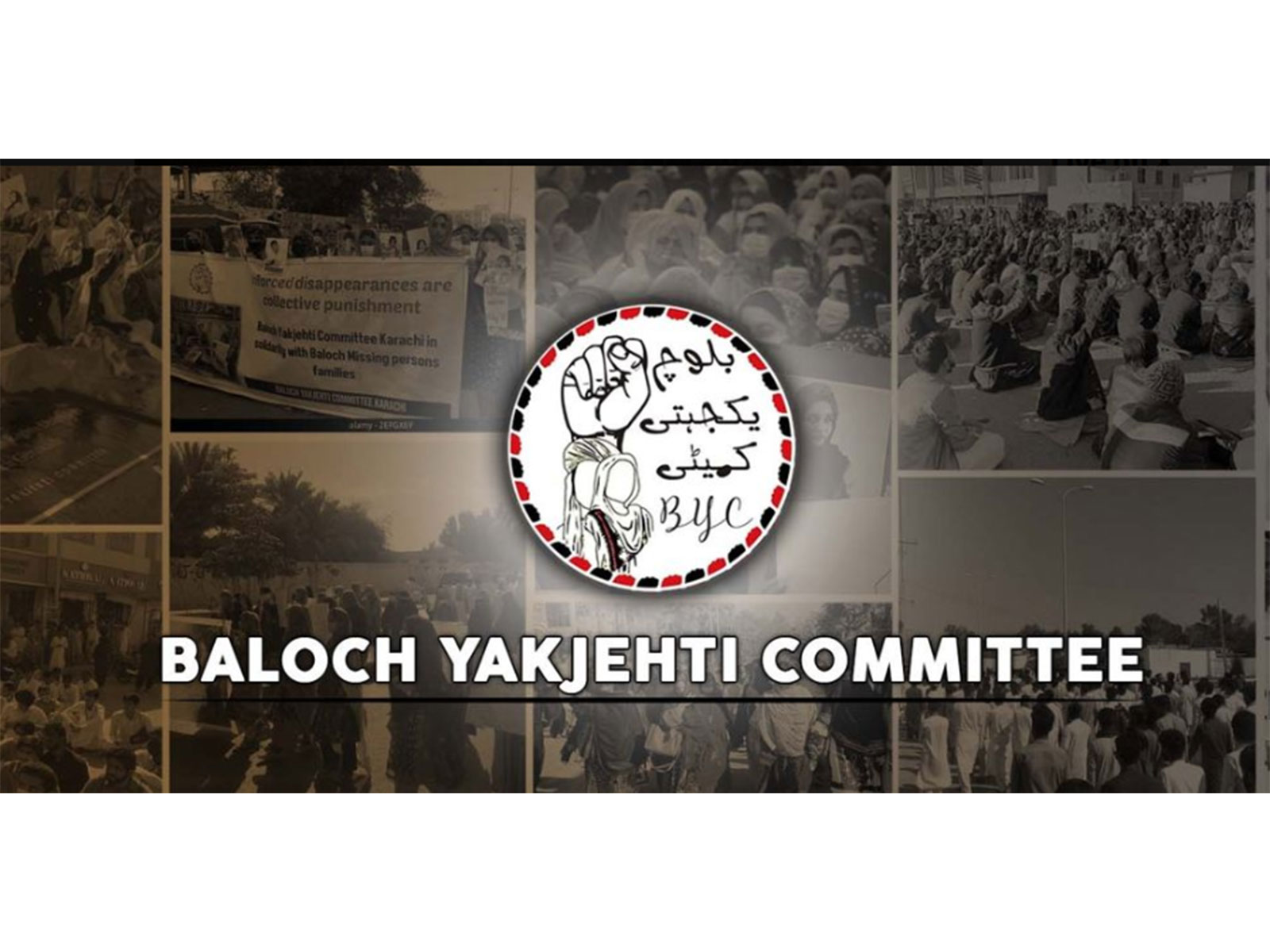
Quetta [Pakistan], July 25 : The Baloch Yakjehti Committee (BYC) has alleged a sharp escalation in violence and state repression in Balochistan, citing the killing of Sessions Judge Abdul Haqim Kakar, a deadly attack on a passenger bus in Sorab and prolonged restrictions in Mastung's Khad Kocha area as evidence of what it described as worsening conditions in the province.
In a statement posted on social media platform X, the BYC said, "The murder of Judge Abdul Haqim Kakar, the firing on a passenger bus, and curfew-like incidents are signs of the worst oppression and a reflection of the true situation in Balochistan."
The organisation alleged that the recent incidents were not isolated events but reflected a broader pattern of state policy.
According to the BYC, Judge Kakar had been hearing sensitive cases, particularly those involving enforced disappearances, and had repeatedly sought accountability from relevant institutions during judicial proceedings.
It claimed that his killing in broad daylight continued what it described as a long-standing pattern of targeting independent judges and lawyers in Balochistan.
The committee also referred to the recent attack on a passenger bus in Sorab, stating that ordinary travellers, including women and children, were among those killed.
It said the back-to-back incidents demonstrated that "neither passengers are safe, nor judges, nor ordinary citizens in their own homes."
The BYC further alleged that authorities had imposed curfew-like restrictions in the Khad Kocha area of Mastung for three consecutive days, causing hardship for residents.
It claimed that in several parts of Balochistan, stringent security measures had become routine, with residents allegedly requiring permission to enter or leave their villages and, in some cases, even to hold weddings, condolence gatherings and other social events.
Calling the situation a consequence of what it termed a policy of "Baloch genocide," the committee alleged that violence and coercive measures had made life increasingly difficult for civilians across the province.
It urged the United Nations and international human rights organisations to intervene immediately, alleging that such action was necessary to halt what it described as violence, repression and the use of force in Balochistan.