Delhi HC: Custodial interrogation not required merely for recovery of stridhan, grants anticipatory bail to 80-year-old
Sep 29, 2026
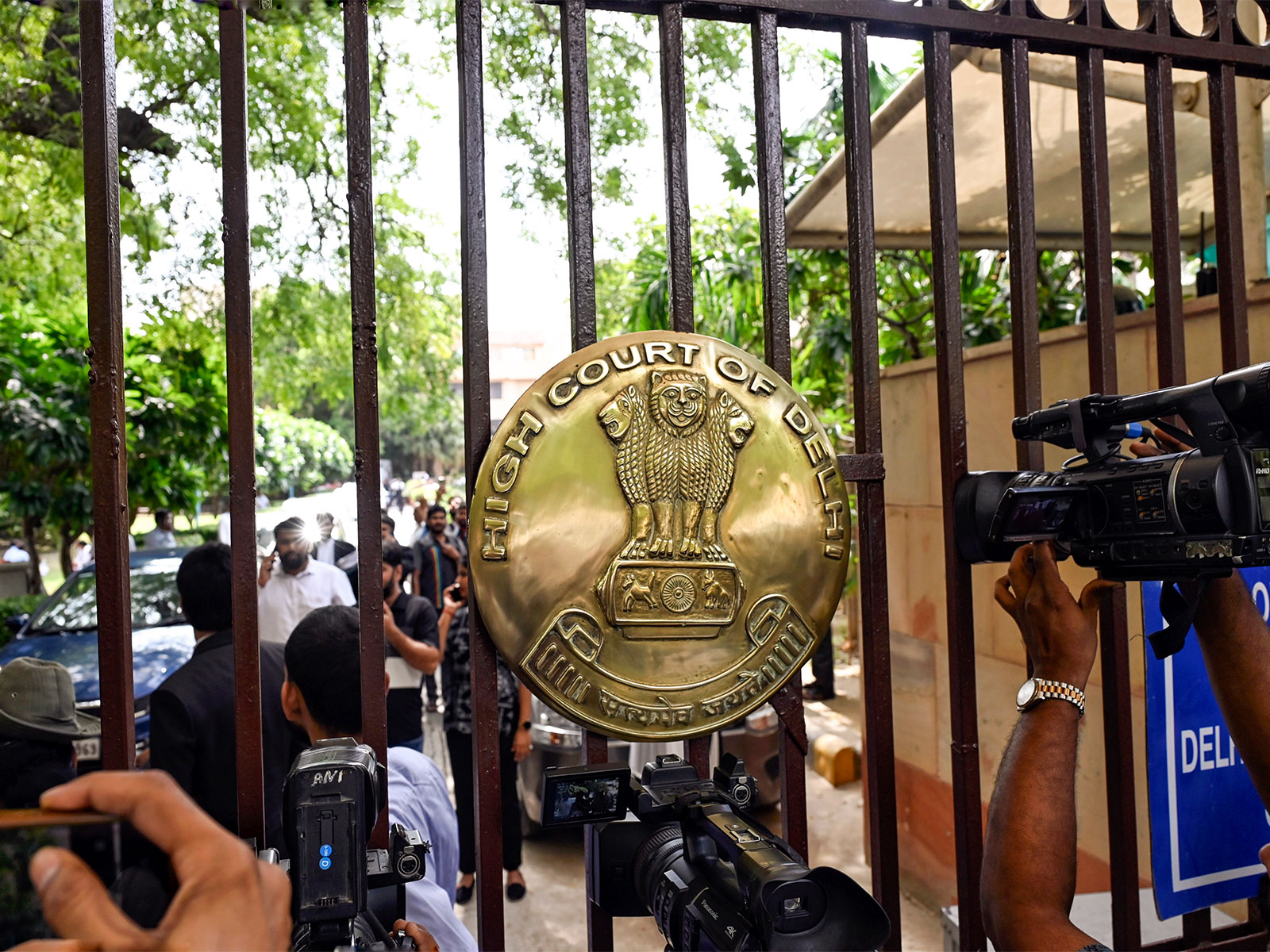
New Delhi [India], September 29 : The Delhi High Court has held that custodial interrogation is not required merely for recovery of stridhan, observing that such recovery does not fall within the domain of the bail court.
The court also questioned the investigating officer’s claim that an elderly accused had failed to join the investigation, noting that the alleged notices were issued verbally and no case diary was produced.
Justice Girish Kathpalia made the observations while granting anticipatory bail to an around 80-year-old retired government servant in a matrimonial dispute case involving allegations under Sections 354, 354A, 376, 498A, 406 and 34 of the IPC and Section 74 of the BNS.
The court noted that the investigating officer had initially stated that the accused did not join the investigation despite repeated notices. However, when asked to produce the notices, the officer stated that they had been issued verbally. The court further noted that no case diary relating to the alleged notices was produced and said the investigating officer’s exercise failed to inspire confidence.
The court said it found no hesitation in holding that the investigating officer did not require the accused to join the investigation. On the issue of custodial interrogation, the court noted that the only purpose cited was recovery of the complainant’s stridhan and held that custodial interrogation was “certainly not a requisite” for that purpose.
The court further observed that the alleged non-return of stridhan did not fall within the domain of the bail court for the purpose of securing its recovery. It noted that, till then, the complainant had not initiated appropriate proceedings in accordance with law for recovery of her stridhan.
The FIR was initially registered on April 29, 2026, under Sections 498A and 406 IPC. Subsequently, Sections 354, 354A and 376 IPC and Section 74 of the BNS were added. The allegations of sexual misconduct were made against the accused, who is the father-in-law of the complainant.
According to the FIR, the complainant alleged that the accused had sexually harassed her on various occasions and attempted to establish physical relations with her. One of the allegations related to an incident in which she claimed that while she was massaging his legs, he pulled her hands towards his private parts. She also alleged that in May 2022, he forcibly pushed her onto a bed and had physical relations with her.
The accused argued that the allegations were made to pressurise his son, the complainant’s husband, in connection with their matrimonial dispute. The prosecution opposed the anticipatory bail plea, arguing that custodial interrogation was more effective and that the investigation was at an early stage.
The High Court referred to the Supreme Court’s judgment in Arnesh Kumar v. State of Bihar, observing that arrests in matrimonial cases should not be automatic or routine. At the same time, the court cautioned that allegations of sexual misconduct in matrimonial cases cannot be presumed to be false and that every case has to be examined on its own facts.
While considering the allegations for the limited purpose of anticipatory bail, the court noted that the alleged sexual offences were stated to have taken place in May 2022 or earlier, whereas the FIR was lodged on April 29, 2026. It also noted that no specific date of the alleged offences had been mentioned in the FIR and said it found no convincing circumstances to justify the prolonged silence.
The court also considered family photographs placed on record, which depicted the accused, the complainant and their child together. However, it cautioned that these aspects were considered only for deciding the anticipatory bail plea and that the final view would have to be taken by the trial court based on evidence led during the trial.
The court also rejected the prosecution’s apprehension that the accused was a flight risk merely because other members of his family were settled in Canada. It observed that the accused could not be deprived of his liberty on that basis and also took note of his age, which was around 80 years.
The court accordingly allowed the anticipatory bail application and directed that, in the event of arrest, the accused be released on bail on furnishing a personal bond of Rs 25,000 with one surety of the like amount.
The court also noted that the custody of the couple’s three-year-old child had been granted to the husband by a Canadian court. It observed that child custody is a matter of the child’s welfare and not merely a matter of competing rights between the parents, stressing the importance of the child having co-parenting through both parents.