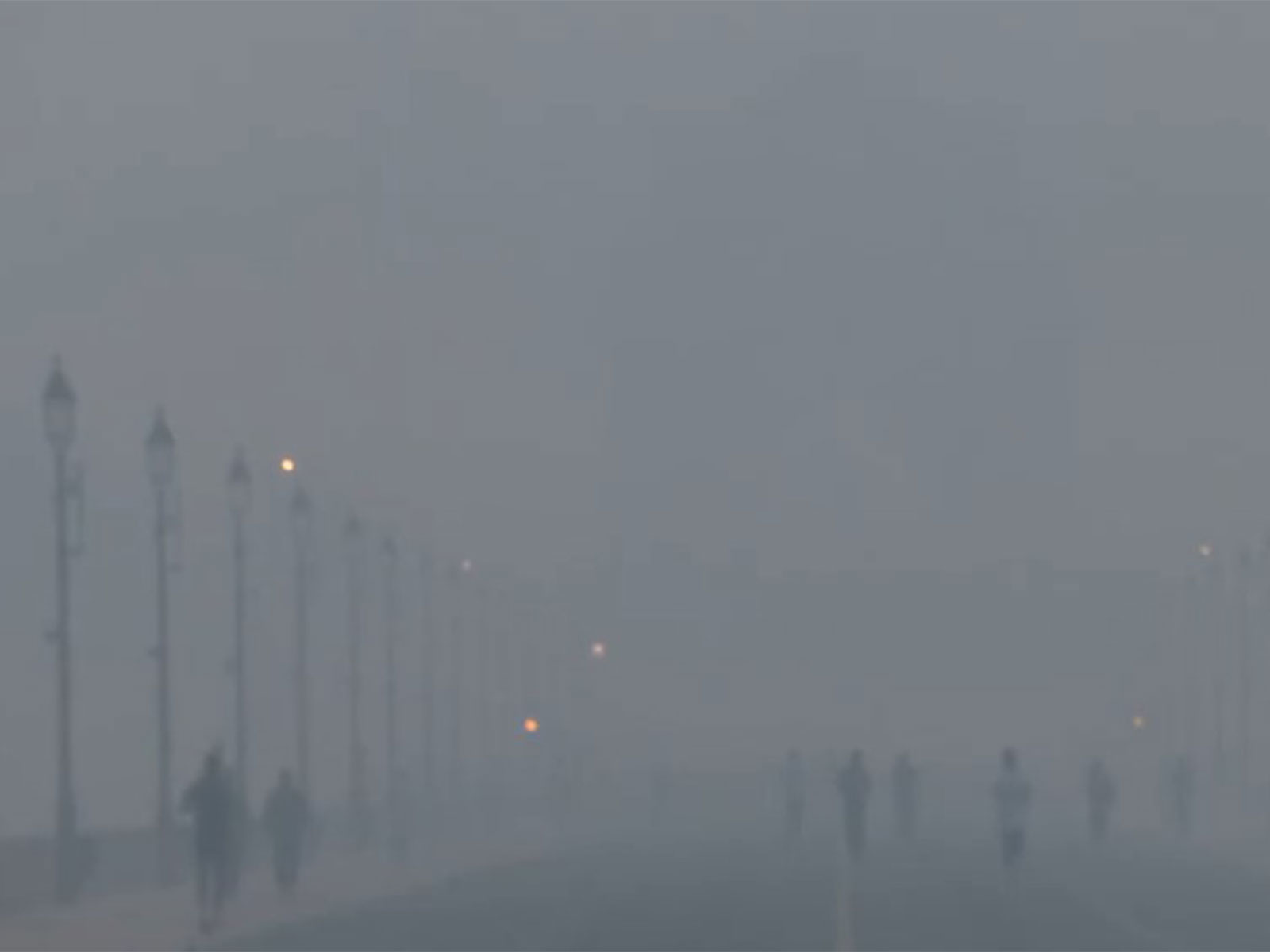
Delhi's air quality slips into 'severe' category with overall AQI at 483; several areas record levels above 400
Nov 08, 2026
New Delhi [India], November 8 : Delhi's air quality deteriorated sharply on Sunday morning, with the overall Air Quality Index (AQI) slipping into the 'severe' category at 483 at 8:10 am, as several parts of the national capital recorded pollution levels above 400, according to data from the Central Pollution Control Board (CPCB).
The worsening air quality comes after the Commission for Air Quality Management (CAQM) on Friday invoked Stage III of the Graded Response Action Plan (GRAP) across Delhi-NCR, two days ahead of Diwali, amid concerns over further deterioration in pollution levels.
According to CPCB data, Bawana recorded an AQI of 446, followed by Punjabi Bagh at 449, RK Puram at 448, IIT Delhi and Rohini at 445 each, Chandni Chowk at 420, Patparganj at 421 and Alipur at 413. All these areas fell under the 'severe' category.
Meanwhile, Anand Vihar recorded an AQI of 328, while Narela registered 395, with both areas falling under the 'very poor' category.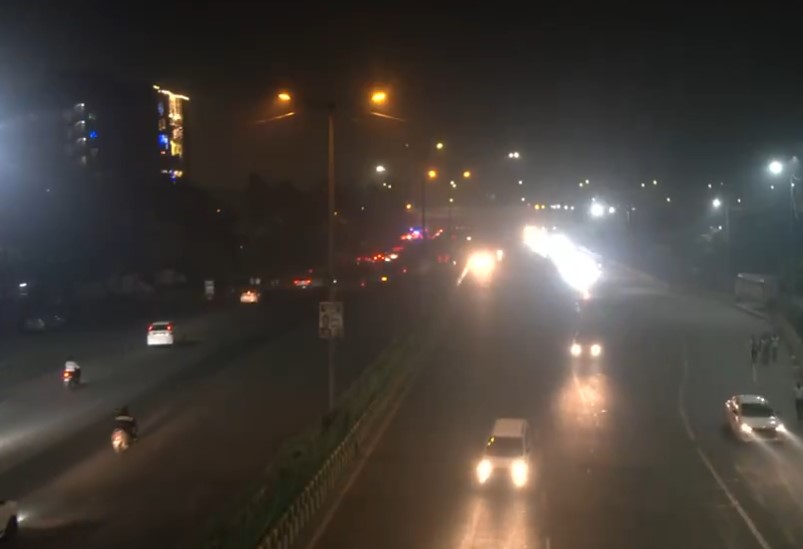
The air quality around India Gate was recorded at 398, categorised as 'very poor', while the area around Akshardham Temple registered an AQI of 336, also falling under the 'very poor' category, according to CPCB data.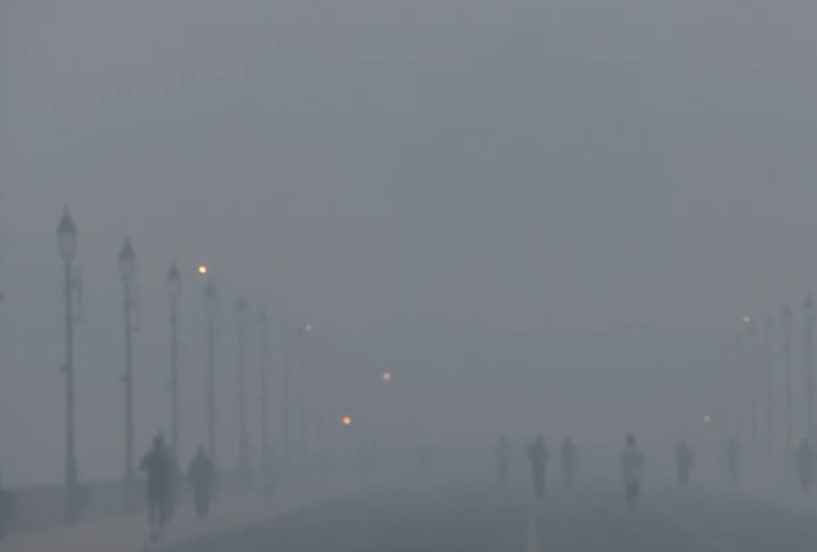
As winter has begun to set in, several parts of Delhi woke up to a thick layer of haze on Sunday morning, with poor visibility and deteriorating air quality adding to concerns among residents.
The overall AQI of 483 marks a significant deterioration from Saturday morning, when Delhi's AQI stood at 364 at 8 am, placing it in the 'very poor' category.
According to CPCB classification, an AQI between 0 and 50 is considered 'good', 51-100 'satisfactory', 101-200 'moderate', 201-300 'poor', 301-400 'very poor', and 401-500 'severe'.
With Stage III measures in force following the CAQM's decision, existing restrictions will continue alongside additional pollution-control measures, increased enforcement and directions to concerned agencies to prevent further deterioration in air quality.
The emergency action plan applies across Delhi and adjoining districts of Haryana, Uttar Pradesh and Rajasthan. It is invoked as a precautionary measure based on meteorological and pollution forecasts provided by the India Meteorological Department (IMD) and the Indian Institute of Tropical Meteorology (IITM), allowing restrictions to be implemented before citywide AQI levels reach the 'severe' category.
GRAP is a four-stage emergency framework managed by the CAQM in coordination with the CPCB and regional state governments. Restrictions become progressively stricter as air quality deteriorates.
Under Stage I, triggered when the AQI is between 201 and 300 and categorised as 'poor', the focus is on controlling road dust, enforcing pollution norms and prohibiting open waste burning.
Stage II comes into force when the AQI is between 301 and 400, categorised as 'very poor'. It entails enhanced dust-control measures, higher parking fees and staggered office timings.
Stage III is invoked when the AQI reaches the 401-450 range, classified as 'severe', and includes stricter vehicle restrictions, a halt to construction activities and hybrid learning arrangements for primary school students.
Stage IV, applicable when the AQI exceeds 450 and enters the 'severe plus' category, involves restrictions on heavy goods vehicles and emergency measures targeting traffic and industrial pollution.
The activation of Stage III introduces additional high-impact measures aimed at curbing vehicular emissions and dust pollution, operating alongside the existing Stage I and Stage II restrictions.
Under the Stage III restrictions, BS-III petrol and BS-IV diesel four-wheelers are prohibited from plying across Delhi and designated districts of the National Capital Region (NCR).
The revised framework also tightens restrictions on older light and medium goods vehicles, as well as diesel commercial vehicles not registered in Delhi entering the national capital.
All non-essential construction activities generating substantial dust have been suspended. These include major excavation work, earthwork, demolition and road construction. Essential projects permitted to continue are required to follow stringent dust-mitigation protocols.
Heavy dust-generating operations, including stone crushers and mining activities, also face immediate shutdown or operational restrictions.
The measures are aimed at containing pollution levels and preventing further deterioration in air quality across Delhi-NCR following the Diwali celebration today.