Democrats seize control of Congress as House Speaker Johnson steps aside, Scalise and Jordan vie for GOP leadership
Nov 04, 2026
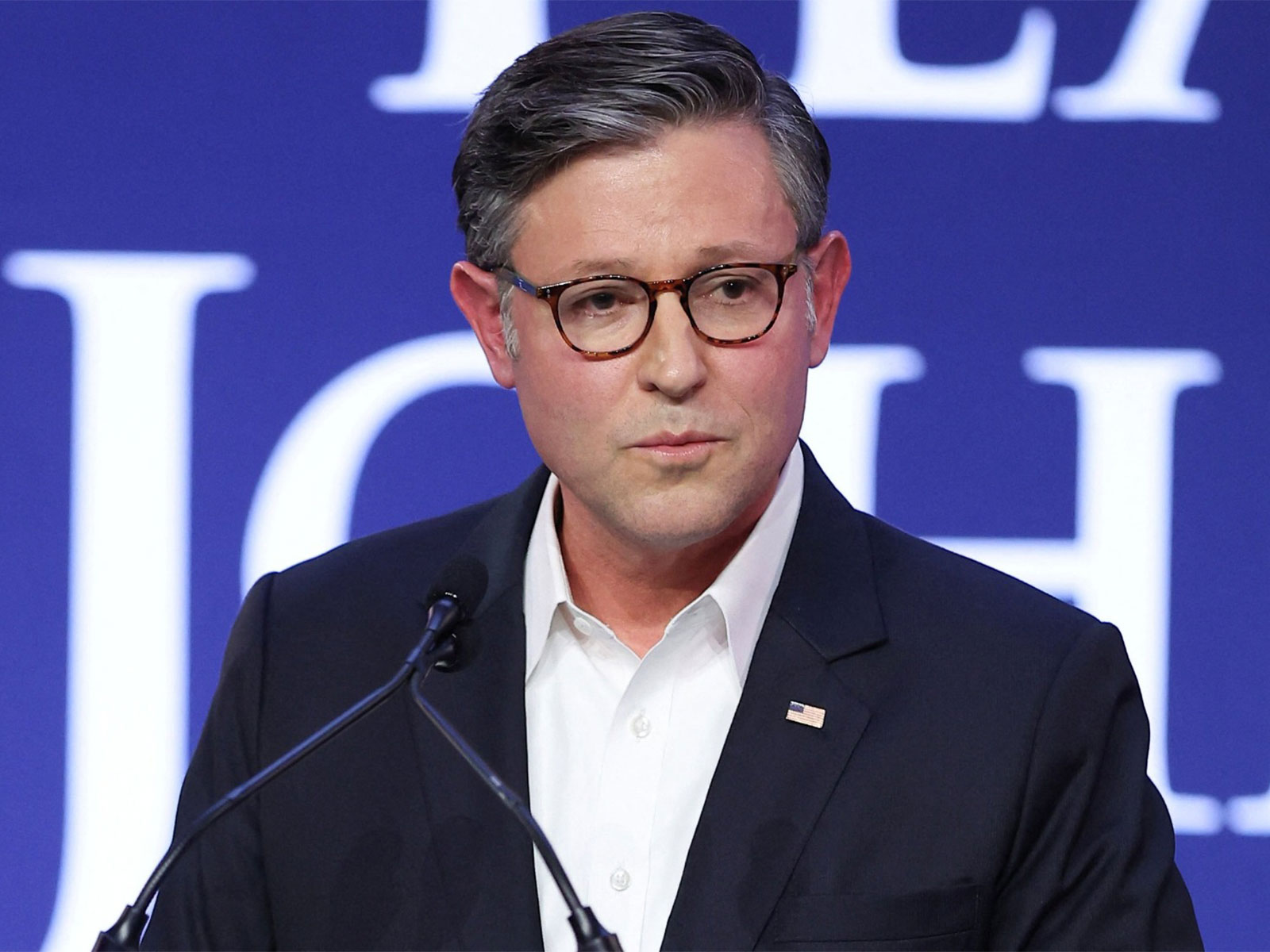
Washington DC [US], November 4 : Democrats have been projected to secure control of both chambers of the US Congress in the 2026 midterm elections, prompting a major leadership shake-up within the Republican Party, with House Speaker Mike Johnson deciding not to run for House minority leader, while House Majority Leader Steve Scalise and Republican Representative Jim Jordan have entered the contest to lead the party in the chamber.
According to ABC News, Johnson informed his staff on Wednesday (local time) that he would not seek the position of House minority leader, following significant Republican losses in Tuesday's elections. Multiple sources familiar with the call confirmed his decision to the network.
Fox News Digital also reported that Johnson had informed his staff that he would not run for the position, adding that his decision came as Jordan prepared to enter the leadership contest.
Meanwhile, Fox News reported that House Majority Leader Steve Scalise had announced his candidacy for House minority leader on Wednesday as Republicans prepared for a leadership transition following their electoral setbacks.
According to ABC News, Republican Representative Jim Jordan formally launched his bid by sending a letter to his Republican colleagues on Wednesday.
"This is a staggering day for our Conference," Jordan wrote in the letter. "As we look to the future, we must learn from these results."
Jordan also said he was "battle-tested on oversight" and stressed that Republicans must highlight their policies as they prepare to serve in the minority.
ABC News reported that House GOP leadership elections are scheduled for November 10, with candidates required to declare their candidacy by November 6 at noon.
The leadership contest follows the Democrats' takeover of Congress. According to CBS News projections, Democrats have won control of both the House of Representatives and the Senate, marking a significant setback for Republicans and the administration of US President Donald Trump.
The change in congressional control is expected to give Democrats greater authority to scrutinise the Trump administration, initiate congressional investigations and challenge the President's legislative agenda. The party will also have greater influence over legislation and congressional oversight during the remaining two years of Trump's presidency.
According to the latest figures displayed by Fox News, Democrats had secured 54 seats in the Senate against 44 for Republicans, with seven seats flipped by the Democrats. The results showed the party making gains in several states that had been considered competitive or Republican strongholds.
The electoral outcome also reflected voter dissatisfaction with Trump's performance. According to ABC News Voter Polls, approximately six in 10 Americans who voted in House races disapproved of Trump's performance as President, including 53 per cent who strongly disapproved.
The ABC News analysis found that voters who strongly disapproved of Trump supported Democratic candidates for the House by an 89-percentage-point margin. Meanwhile, approximately two in 10 voters who strongly approved of his performance backed Republicans by a 96-point margin.
ABC News further reported that the share of House voters who strongly disapproved of Trump's performance was the highest for any President dating back to the 2008 election.
The network's voter analysis also found that around two-thirds of voters believed Trump had the wrong priorities and was placing his personal interests ahead of the country's interests. Approximately three-quarters of voters rated the economy negatively, while inflation and the rising cost of living remained major concerns for households.
Amid the Democratic gains, the White House shared a public service announcement (PSA), reminding Americans that Trump continues to hold the presidency irrespective of the congressional election results.
In a post on X on Wednesday (local time), the White House shared an image of Trump carrying the caption, "PSA: Trump is still your President", accompanied by the message, "Thank you for your attention to this matter."
The post came as the midterm elections determined the composition of Congress, rather than the presidency, with Trump's presidential term continuing.
Meanwhile, Democratic leader Hakeem Jeffries welcomed the party's victory on Tuesday night (local time), declaring that "today begins the great American comeback".
Addressing supporters after the Democratic gains, Jeffries said, "House Democrats have taken back control of the United States Congress".
Emphasising the electorate's verdict, he stated that "the American people have spoken and made clear they've had enough of the extremism, enough of the corruption".
He further pledged that "they want a Congress that's going to deliver for the American people and that is exactly what House Democrats will do as soon as we get into office in January".
Jeffries also acknowledged the challenges ahead, saying Democrats understood that "we need to deliver dramatic change", adding that "things are broken". He said the party would work towards delivering a Congress that puts everyday Americans first.
The Democratic breakthrough also extended to the Texas Senate race, where James Talarico defeated Republican Ken Paxton, according to CBS News projections.
According to the latest figures displayed by Fox News, Talarico had secured 5,388,840 votes, or 55.21 per cent, against Paxton's 4,184,417 votes, or 42.87 per cent, with 96.22 per cent of the vote reported.
Talarico, a 37-year-old state legislator, former public school teacher and Presbyterian seminarian, is set to become the first Democrat to win a US Senate election in Texas since the previous Democratic victory in the state.
The seat opened up following a Republican primary contest in which Paxton defeated incumbent Senator John Cornyn after receiving Trump's endorsement.
Addressing supporters in Austin on Tuesday night following his victory, Talarico said, "We just took back Texas." Drawing on biblical imagery, he compared his campaign against the Republican establishment and political donors to the encounter between David and Goliath.
The Democratic gains were also reflected in Michigan, where Abdul El-Sayed defeated Republican Mike Rogers in the Senate race, according to CBS News projections.
The victory makes El-Sayed the first Muslim elected to the United States Senate, according to the network.
The latest figures displayed by Fox News showed El-Sayed with 2,497,852 votes, or 52.52 per cent, against Rogers' 2,162,890 votes, or 45.48 per cent, with 96.59 per cent of the vote reported.
Reacting to the result, US Congressman Ro Khanna welcomed El-Sayed's victory in a post on X, stating, "Abdul's win shows a bold progressive agenda can win anywhere. Proud to have endorsed him on Day 1."
In a video attached to the post, Khanna said, "Abdul El-Sayed is likely to become the first Muslim American senator from Michigan. This is huge news for the progressive movement. He ran on Medicare for All. He ran calling out the genocide. He ran on taxing billionaires. And he won a swing state."
"This shows if Abdul can win in Michigan, progressives can win across the country. The establishment cannot tell us we are not electable," he added.
Addressing supporters at an election-night event on Tuesday, El-Sayed declared, "Michigan, we did it!"
Expressing gratitude to voters, he said, "You took a chance on the unlikeliest of candidates, so thank you," adding, "This is all yours."
He further thanked voters for their support during the campaign, saying, "Thank you for your trust and your belief and your kindness."
According to CBS News, Democrats also made significant gains in other Senate contests, with the network projecting victories in Texas, North Carolina, South Carolina, Ohio, Kansas and Iowa. The party also secured a victory in Maine, where Democrat Troy Jackson defeated Republican Senator Susan Collins, according to CBS News.
The results mark a significant shift in the balance of power in Washington, with Democrats preparing to take control of both chambers when the new Congress convenes in January.
The Democratic victories are expected to reshape the legislative landscape during the remaining two years of Trump's presidency, while Republicans face an internal leadership contest and the challenge of rebuilding their position in Congress.