Economic pressure a "delicate dance" against Iran, most effective tool: JD Vance
Aug 20, 2026
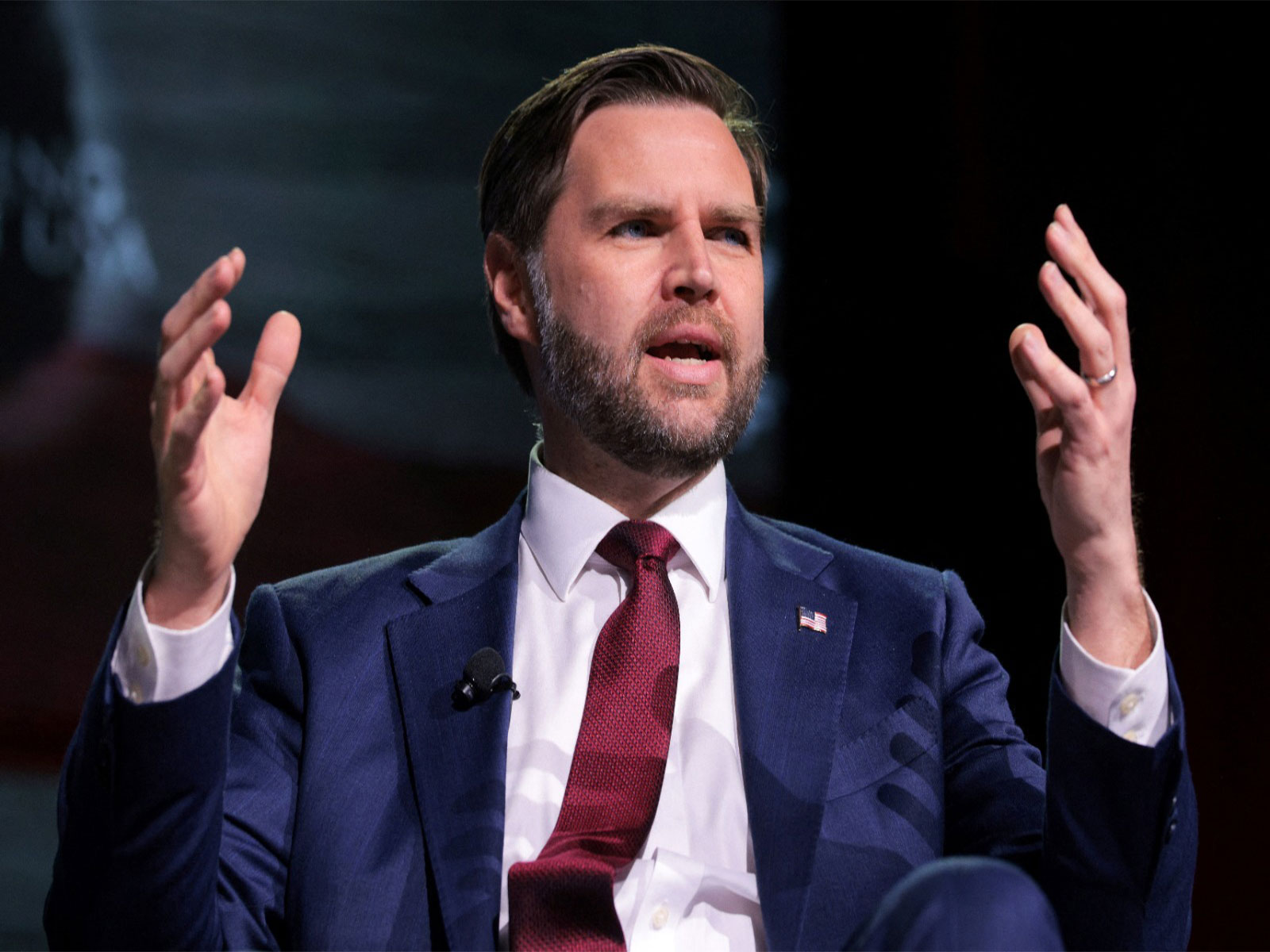
Washington, DC [US], August 21 : US Vice President JD Vance on Thursday (local time) said economic pressure remains the "most effective tool" available to Washington against Iran, while describing the approach as a "delicate dance", CNN reported.
Speaking on the "Clay Travis and Buck Sexton Show", Vance said the US could use economic measures to influence Tehran but warned that such pressure could also have wider consequences.
"The most effective tool that we have is the economic pressure we can apply to them. And this is a delicate dance, because we apply economic pressure to them, they're going to try to apply economic pressure to us," Vance said, according to CNN.
"What has been true over the last couple of weeks is they have felt a lot more pressure than we have," he added.
Vance acknowledged that oil prices had increased but said the administration was working to ensure energy supplies continued through the Strait of Hormuz.
"Obviously oil prices are elevated, which people see at the pump," he said, as reported by CNN.
"They are trying to close the Strait down, and if we can, you know, not even get it back to where it was before, but if we can get enough oil and gas out to give some Americans some ease at the pump, some ease on energy prices," Vance added.
According to CNN, he said maintaining pressure on Iran over attacks on commercial vessels would influence Tehran's decision-making.
"Meanwhile, the Iranians are punished for shooting at commercial ships. That just applies a lot of economic pressure to them, and that changes their calculus for you know what kind of a deal they want to make," Vance said.
Vance said the broader objective of the US policy was to prevent Iran from rebuilding its nuclear capabilities, CNN reported.
"What we are trying to do is create a changed reality on the ground, where not just we can say with confidence their facilities have been destroyed; we can also say with confidence they're never going to try to rebuild, and that's the phase that we're in now," he said, as per CNN.
Vance's remarks came amid heightened tensions between Washington and Tehran following the US announcement of new sanctions against Iran.
The Iranian Ministry of Foreign Affairs had condemned the latest US economic and trade sanctions, calling them "economic terrorism" and "crimes against humanity."
In a statement issued on Thursday, the ministry said the sanctions were "another indication of the continuation of 73 years of hostility and animosity by US policymakers toward the Iranian people."
"The US economic sanctions against Iran, which target the fundamental human rights of every Iranian citizen, constitute 'economic terrorism' and 'crimes against humanity'," the statement said.
Iran accused Washington of pursuing a policy that had already failed and said the new measures would not affect its determination to protect its independence and national sovereignty.
"Economic sanctions and pressure are the other side of the same coin as war and military aggression," the Iranian Foreign Ministry said.
The ministry also said the US government and those responsible for the policy would bear responsibility for its consequences.
"The Islamic Republic of Iran remains steadfast and determined in defending its security and national interests and confronting the US military, economic, political and psychological pressures and attacks," it added.
The statement followed US President Donald Trump's announcement of what he described as the "most crushing economic operation ever taken" against Iran, warning countries providing financial, business or government support to Tehran of "tremendous economic consequences."
"No one has given the Islamic Republic of Iran a greater opportunity to make a Deal than me. TRAGICALLY, for them, they have failed to take it," Trump said in a post on Truth Social.
"Therefore, today, I am announcing the MOST CRUSHING ECONOMIC OPERATION EVER TAKEN AGAINST ANY COUNTRY! This will be Economic Warfare and Isolation on an unprecedented scale," he added.
Trump said the measures would target Iran's economic lifelines, including oil smuggling networks, financial transfers, exchange houses, ship registries and front companies.
"Oil smuggling, swap lines, cash transfers, exchange houses, ship registries, front companies -- It all needs to stop NOW," Trump said.
He also warned that any country allowing its financial institutions, businesses, airports or government entities to support Iran would face "tremendous economic consequences."
The developments come amid tensions over the Strait of Hormuz, a key global energy transit route. Trump had earlier claimed that the waterway remained open and that the US naval blockade had been effective.
"Right now the Strait is open. A lot of boats are coming through," Trump said, adding that "the naval blockade has been extremely effective" and "100 per cent successful."
Trump also reiterated that Iran would not be allowed to acquire nuclear weapons, stating, "IRAN WILL NEVER HAVE A NUCLEAR WEAPON."
Meanwhile, Iranian Foreign Minister Seyed Abbas Araghchi criticised Trump's "Economic D-Day" announcement, saying it diverted attention from US economic issues.
"The so-called 'Economic D-Day' is a diversion from America's own crisis: unprecedented debt and surging interest costs," Araghchi said in a post on X.
"Doubling down on failed policies will only bring further defeat -- and enmity of Iranians. US economic terrorism threatens global economy and sovereignty worldwide," he added.
Iranian Parliament Speaker Mohammad Bagher Ghalibaf had earlier said Tehran would not reopen the Strait of Hormuz until the United States fulfilled commitments under a 14-point Memorandum of Understanding, including lifting the blockade, releasing frozen Iranian assets and easing oil sanctions.