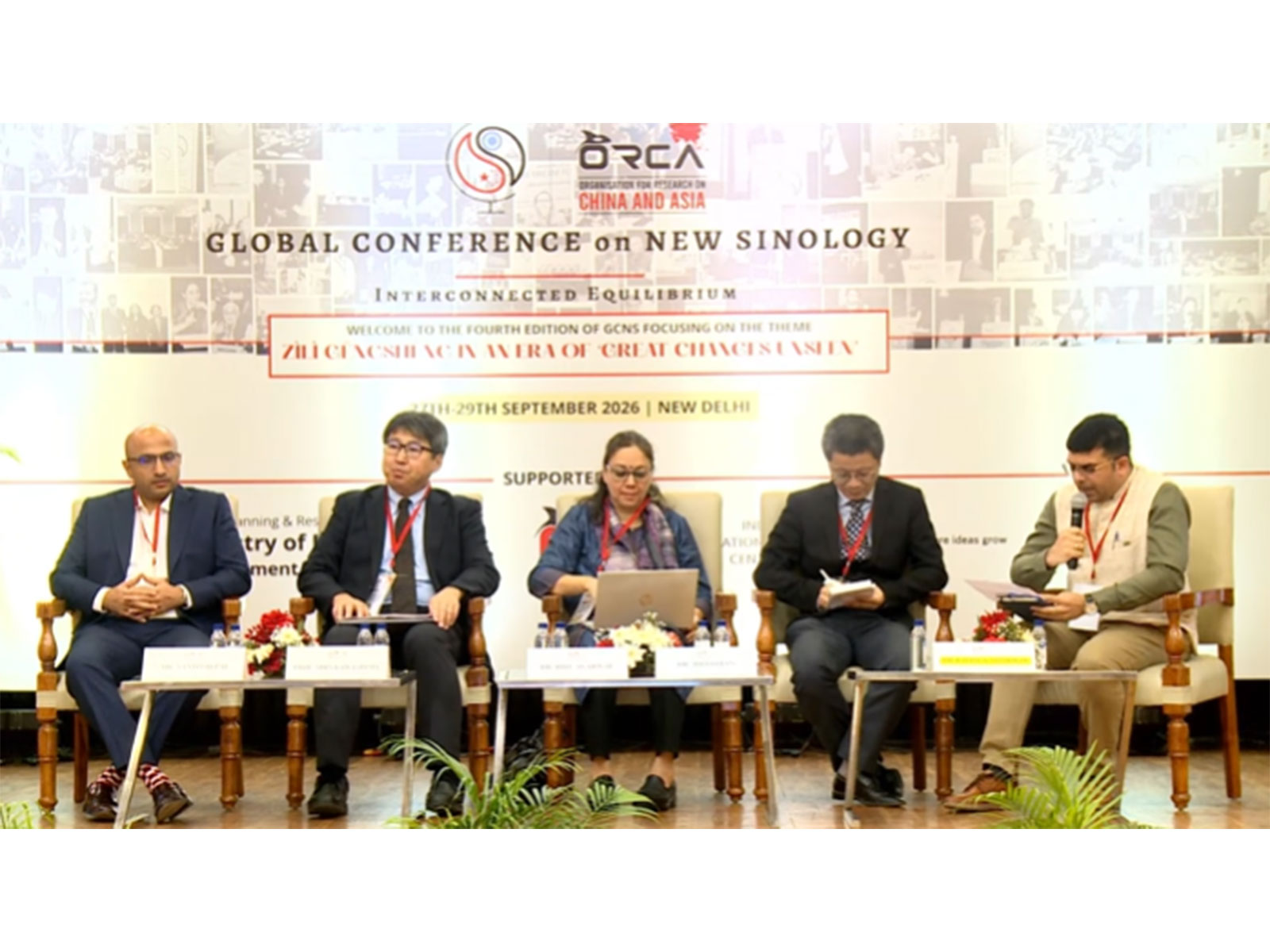
Experts analyse China’s strategic ambitions and regional contestation
Oct 01, 2026
New Delhi [India], October 1 : The fourth edition of the Global Conference on New Sinology (GCNS) 2026, organised by the Organisation for Research on China and Asia (ORCA), examined China’s evolving approach to self-reliance, technological development, military modernisation, domestic governance and foreign policy, according to a press release issued by the organisers.
Held recently in New Delhi, the conference brought together more than 40 speakers, including over 13 international participants. This year’s theme was “Zìlì Gēngshēng in an Era of ‘Great Changes Unseen’”, referring to China’s concept of self-reliance and regeneration through its own efforts.
According to the press release, discussions focused on how Beijing is seeking greater national capacity amid growing global uncertainty, including in areas such as scientific innovation, technology, social governance and defence.
The conference also examined the implications of China’s domestic priorities and foreign-policy choices for the international order. An expert dialogue on India-China relations discussed strategic rivalry, border tensions, economic competition and the prospects for coexistence between the two countries.
The organisers said scholars also examined the Communist Party of China’s approach to long-term governance, leadership continuity, elite politics and institutional adaptation ahead of the 21st Party Congress in 2027.
China’s technological ambitions and economic challenges were among other issues discussed, with sessions examining Beijing’s pursuit of artificial intelligence capabilities, technological sovereignty and what the organisers described as economic headwinds.
A separate panel on China’s 15th Five-Year Plan looked at civil-military fusion and the role of “New Quality Productive Forces” in China’s economic and technological development.
The conference also featured discussions on China’s foreign-policy decision-making and its approach to international crises. According to the press release, one keynote examined the tension between Beijing’s strategic interests and its stated principle of non-interference.
The second day featured closed-door discussions under the Chatham House Rule on what the organisers described as “strategic blind spots” in understanding China, emerging areas of regional contestation in South Asia and domestic challenges to Beijing’s pursuit of self-strengthening.
A concluding roundtable examined China’s military modernisation and the strategic priorities shaping its future capabilities towards 2027 and beyond.
The conference was preceded by a September 25 closed-door roundtable on “Water Risks and Environmental Security in the Himalayas”, which examined environmental and security challenges in the Himalayan region.
ORCA Director Eerishika Pankaj, in her opening remarks, said the growing prominence of zìlì gēngshēng in China’s political discourse raised questions about what self-reliance means for China today, particularly given its deep integration with global trade, technology and cross-border networks.
The organisers said the conference sought to provide a multidisciplinary platform for examining China’s changing strategic outlook and its implications for India, the region and the wider international order.