"Fearless world where everyone is equal": Indian High Commissioner honours Tagore and Nazrul Islam as beacons of India's shared secular heritage
Aug 06, 2026
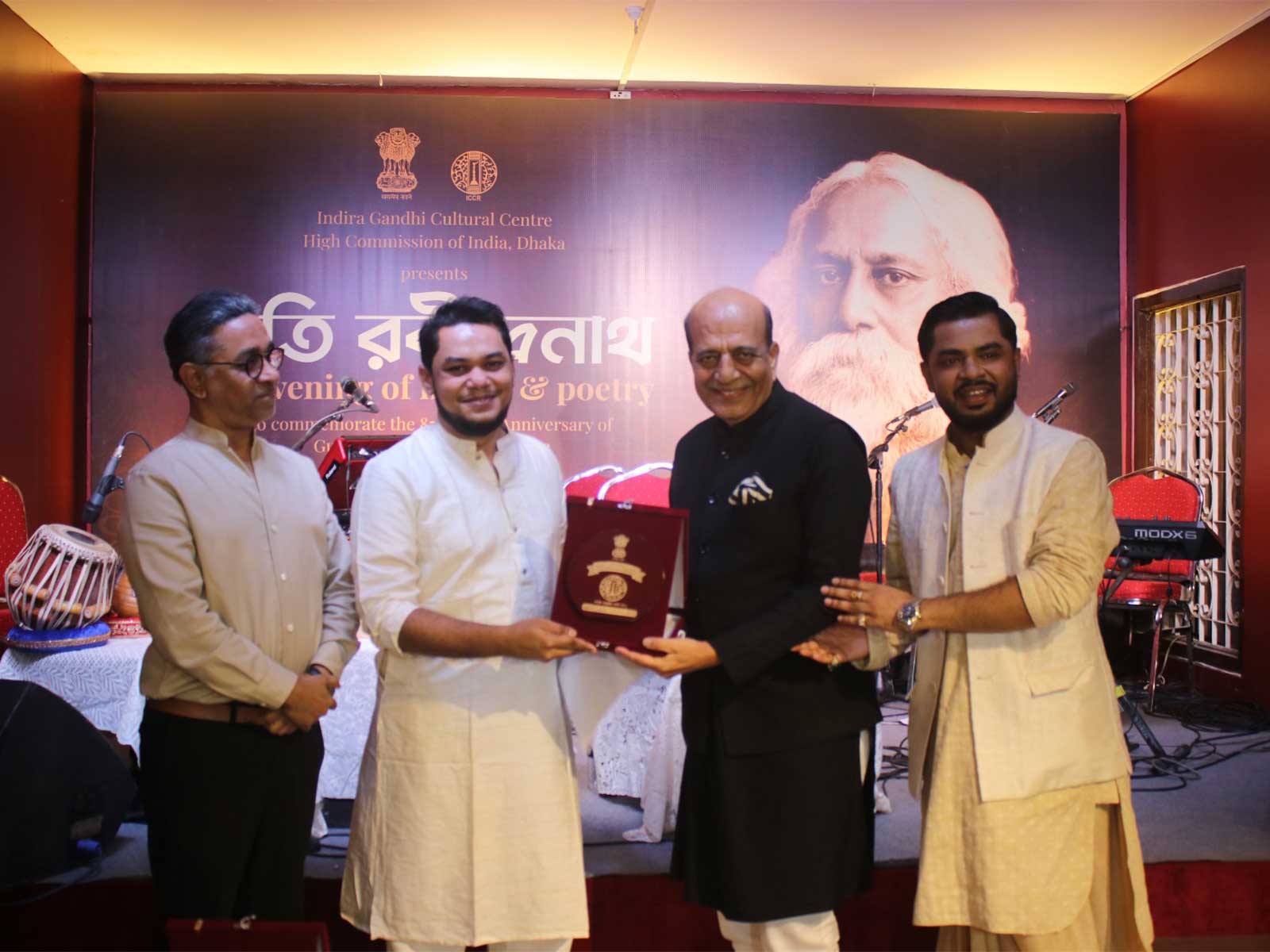
Dhaka [Bangladesh], August 6 : Underscoring the deep cultural and secular bonds shared across South Asia, Indian High Commissioner to Bangladesh Dinesh Trivedi paid glowing tributes to Nobel laureate Rabindranath Tagore on Thursday on the eve of his death anniversary.
Speaking to ANI following a commemorative event held at the Indira Gandhi Cultural Centre (IGCC) in Dhaka, Trivedi reflected on the enduring legacy of Tagore alongside Bengali poet Kazi Nazrul Islam, describing them as eternal pillars whose humanistic ideals transcend borders and continue to inspire humanity.
"This philosophy can only come from this part of the universe, and we are very fortunate that we had such great poets. It is these values that make this part of the world very special in the entire universe," he added.
Highlighting the inclusive and secular character embedded in the literary traditions of the subcontinent, Trivedi noted that the philosophies of both Tagore and Nazrul Islam champion a universal brotherhood where human dignity supersedes all divisions.
"That philosophy of 'where the mind is without fear and the head is held high' is what humanity is all about. If we truly want to live by that philosophy, the world has to remember that what is most important is a fearless world where everybody is equal. Nobody is big, nobody is small. Everybody is a human being, and everybody is together like one big family of the world," said Trivedi
The High Commissioner emphasised that such profound ideals make the cultural tapestry of the region uniquely special to global civilisation.
"Rabindranath Tagore and Nasrul Islam- these are the two greatest personalities of our times, and they are going to be there forever. As long as civilisation is there, these two, the greatest poets we have, will always remain," he said.
In 1913, Tagore made history as the first Asian and the first non-European to win the Nobel Prize in Literature for his seminal collection, Gitanjali. His profound influence is uniquely anchored in the national identities of two nations, having penned the national anthems for both India (Jana Gana Mana) and Bangladesh (Amar Shonar Bangla).
Tagore's timeless novel Ghare-Baire (The Home and the World) was immortalised on screen by legendary Oscar-winning director Satyajit Ray.
Tagore passed away on August 7, 1941, leaving behind a legacy that, alongside Nazrul Islam's revolutionary spirit, continues to serve as a beacon of secularism, pluralism, and human freedom across generations.
Kazi Nazrul Islam, the legendary revolutionary "Rebel Poet" (Bidrohi Kobi), is known for his fierce anti-colonial poetry, such as his famous poem "Bidrohi" (The Rebel) and the revolutionary song "Karar Oi Louho Kopat."
He was imprisoned by the British colonial government for his rebellious literary works and journalism, including his bi-weekly magazine Dhumketu.
He championed secularism, humanism, and religious unity, writing extensively against communalism and fanaticism while blending Hindu and Islamic lyrical traditions (Nazrul Geeti). He is the national poet of Bangladesh and revered globally in Bengali literature.
Kazi Nazrul Islam was born on May 24, 1899, in Churulia, a village in the Burdwan district of West Bengal, India.