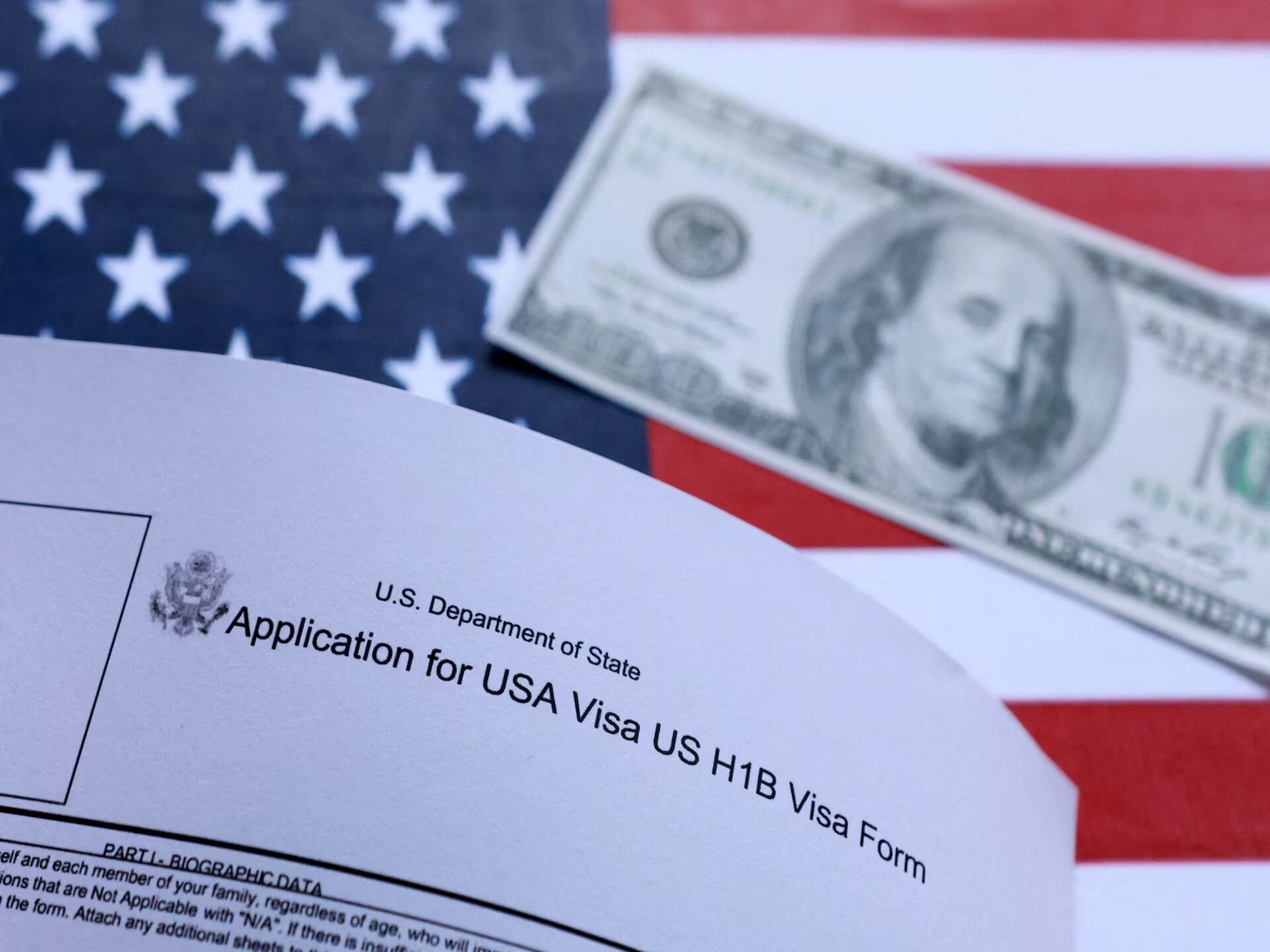
H-1B fee hike must be viewed in context of programme's role in providing temporary skills during shortages: Nasscom
Aug 25, 2026
New Delhi [India], August 25 : National Association of Software and Service Companies (Nasscom) on Tuesday said the proposed increase in H-1B visa fees should be assessed in light of the programme's original purpose of helping US employers access temporary specialised skills when shortages exist, while pointing to increased local hiring and investments by Indian technology companies in the American workforce.
"A proposed increase in visa fees must therefore be viewed in the context of the programme's original purpose of enabling access to temporary skills where there is a shortage in the US," Nasscom said in its statement on the proposed H-1B visa fee increase.
Nasscom's comments came after the US Department of Homeland Security (DHS) proposed an additional USD 103,265 fee for H-1B petitions subject to the annual cap, including petitions eligible for the advanced-degree exemption.
The proposed fee would be payable at the time of filing and would be imposed in addition to all other applicable fees and payments, according to DHS.
The US administration has said the proposed fee is aimed at recovering costs associated with the immigration system and encouraging employers to hire and train American workers rather than relying on foreign labour.
Nasscom said the H-1B programme has "long served an important purpose in addressing short-term skill gaps in the U.S."
It also highlighted a decline in the number of H-1B employees employed by Indian technology companies in the US over the past five years, attributing the trend to an expansion of local hiring.
"It is also important to recognise that, over the past 5 years, the number of H-1B employees of Indian technology companies operating has reduced significantly, as companies have steadily expanded local hiring," Nasscom said.
Nasscom further highlighted the technology industry's investments in strengthening the STEM pipeline in the United States.
According to the industry body, the sector has invested more than USD 1.1 billion in STEM development initiatives in the US, working with more than 130 universities and colleges. These efforts, it said, have impacted 2.9 million students and contributed to the upskilling of more than 255,000 employees.
"Nasscom remains actively engaged with all key stakeholders on this matter," it said.
According to the DHS, the proposed additional fee would apply to all H-1B cap-subject petitions, including those eligible for the advanced-degree exemption.
DHS estimates the fee could generate around USD 8.8 billion annually, based on a projected 85,000 cap-subject H-1B petitions.
"The proposed H-1B fee is intended to recover the costs incurred across the federal government to adjudicate, vet, and support lawful immigration programs that otherwise must be funded by taxpayers," US Citizenship and Immigration Services spokesperson Zach Kahler said.
DHS said the revenue would be used to recover costs associated with immigration-benefit adjudication, fraud detection and national-security vetting, systems modernisation, records and fee-collection operations, immigration court operations, consular visa processing, labour-standards enforcement and interagency coordination.
The additional fee would not apply to H-1B petitions that are not subject to the annual cap, including petitions filed by certain nonprofit research organisations, government research organisations and institutions of higher education.
The H-1B programme allows US companies to employ foreign workers in specialised, high-skilled occupations and has traditionally played a significant role in the technology sector.
The annual statutory limit for new H-1B visas is 85,000, comprising 65,000 regular-cap visas and 20,000 visas for applicants holding a master's degree or higher from a US institution of higher education under the advanced-degree exemption.
Of the 65,000 regular-cap visas, 6,800 are reserved for nationals of Chile and Singapore.
The latest proposal follows a federal judge's decision in June to strike down the Trump administration's previously proposed USD 100,000 fee for H-1B visa applications, The Hill reported.