India must place dementia prevention, caregiver support at heart of healthcare: Experts at Delhi conclave
Sep 27, 2026
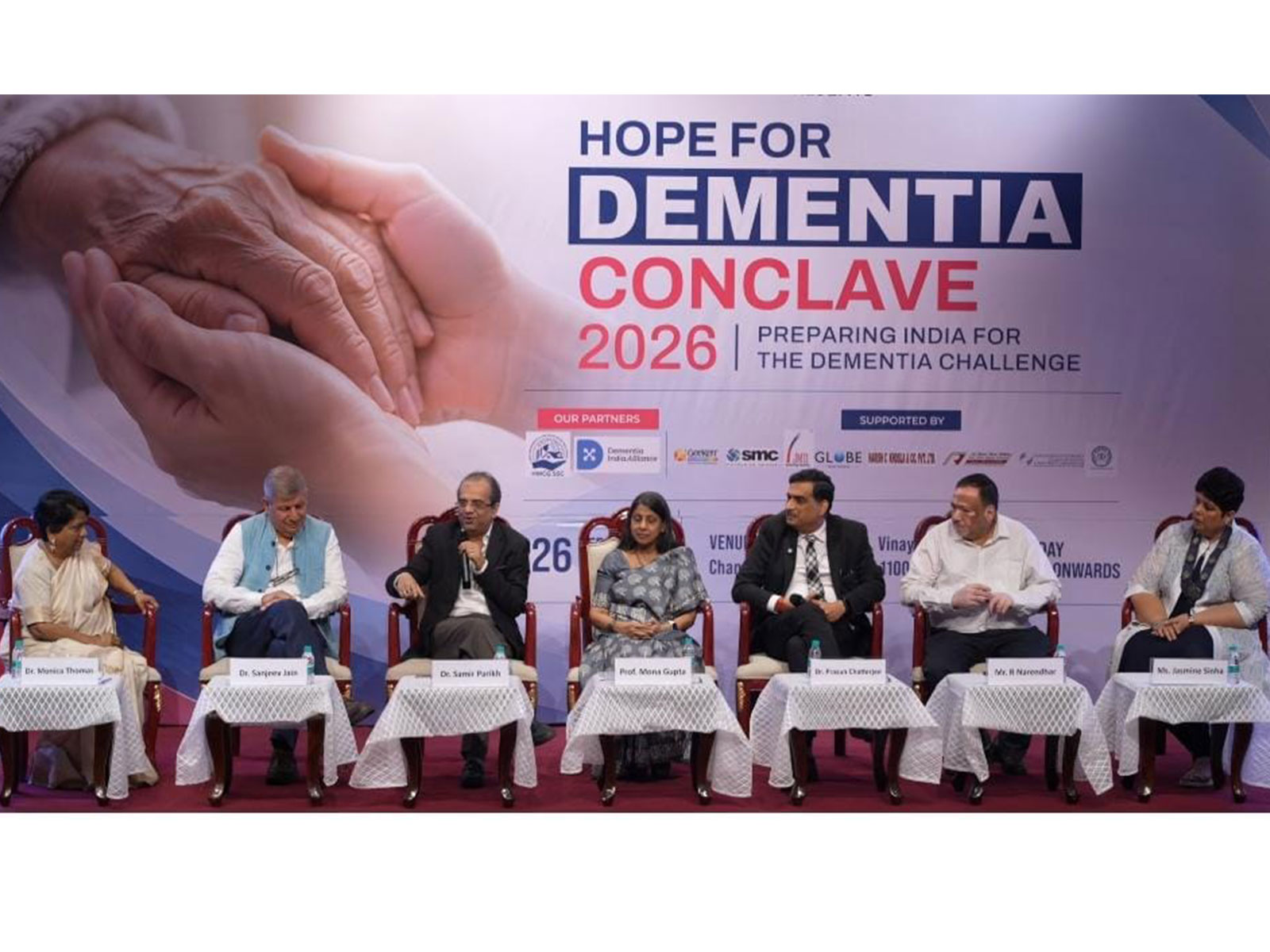
New Delhi [India], September 27 : India must place dementia prevention, earlier identification and caregiver support at the heart of its public health response to ageing, policymakers, clinicians and civil-society leaders said at the Hope for Dementia Conclave 2026, held in New Delhi on Saturday.
The conclave was organised by Hope Ek ASHA as the organisation marked 25 years of working with people living with dementia and their families. It brought together specialists in neurology, psychiatry, geriatrics, caregiver training and dementia services to discuss how India can prepare for a rapidly growing need for diagnosis, care and support.
A nationally representative LASI-DAD study published in Alzheimer’s & Dementia in 2023 estimated that 7.4 per cent of Indians aged 60 years and older — approximately 8.8 million people (88 lakh) — were living with dementia. Based on demographic change and assuming prevalence remains unchanged, the number was projected to reach 16.9 million (1.69 crore) by 2036.
Addressing the conclave as chief guest, Dr VK Paul called for dementia to be treated as a public health challenge while keeping dignity and compassion at the centre of care. He said, “dementia should be seen as a public health challenge, and it should be responded to through the tools that public health offers and can be crafted. Classical tools as well as technological tools. And never losing sight that the person in front, above all, is to be offered the highest level of dignity and compassion, and embracing the connection as a human being is at the heart of that journey even as we move to a public health paradigm."
“Can we prevent? And I know from my colleagues working in this area that yes, to an extent, to a significant extent, we can avert it. We can mute it. We can delay it,” he said. “There is a package of prevention that should be promoted as part of public health. Promoted as part of a societal movement. Promoted as a part of our awareness generation. And I call for it. It has to be done systematically. It should be told with clarity.”
He also pointed to the network of Ayushman Arogya Mandirs as a potential platform for bringing dementia awareness, risk reduction and early identification closer to communities.
Dr Sushma Chawla, Founder President of Hope Ek ASHA, recalled establishing the organisation after caring for her mother, who lived with Alzheimer’s disease, and said its work had grown from a small support effort into a community spanning awareness, counselling, memory assessment, training, outreach, day care and residential care.
“Dementia care cannot be the responsibility of one doctor, one family or one person. It requires all of us,” Dr Chawla said. “As we mark 25 years, our vision is clear: a truly dementia-inclusive society, where people living with dementia are treated with dignity, caregivers are supported and quality care is accessible.”
Dr Atul Prasad, Chairman and Head of Neurology at BLK-Max Super Speciality Hospital, emphasised that India’s response must begin before people reach an advanced stage of illness.
“Dementia is not just a medical condition; it is a societal challenge. India is entering a major ageing transition. We must shift from dementia treatment to brain health plus care,” Dr Prasad said. “The next five years should make dementia risk reduction part of routine healthy ageing.”
During a panel moderated by Dr Monica Thomas, speakers highlighted the need for greater investment in dementia research, better integration of mental health within health services, multidisciplinary memory clinics, standardised caregiver training, stronger insurance and care pathways, rural community outreach, reliable data, respite care and sustained support for families.
Panellists also stressed that a diagnosis affects an entire household. They called for care that respects the preferences, dignity and emotional life of the person living with dementia, while recognising that families may need structured day care, home-based assistance or residential support as needs change.
The conclave’s central message was that India’s dementia response cannot rest on specialist treatment alone. Prevention and healthy ageing, earlier recognition, skilled community and home-based care, accessible services and support for caregivers must develop together.