India needs to shift more household savings to long-term pension assets: CEA Nageswaran
Oct 01, 2026
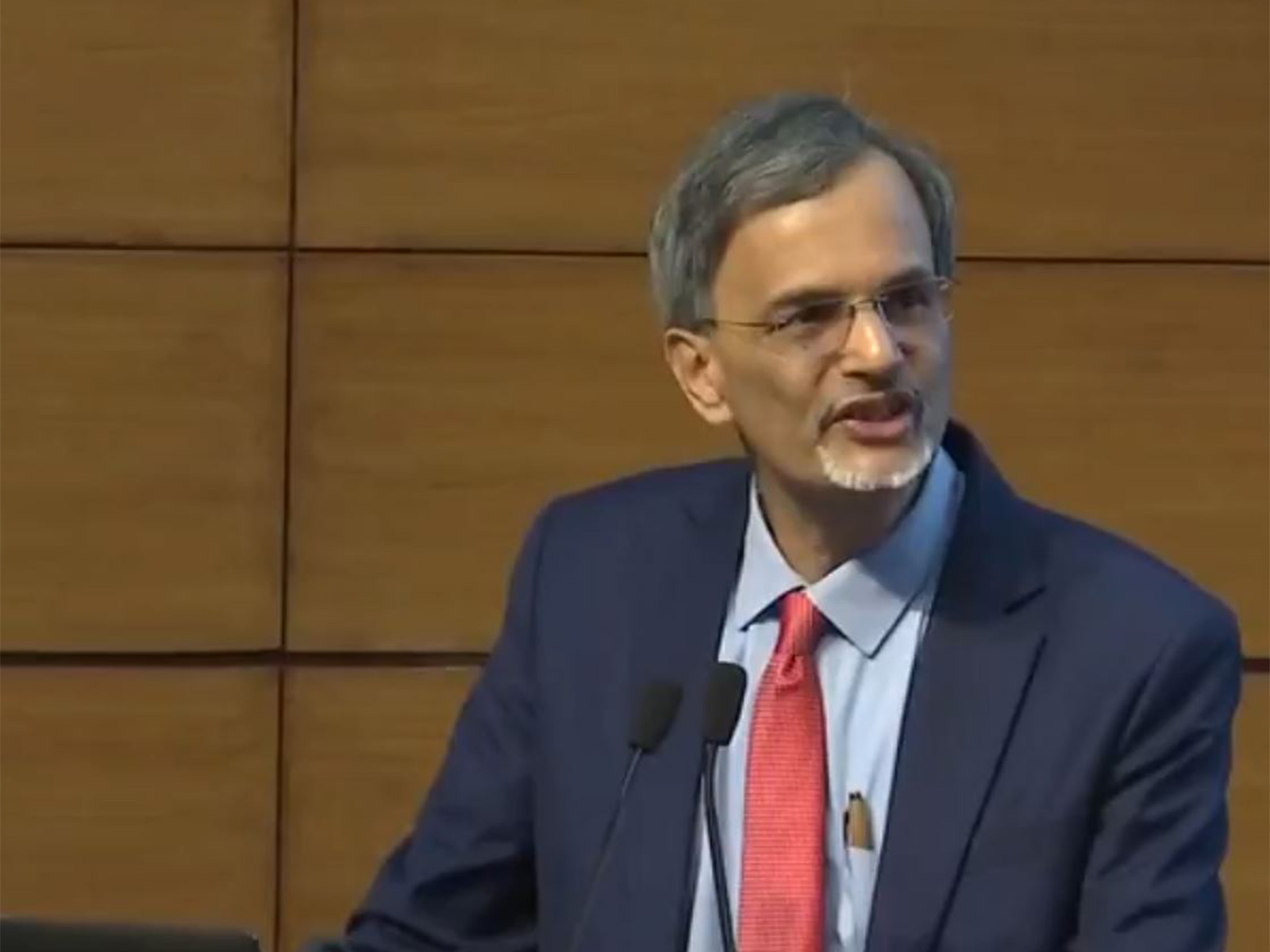
New Delhi [India], October 1 : India needs to encourage households to commit a larger share of their savings to long-term pension products as pension and insurance assets remain a relatively small part of household savings, Chief Economic Adviser V Anantha Nageswaran said, calling for simpler pension products, wider access and stronger retirement-income solutions.
Speaking virtually at an event marking NPS Diwas 2025-26, Nageswaran said Indian households have changed their saving patterns, with a sharp rise in market-linked investments, but pension savings have not increased at the same pace.
“The Indian saver has shown a willingness to accept market risk or so we would like to believe. What the saver has not yet done at scale is to commit savings for a longer tenure,” he said.
“That is a different decision because in general Indians do not optimize for the long term,” Nageswaran said, adding that the shift would require trust in institutions, accessible financial information and products that do not require savers to become financial experts.
He cited Economic Survey data showing that the share of equity and mutual funds in annual household savings rose from about 2 per cent in 2011-12 to around 15 per cent in 2024-25, while the share of bank deposits fell from over 58 per cent to about 35 per cent.
Monthly systematic investment plan flows also rose from under Rs 4,000 crore in 2016-17 to over Rs 28,000 crore in the first eight months of 2025-26. However, the share of pension and insurance assets in household savings remained unchanged between 2018-19 and 2023-24.
Nageswaran said India's total pension assets were about 17 per cent of GDP, against at least 80 per cent in OECD peer countries, indicating significant scope for expansion.
He said technology and simpler products could help address the coverage gap, drawing a parallel with UPI.
“The experience of UPI is quite illuminating,” he said. “Financial inclusion can indeed precede financial literacy. Nobody took a course on payment systems before using it.”
“NPS has learned from that as well,” he said, pointing to default schemes, small contributions that can be made through a phone and locally known agents as ways to improve coverage. Initiatives such as Tatkal NPS and Pension Sakhis, he said, were moving in that direction.
Nageswaran further said building the pension corpus was only part of the task and that the system would also need to ensure reliable income during retirement.
“A corpus at 60 years of age is only half the job. The other half is converting it into a steady income that lasts for as long as the person lives and one that keeps pace with prices or inflation,” he said.
He added that work on retirement-income schemes, drawdowns and assured payouts would need to remain at the centre of attention in the years ahead.