India targets 1 lakh more semiconductor engineers under Semicon 2.0: Vaishnaw
Aug 31, 2026
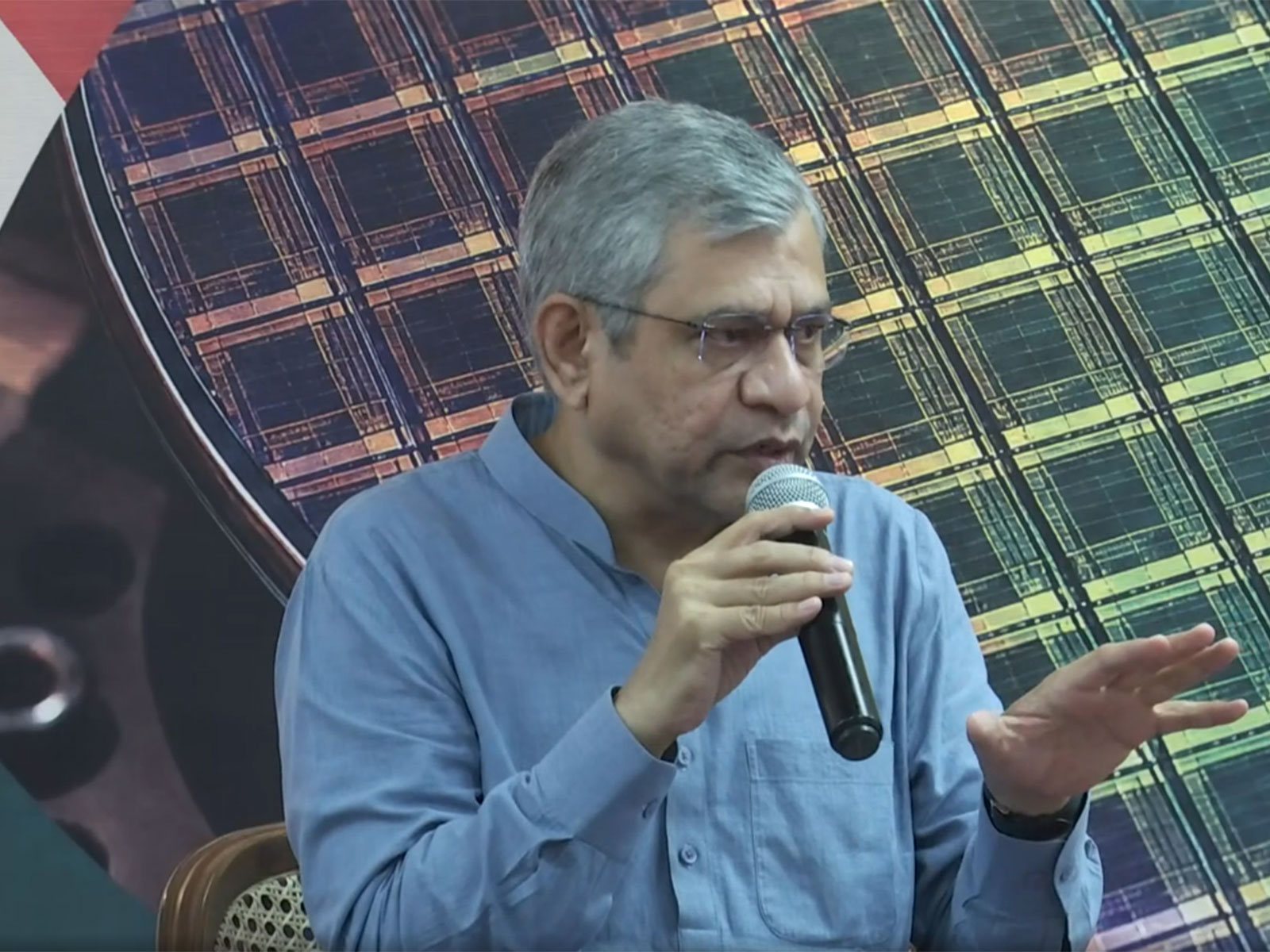
New Delhi [India], August 31 : India will develop another one lakh semiconductor engineers under the second phase of its semiconductor programme, Electronics and IT Minister Ashwini Vaishnaw said, as the government seeks to strengthen the country's talent pool and build a complete semiconductor ecosystem.
The minister, speaking after the launch of Semicon 2.0, said the initiative will focus not only on semiconductor manufacturing but also on developing talent, chip design, equipment, materials, advanced packaging and research and development.
"Now we have taken a target of one lakh more engineers to be developed," Vaishnaw said, adding that the move assumes importance as the global semiconductor industry is expected to face a shortage of about 1 million workers by 2032.
India has already achieved its earlier target of developing 85,000 semiconductor engineers in four years, against a target timeline of 10 years, he said.
The government has also expanded semiconductor design programmes across 355 universities, including institutions in tier-2 and tier-3 cities. Students have so far designed 255 chips, reflecting the growing capabilities of India's domestic semiconductor design ecosystem.
The minister said Semicon 2.0 will seek to build an end-to-end semiconductor ecosystem, covering chip design, manufacturing, equipment, materials, fabrication units, advanced packaging, R&D and skilled manpower.
The programme has identified six key semiconductor categories -- compute, memory, radio frequency (RF), power, networking and sensors -- with around 100 chips being prioritised for development. These chips are expected to cater to sectors such as aviation, transportation, consumer electronics and strategic industries.
The government's push comes as major economies have announced large fiscal support packages to strengthen their domestic semiconductor industries.
According to data presented by the government, the US has announced USD 52.7 billion under the CHIPS and Science Act, while the European Union has earmarked USD 49 billion under the EU CHIPS Act 1.0, with a further USD 140 billion proposal under CHIPS Act 2.0 under discussion.
Japan has announced USD 25.7 billion under its Semiconductor Strategy, while South Korea has committed USD 23.3 billion under its Semiconductor Ecosystem Support Package.
Singapore has announced USD 27.5 billion under its RIE2030 Strategy. China has committed USD 47.5 billion in the third round of its "Big Fund", taking its cumulative semiconductor fund support to more than USD 150 billion since 2014.
Taiwan has announced USD 9.3 billion under its Chip-based Industrial Innovation Program.
Vaishnaw said India, therefore, needs to build capabilities across the semiconductor value chain to remain competitive and become an important part of global supply chains.
"People should feel dependent on India. People should become dependent on our country, on our industry, on our production, on our design," he said.
The government has already approved 12 semiconductor manufacturing projects across six states, including a silicon fab, compound semiconductor and display facilities, along with nine ATMP/OSAT packaging projects.
Three of these projects have started commercial production in 2026, while two more are expected to begin production this year.
Vaishnaw stressed that the government's focus would remain on actual implementation rather than merely announcing investments.
"The actual achievements are more important. We'll continue to focus on the actual achievements," he said.